The World Indigenous Games 2025, held in Brazil under the auspices of the Inter Tribal Council, marked a major milestone in the global movement for indigenous sports recognition. The International Council of Traditional Sports and Games participated in the Games as a key international partner, extending its advocacy for traditional and indigenous sports into one of the most significant events in the calendar of indigenous peoples worldwide.
The World Indigenous Games
The World Indigenous Games brings together thousands of athletes from indigenous communities across the Americas, Oceania, Africa, Asia, and Europe to compete in a range of traditional indigenous disciplines including archery, canoe racing, spear throwing, tug of war, swimming, and log racing. The Games are governed by the Inter Tribal Council, a Brazilian indigenous peoples NGO that has staged Brazil's National Indigenous Games since 1996.
The international edition of the Games elevates the platform to a global scale, creating a unique moment of cultural convergence where indigenous communities from radically different environments — Amazon rainforest peoples alongside Arctic Inuit, Andean communities alongside Pacific Islanders — share their sporting traditions in a spirit of mutual recognition and respect.
ICTSG's Role
The International Council of Traditional Sports and Games serves as an international observer and partner at the World Indigenous Games, contributing its global documentation infrastructure to the identification and recording of indigenous sporting traditions represented at the event.
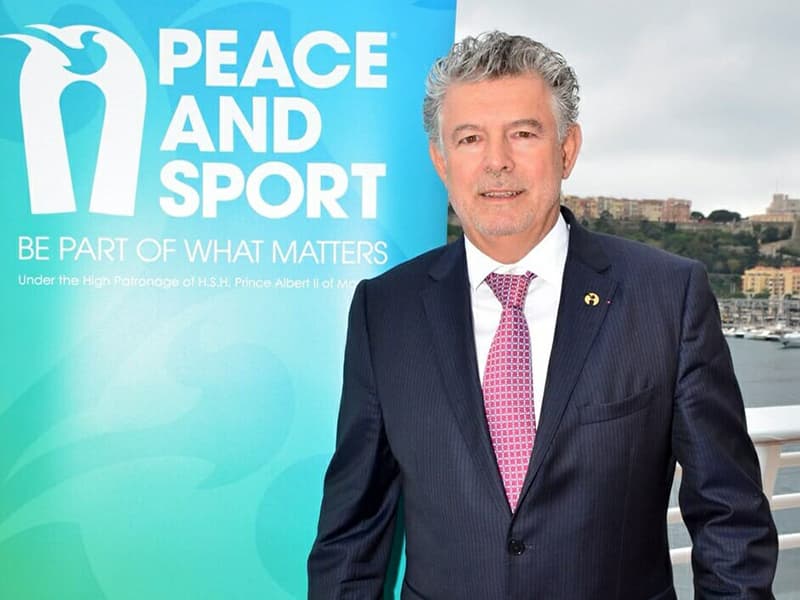
ICTSG Ambassador-at-Large Joel Bouzou — four-time Olympic competitor and founder of Peace and Sport — represented ICTSG at key high-level sessions, emphasising the connection between indigenous sport preservation, intercultural dialogue, and sustainable peace.
A Living Laboratory
For ICTSG researchers and coordinators, the World Indigenous Games functions as a living laboratory for the study of traditional sports in context — a rare opportunity to document sports that are otherwise practised only within geographically remote or socially isolated communities. The Games bring these disciplines into a comparative, cross-cultural dialogue that enriches the ICTSG Online Encyclopedia and informs global TSG policy.
ICTSG's Regional Coordinator for South America, Soraia Chung Saura of the University of São Paulo, coordinated ICTSG's academic programme at the Games, hosting sessions on indigenous games documentation methodology, community-led preservation strategies, and the application of the SRETS Elevation Framework to indigenous sporting disciplines.
The Next Chapter
ICTSG's participation in the World Indigenous Games 2025 deepens a relationship with indigenous sporting communities that is central to the organisation's mission. Indigenous peoples are among the world's greatest custodians of traditional sporting heritage — and their inclusion in ICTSG's global network is both an ethical imperative and an intellectual necessity.
When a sport disappears, it is like a language no longer spoken - its stories, values, and lessons risk being lost forever. When we revive a game, we revive a culture.
Khalil Ahmed Khan - President, ICTSG