The International Council of Traditional Sports and Games (ICTSG) is the global platform for safeguarding and promoting the world's diverse traditional and indigenous sports as living cultural heritage. Established in 2018 following a series of UNESCO-facilitated collective consultations spanning two decades, ICTSG operates as an independent, non-governmental organization headquartered in Hollywood, Florida, USA, with regional offices across six continents.
Origins: A UNESCO-Catalysed Process
The journey toward establishing a dedicated global body for traditional sports and games began in 1999 at MINEPS III - the Third International Conference of Ministers and Senior Officials in Punta del Este, Uruguay. That gathering issued the first international declaration calling on governments to actively support the promotion and safeguarding of Traditional Sports and Games as part of intangible cultural heritage.
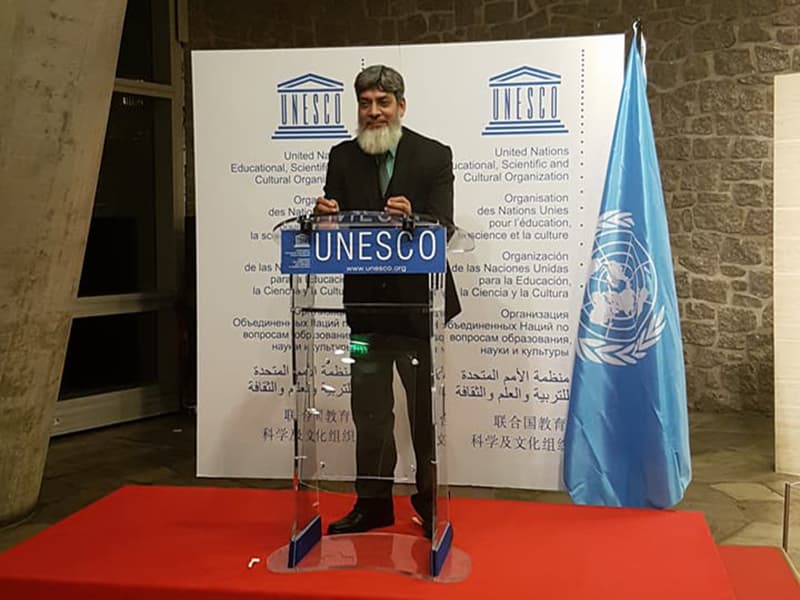
In 2006, the First Collective Consultation on TSG was held at UNESCO Headquarters in Paris, convening international organizations and stakeholders for the first time under one roof. Subsequent consultations in Tehran (2009) and Paris (2017) formalized the ICTSG name and elected its first Ad Hoc Advisory Committee, with Khalil Ahmed Khan elected as Chair.
The fourth and decisive Collective Consultation took place in Istanbul in August 2018, where the ICTSG statutes were formally approved by more than 82 participants representing over 40 countries. ICTSG's official logo and website were adopted, and the organization formally established its independent identity as the world's leading intergovernmental mechanism for TSG preservation.
Mission and Mandate
ICTSG is the sole global platform dedicated to the preservation, promotion, and elevation of traditional sports and games. Its mandate spans four pillars:
Documentation - The ICTSG Online Encyclopedia of Traditional Sports and Games has catalogued over 160 disciplines from every inhabited region of the world, preserving their rules, histories, cultural significance, and communities of practice.
Advocacy - ICTSG engages with governments, parliaments, and intergovernmental bodies to secure policy recognition for traditional sports within cultural heritage frameworks, education curricula, and national sports legislation.
Elevation - Through the SRETS Framework, ICTSG provides a structured, six-stage pathway for taking traditional sports from community-level practice to international recognition and UNESCO Intangible Cultural Heritage protection.
Partnership - ICTSG coordinates a global network spanning over 50 National Chapters, regional bodies including the African Traditional Sports and Games Council (ATSGC), and partnerships with the United Nations, World Games, and Peace and Sport.
The SRETS Elevation Framework
One of ICTSG's most significant contributions to the global heritage movement is the SRETS (Six-stage Elevation Framework for Traditional Sports), a structured, replicable pathway for elevating any traditional sport from village-level practice to international recognition:
Stage 1 - Identify: Document and profile the sport in its original community context, recording rules, history, geographic distribution, and at-risk status.
Stage 2 - Validate: The sport's home community formally endorses and affirms its cultural significance, creating a foundation of community ownership and consent.
Stage 3 - National: Government recognition is secured through formal engagement with national ministries of sports, culture, and education.
Stage 4 - Regional: A continental or regional governing body formally endorses the sport, creating pathways for regional championships and policy inclusion.
Stage 5 - International: Engagement with the International Olympic Committee, World Games, and international sports federations opens the door to global competition and visibility.
Stage 6 - Heritage: UNESCO Intangible Cultural Heritage (ICH) listing is secured, providing the highest level of international protection for the sport and its associated cultural practices.
International TSG Day: August 14
On 14 August each year, the world celebrates the International Day of Traditional Sports and Games - a date formally declared in 2022. TSG Day has grown into a global moment of recognition, with messages of support from European commissioners, heads of state, ministers, and ambassadors worldwide. TSG Day 2025 marked a historic milestone with the unanimous adoption of a global declaration and participation from communities in over 90 countries.
Leadership and Structure
ICTSG is led by President Khalil Ahmed Khan, an attorney-at-law from Lahore, Pakistan, and the principal architect of ICTSG's founding statutes and the SRETS framework. He served as Chairman of the UNESCO Ad Hoc Advisory Committee on TSG for over a decade, guiding the movement through its most consequential milestones.
In 2024, Khan led the ICTSG delegation to the United Nations Summit of the Future in New York, where he met with UNESCO Director-General Audrey Azoulay to formalize joint commitments to TSG preservation - marking a new chapter in ICTSG's relationship with the international community.
Ambassador-at-Large Joel Bouzou, a four-time Olympic Modern Pentathlon competitor and founder of Peace and Sport, brings Olympic-level credibility and diplomatic reach to ICTSG's global advocacy.
A Living Heritage Movement
ICTSG's work is grounded in a simple but powerful conviction: traditional sports are not relics of the past. They are living expressions of human culture - games that carry the values, stories, and bonds of communities across generations. Every time a traditional game is played, it is an act of cultural memory.
"When a sport disappears, it is like a language no longer spoken," says President Khan. "When we revive a game, we revive a culture. We give a voice to the past and a gift to the future."
With over 50 National Chapters now active, regional coordinators on every inhabited continent, and a growing network of academic, governmental, and civil society partners, ICTSG stands as the world's foremost guardian of humanity's living sporting heritage.
When a sport disappears, it is like a language no longer spoken - its stories, values, and lessons risk being lost forever. When we revive a game, we revive a culture.
Khalil Ahmed Khan - President, ICTSG