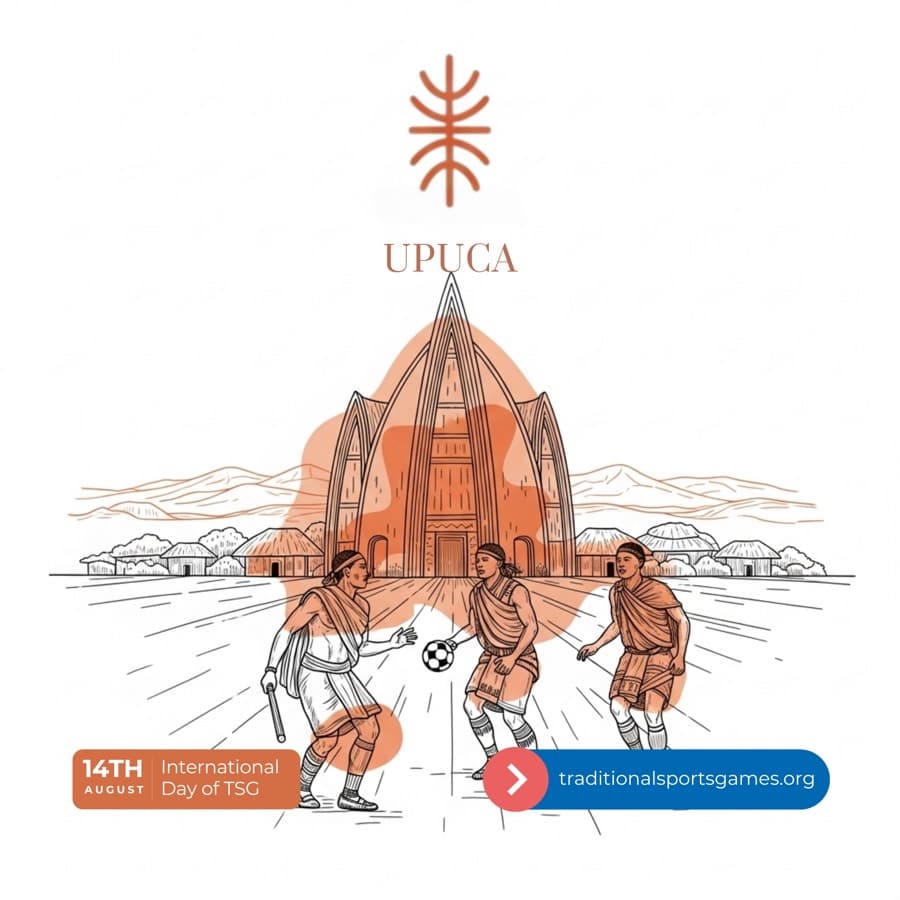
Upuca: South Africa’s Seated Game of Skill, Strategy, and Cultural Memory Upuca is a traditional South African game recognized among the ten officially acknowledged indigenous games in the region. Played while seated with legs crossed or folded, it offers a unique example of traditional sports and games (TSG) that foster community participation, inclusive education, and intergenerational transmission of knowledge. Historical and Cultural Background Rooted in South African communities, Upuca reflects an age-old social practice often taught during childhood. It is commonly played during family gatherings or community events, emphasizing cultural diversity, patience, and tactical coordination. It is part of the broader global effort to safeguard indigenous games and maintain a connection to ancestral knowledge. Gameplay Rules
Participants: Played individually or in pairs, mostly by children and young adolescents. Posture: Players sit on the ground with legs crossed or folded. Setup: Small stones or objects are used for tossing and catching. Objective: Tossing a stone in the air and swiftly picking up others from the ground before catching the first. Scoring: Points are awarded for the number of successful pickups before dropping or missing the catch.
Strategic Aspects and Skill Development Although simple in form, Upuca develops fine motor coordination, concentration, and timing. Each round becomes progressively harder, demanding quicker reflexes and enhanced focus—echoing elements found in performing arts through its rhythm and flow. Benefits and Educational Value
Promotes inclusive education through accessible rules and minimal equipment needs. Strengthens youth empowerment via skill mastery and peer teaching. Fosters community cohesion by being played in shared, informal spaces. Supports global health by reducing screen time and encouraging physical interaction. Facilitates intergenerational learning by connecting elders and youth in shared cultural activities.
Alignment with UN’s Sustainable Development Goals (SDGs)
SDG 4: Quality education through informal, inclusive learning environments. SDG 5: Gender equality as both boys and girls equally participate. SDG 10: Reduced inequalities by highlighting local traditions and marginalized voices. SDG 11: Sustainable communities through the revitalization of heritage-based recreation. SDG 16: Peace and inclusion by fostering cooperation and mutual respect. SDG 17: Partnership for goals through civil society engagement and cultural networks like ICTSG.
Similar Traditional Games Worldwide
Ari Arirang (Korea) – A rhythm-based seated hand game with musical and cultural roots. Angkunh (Cambodia) – A stone-tossing game requiring balance and strategy. Sangkalang (Philippines) – A traditional coordination-based game with rocks or shells.
Preserving and Promoting Upuca Upuca remains a vital element of intangible cultural heritage. Safeguarding such games ensures the continued celebration of Africa’s rich cultural identity and fosters a global dialogue around indigenous resilience and expression. Through documentation, festivals, and school programs, Upuca can thrive and contribute to sustainable development and civil society engagement. Get Involved Benefits of Joining Support ICTSG
About ICTSG: ICTSG (International Council of Traditional Sports and Games) works globally to protect and revive cultural heritage through traditional games. It advocates for peace, education, and cultural sustainability by empowering communities and honoring indigenous knowledge. About Us History Contact
When a sport disappears, it is like a language no longer spoken - its stories, values, and lessons risk being lost forever. When we revive a game, we revive a culture.
Khalil Ahmed Khan - President, ICTSG