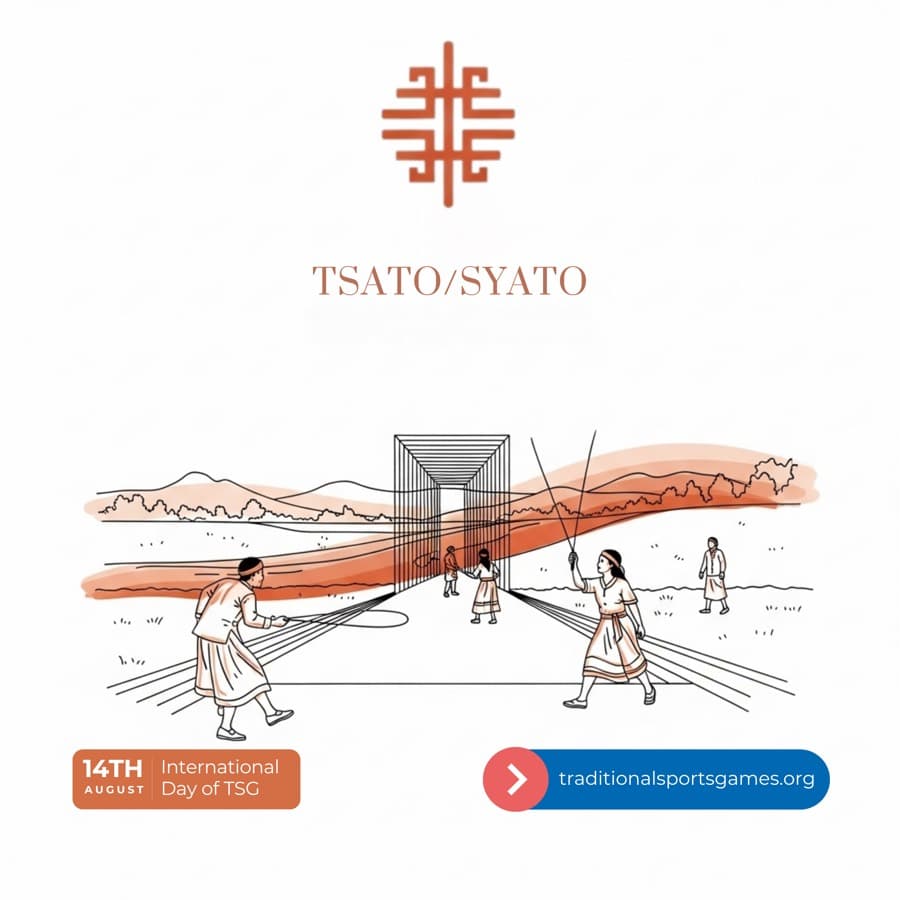
Tsato (Syato): A Traditional Filipino Stick Game Reviving Heritage and Community Spirit Tsato (also spelled Syato) is a celebrated traditional sport and game (TSG) from the Philippines that embodies indigenous knowledge, playful competition, and the art of precision. With deep roots in rural communities, Tsato is both a childhood pastime and a form of intangible cultural heritage that contributes to inclusive education and intergenerational transmission of culture. Historical Background Tsato has been passed down for generations in Filipino barangays, especially in Luzon and Visayas regions. Often played in open fields, streets, or schoolyards using hand-carved sticks, this game is a reflection of Filipino inventiveness, sustainability, and respect for shared spaces. Traditionally, it required no formal equipment, making it accessible to children of all backgrounds. Gameplay Rules and Format
Two sticks are needed: a long stick (approximately 18 inches) and a short stick (around 6 inches). The short stick is placed horizontally over a hole or rock. Using the longer stick, the player flips the small stick into the air and strikes it mid-air for distance. Points are scored based on how far the shorter stick lands — distances can be measured in stick-lengths. The game continues until a player reaches a set score or after a fixed number of rounds.
Cultural Significance Tsato transcends play — it is a social practice rooted in teamwork, fairness, and mutual respect. As a game played in open communities, it reinforces civil society engagement and teaches young people about traditional knowledge systems. Tsato also helps bridge generational gaps, with elders often teaching the rules and techniques to younger players. Strategic and Educational Value
Improves timing, coordination, and strategic planning. Teaches mathematical estimation through distance scoring. Enhances spatial awareness and physical agility. Promotes problem-solving and resilience in gameplay. Fosters youth empowerment through self-expression and skill development.
Community Impact and Sustainability As a locally accessible game, Tsato promotes sustainable development by using natural, biodegradable materials. It strengthens community participation during festivals, school programs, and youth camps. Its resurgence is crucial in the preservation and revitalization of intangible heritage, especially in an era of rapid digitalization and urbanization. Connections to Other Traditional Games Tsato is culturally linked to other TSGs around the world, including:
Gilli Danda (India, Pakistan, Nepal) Knucklebones (Greece, Turkey) Luk-Luk Mei (Malaysia)
These cross-cultural parallels highlight the universal appeal of stick-based TSGs and their role in fostering cultural diversity. Supporting UNESCO’s Sustainable Development Goals
SDG 4: Quality education through cultural literacy and traditional knowledge. SDG 5: Gender equality through inclusive community participation. SDG 10: Reduced inequalities by celebrating all cultural identities. SDG 11: Sustainable communities via localized recreation and heritage safeguarding. SDG 16: Peace and strong institutions through respectful play and rule-based interaction. SDG 17: Global partnerships in cultural preservation and education initiatives.
Call to Action Tsato is not just a game — it is a cultural beacon that connects the past, present, and future. Join hands with ICTSG and global communities to protect, promote, and practice traditional sports and games for generations to come. Get Involved Benefits of Joining Support ICTSG
About ICTSG: The International Council of Traditional Sports and Games (ICTSG) safeguards intangible heritage and supports global cooperation through education, culture, and inclusive traditional play. About Us | History | Contact
When a sport disappears, it is like a language no longer spoken - its stories, values, and lessons risk being lost forever. When we revive a game, we revive a culture.
Khalil Ahmed Khan - President, ICTSG