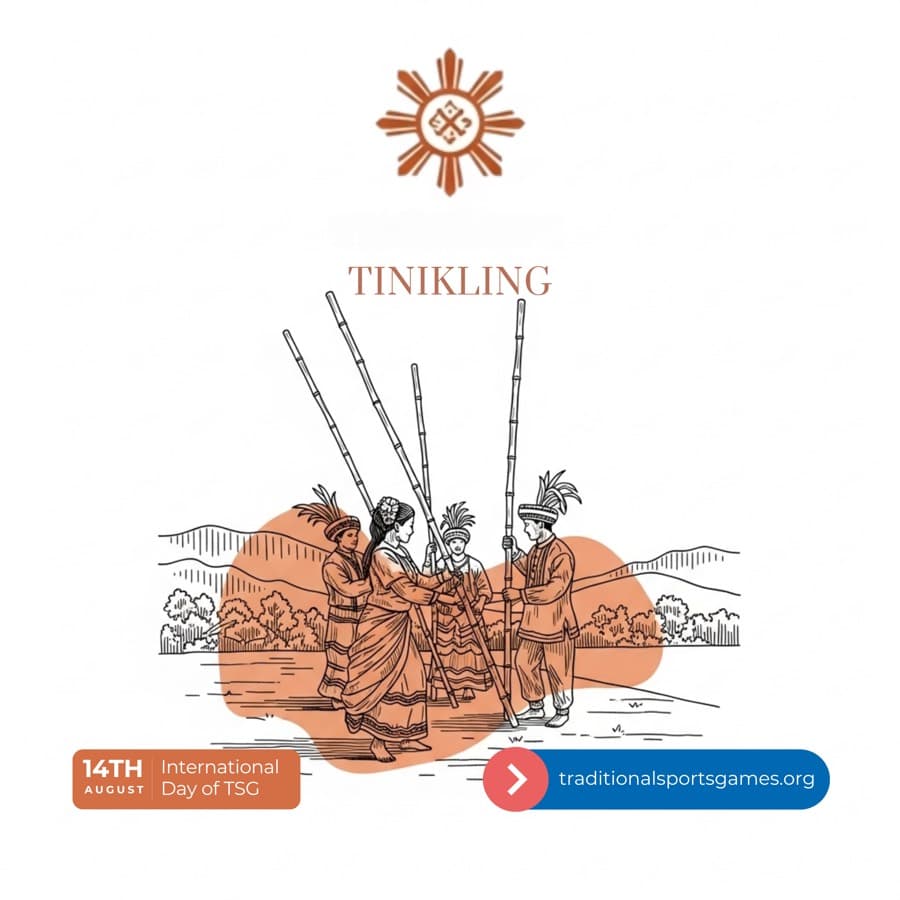
Tinikling: The Rhythmic Art of Filipino Cultural Expression Tinikling is one of the most iconic traditional sports and games (TSG) of the Philippines. Recognized for its graceful, rhythmic movements performed between clapping bamboo poles, Tinikling is both a maneuvering game and a folk dance rooted in indigenous knowledge and intangible cultural heritage. Historical Background The word "Tinikling" derives from the name of the Tikling bird, which nimbly dodges bamboo traps in rice fields. Originating during the Spanish colonial era, the dance was developed by rural Filipinos as a creative expression of agility and resilience. Over generations, it has become a cultural symbol and a form of intergenerational transmission of heritage. Gameplay and Rules Tinikling involves players hopping and stepping between two horizontally placed bamboo poles as they are rhythmically clapped together on the ground and against each other. The main elements include:
Two bamboo poles, around 6–10 feet in length Two clappers who control the pole movement One or more dancers who perform agile footwork in rhythm
Strategic Aspects The challenge of Tinikling lies in the dancer’s timing, coordination, and rhythm. This game sharpens reflexes, encourages spatial awareness, and teaches discipline and collaboration. It aligns with global goals such as youth empowerment and inclusive education. Cultural Significance and Performing Arts Tinikling transcends being a mere game; it is a vibrant expression of Filipino identity and cultural diversity. As a form of performing arts, it is showcased in festivals, schools, and global cultural exchanges. It fosters pride and community participation, helping to safeguard indigenous traditions. Benefits and Educational Value
Enhances balance, flexibility, and motor skills Promotes social interaction and team dynamics Encourages physical fitness contributing to global health Provides context for lessons in history, culture, and music
Community and Global Impact Tinikling plays a key role in civil society engagement, encouraging youth to connect with their roots and share traditions with wider audiences. It serves as a tool for sustainable development and strengthens cultural ties in both local and global contexts, directly supporting the following UNESCO SDGs:
SDG 4: Quality Education SDG 5: Gender Equality SDG 10: Reduced Inequalities SDG 11: Sustainable Cities and Communities SDG 16: Peace, Justice, and Strong Institutions SDG 17: Partnerships for the Goals
Related Traditional Games Explore other traditional Filipino games such as Holen, Luksong Baka, and Palosebo to gain a broader understanding of Philippine heritage and cultural resilience. Call to Action Tinikling is more than a game—it's a living archive of cultural identity. Let us unite in preserving this beautiful tradition by promoting education, community participation, and international recognition. Get Involved Benefits of Joining Support ICTSG
About ICTSG The International Council of Traditional Sports and Games (ICTSG) promotes global recognition of intangible heritage and traditional games. We work to empower communities and ensure cultural sustainability. About Us History Contact
When a sport disappears, it is like a language no longer spoken - its stories, values, and lessons risk being lost forever. When we revive a game, we revive a culture.
Khalil Ahmed Khan - President, ICTSG