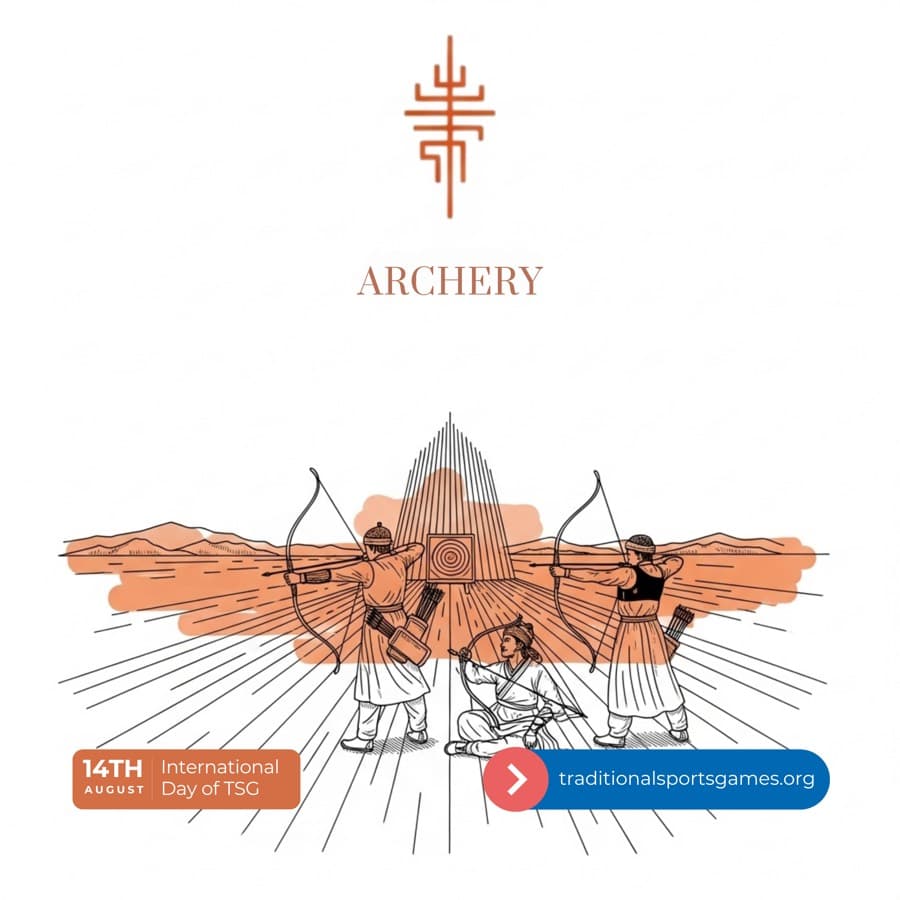
Tibetan Archery: Whistling Arrows of Heritage and Community Tibetan Archery is a centuries-old traditional sport practiced on the Himalayan plateau. With traditional sports and games (TSG) roots, it embodies indigenous knowledge, intangible cultural heritage, and a deep connection to nature and spirituality—where Tibetan arrows famously whistle in the wind as they soar toward earth or sky. Historical and Cultural Background Archery in Tibet has ancient origins—initially linked to hunting and military use, involving the distinctive composite “Qinghai” bow made of bamboo, wood, horn, and sinew :contentReference[oaicite:4]{index=4}. With over 2,000 years of tradition, it evolved into a vital element of festivals, especially during Losar (Tibetan New Year), where archery contests symbolize renewal and unity :contentReference[oaicite:5]{index=5}. Gameplay and Contest Structure
Archers use compact, recurve composite bows (“Qinghai bows”) and arrows with metal or bone tips :contentReference[oaicite:6]{index=6}. Tournament targets (“gara” or “doks”) are built from packed earth or stone, often triangular and placed 60–100 m away :contentReference[oaicite:7]{index=7}. Contests test accuracy, consistency, and arrow placement—shots that hit near or hit existing arrows score higher :contentReference[oaicite:8]{index=8}. Events include individual, team, and horseback shooting, often accompanied by music, dance, and spiritual rites :contentReference[oaicite:9]{index=9}.
Cultural Significance and Spiritual Dimension Archery is spiritually meaningful—archers recite mantras before shooting, aiming for focus, mental clarity, and communal harmony :contentReference[oaicite:10]{index=10}. During festivals like Losar, archery unites villages, performing rituals, music, and blessings. The whistling arrow symbolizes connection with the deities and landscape. Physical, Strategic & Social Aspects
Builds physical strength, posture, and endurance at high altitudes. Develops precision, rhythm, and mental focus. Strengthens community bonds through team-based competition and shared ceremony. Teaches discipline, tradition, and respect for natural and spiritual systems.
Educational Value & Youth Engagement Tibetan Archery supports inclusive education and youth empowerment. Young archers learn tradition, physical wellbeing, and spiritual mindfulness. Elders mentor novices, enabling intergenerational knowledge transfer, and creating social cohesion. Alignment with UNESCO’s SDGs
SDG 4: Encourages quality, culturally contextual learning. SDG 5: Inclusion of all genders in cultural sport. SDG 10: Low-barrier access supports equity. SDG 11: Strengthens sustainable community and cultural landscapes. SDG 16: Promotes peaceful dialogue and social integrity. SDG 17: Collaborative festivals foster global partnerships and cultural diplomacy.
Related Traditional Games
Horse Archery – Central Asia Gasing – Malaysia spinning tops Yak Racing – Tibetan Plateau
Community Impact and Cultural Safeguarding By preserving Tibetan Archery, communities maintain identity, support mental and physical health, and strengthen civil society engagement. The sport’s ritual nature fosters both spiritual and social development, anchoring cultural continuity and environmental respect. Call to Action Join us in celebrating and safeguarding Tibetan Archery by supporting community programs, integrating it in cultural education, and promoting knowledge-sharing across generations. Let tradition guide our shared future in harmony, health, and cultural diversity. Get Involved Benefits of Joining Support ICTSG
About ICTSG The International Council of Traditional Sports and Games (ICTSG) promotes global safeguarding of intangible heritage through traditional sports. We empower youth, foster peace, and support cultural diversity via community engagement. Learn more via our About Us, History, and Contact pages.
When a sport disappears, it is like a language no longer spoken - its stories, values, and lessons risk being lost forever. When we revive a game, we revive a culture.
Khalil Ahmed Khan - President, ICTSG