The International Council of Traditional Sports and Games has developed one of the most comprehensive frameworks ever created for the formal recognition of traditional sports: the Six-Stage SRETS (Systematic Recognition and Elevation of Traditional Sports) Elevation Framework. This framework is designed for use by national governments, sports ministries, indigenous community organisations, and international bodies seeking a structured pathway to elevate their traditional sports from community practice to institutional recognition.
The Six Stages of SRETS
Stage 1 – Survey and Documentation: The framework begins with systematic documentation of a traditional sport's history, geographic distribution, gameplay rules, community functions, and cultural significance. ICTSG provides technical support for documentation through the ICTSG Online Encyclopedia platform.
Stage 2 – Registration: Once documented, a traditional sport can be formally registered in the ICTSG Global Registry of Traditional Sports and Games — a living record of over 160 disciplines from more than 100 countries. Registration establishes international recognition and provides the foundation for subsequent elevation stages.
Stage 3 – Evaluation: Registered sports are evaluated against ICTSG criteria relating to community embeddedness, cultural authenticity, intergenerational transmission, inclusivity, and alignment with UNESCO intangible cultural heritage principles.
Stage 4 – Stakeholder Engagement: Elevation requires the active engagement of national sports ministries, cultural heritage agencies, academic institutions, and community organisations. ICTSG facilitates multi-stakeholder processes to build governmental and institutional support.
Stage 5 – Strategic Elevation: Sports meeting the evaluation criteria can be elevated to national sport status, included in cultural heritage protection lists, or nominated for UNESCO intangible cultural heritage inscription, depending on the country's legal framework and the sport's profile.
Stage 6 – SDG Integration: The final stage connects traditional sports to the United Nations' Sustainable Development Goals, demonstrating how TSG programmes contribute to SDG 3 (Good Health), SDG 4 (Quality Education), SDG 10 (Reduced Inequalities), SDG 11 (Sustainable Cities and Communities), SDG 16 (Peace), and SDG 17 (Partnerships).
Why the SRETS Framework Matters
Prior to SRETS, no international framework existed to guide the formal recognition of traditional sports at scale. The result was fragmentation: traditional sports remained invisible to policy-makers, absent from sports development budgets, and excluded from education curricula, despite their profound community value.
SRETS provides an evidence-based, culturally sensitive tool that translates traditional sports advocacy into institutional action. Since its development, the framework has been applied by governments and organisations across Africa, Asia, Europe, and the Pacific.
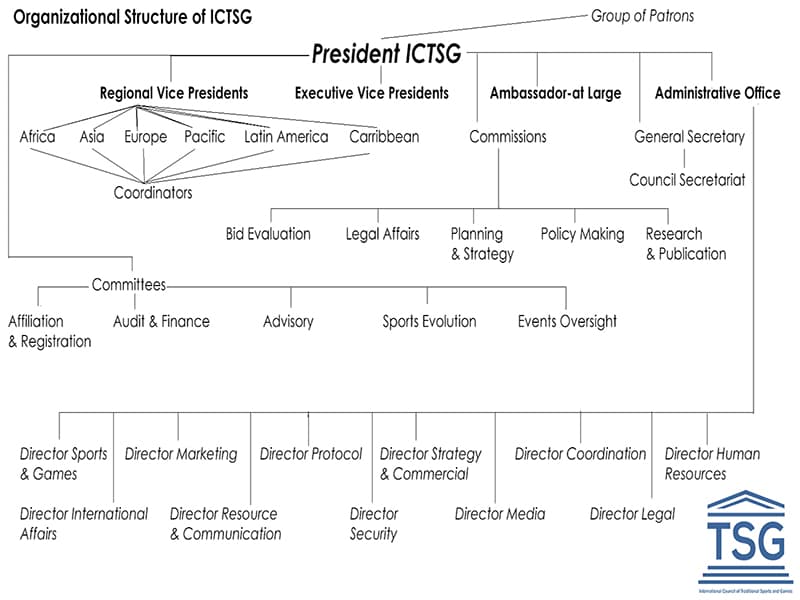
Policymakers and sports organisations wishing to apply the SRETS framework to their national traditional sports are invited to engage with ICTSG's regional coordinators through the official ICTSG website.
When a sport disappears, it is like a language no longer spoken - its stories, values, and lessons risk being lost forever. When we revive a game, we revive a culture.
Khalil Ahmed Khan - President, ICTSG