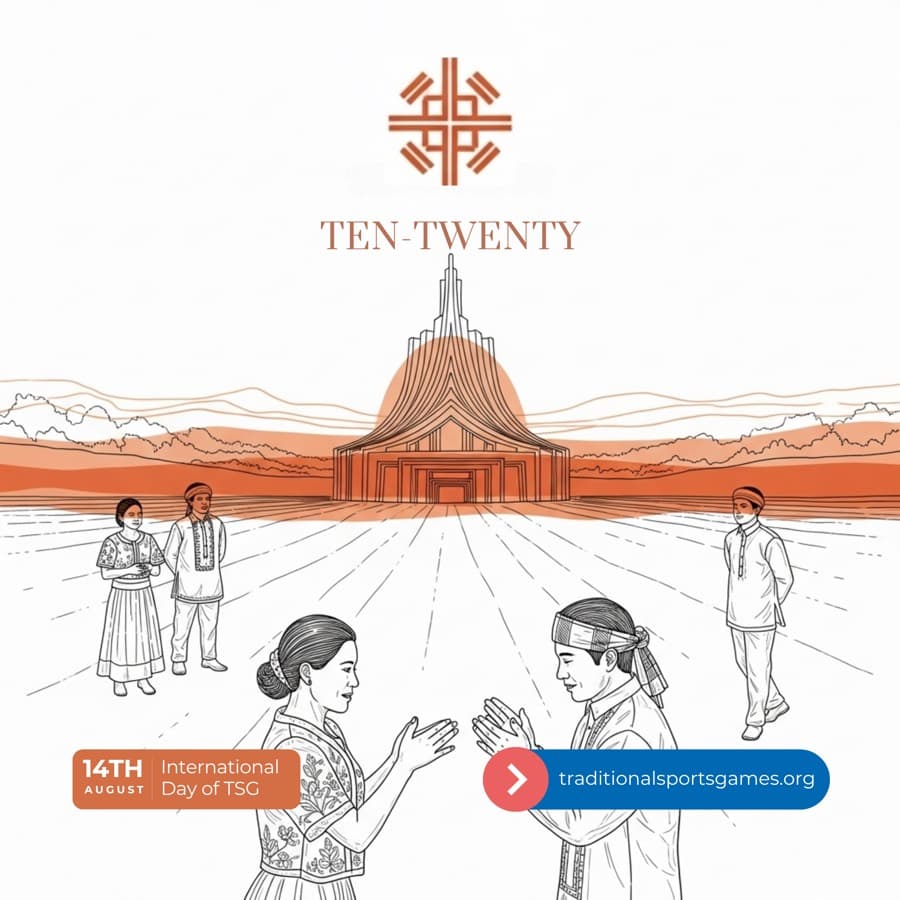
Ten-Twenty: A Traditional Filipino Jump Rope Game of Rhythm, Culture, and Connection Ten-Twenty, also known as "10-20," is a popular Filipino children's game that combines jumping, rhythm, and social play using a stretched garter. As a traditional sports and games (TSG) activity, it enhances physical skills while preserving indigenous knowledge and promoting community participation. This culturally rich game supports UNESCO’s values of safeguarding intangible heritage, fostering inclusive education, and empowering youth through play. Historical Background Ten-Twenty emerged as a favorite among Filipino children in the 1980s and 1990s, particularly in urban neighborhoods. With minimal materials—just a long garter band—it became a game of joy, inclusion, and creative expression. Today, its practice is a vibrant memory of social practices and intergenerational sharing. Gameplay Rules
The game uses a garter stretched between two players standing opposite each other. The rope begins at ankle height and progresses higher with each level: knees, waist, armpits, shoulders, head, and above. The jumper performs a series of patterned jumps without touching the garter. Success at one level advances the player to the next; failure results in a turn pass. Variations include singing songs or rhythmic chants while jumping.
Cultural Significance Ten-Twenty is a social practice that blends performing arts with physical movement and camaraderie. It showcases cultural diversity and supports gender-inclusive play, allowing children of all backgrounds to engage, collaborate, and communicate while developing their rhythmic coordination. Strategic and Physical Benefits
Improves timing, coordination, and reflexes. Encourages memory and pattern recognition. Promotes strategic movement under pressure. Builds leg strength, balance, and rhythm. Encourages teamwork and fair play.
Educational Value and Intergenerational Impact Ten-Twenty enables inclusive education through experiential learning, as children teach one another through practice and song. It strengthens intergenerational transmission of tradition and promotes youth empowerment by valuing physical creativity over digital engagement. Its simplicity and accessibility make it an ideal tool for cultural educators and community builders. Alignment with UNESCO’s Sustainable Development Goals (SDGs)
SDG 4: Quality Education – through experiential, playful learning. SDG 5: Gender Equality – inclusive participation regardless of gender. SDG 10: Reduced Inequalities – accessible for all socioeconomic backgrounds. SDG 11: Sustainable Cities and Communities – by activating community spaces for play. SDG 16: Peace, Justice, and Strong Institutions – promoting cooperation and respect. SDG 17: Partnerships for the Goals – empowering civil society engagement in cultural preservation.
Community and Global Relevance Ten-Twenty fosters civil society engagement by turning everyday streets into cultural spaces. Its global parallels—like elastics games in other Asian and Latin American regions—reflect a shared human heritage. Explore more global maneuvering games on the ICTSG sports page. Similar Global Games
Elástico (Latin America) Chinese Jump Rope (East Asia) Zig-Zag Jump (Africa)
Call to Action: Preserve and Participate Preserve the joyful legacy of Ten-Twenty and other traditional games. Support educational programs, engage communities, and share your cultural stories. Together, we can safeguard our shared human heritage through action, awareness, and play. Get Involved Benefits of Joining Support ICTSG
About ICTSG The International Council of Traditional Sports and Games (ICTSG) is committed to safeguarding and promoting cultural heritage through sport. Learn more on our About Us, History, and Contact pages.
When a sport disappears, it is like a language no longer spoken - its stories, values, and lessons risk being lost forever. When we revive a game, we revive a culture.
Khalil Ahmed Khan - President, ICTSG