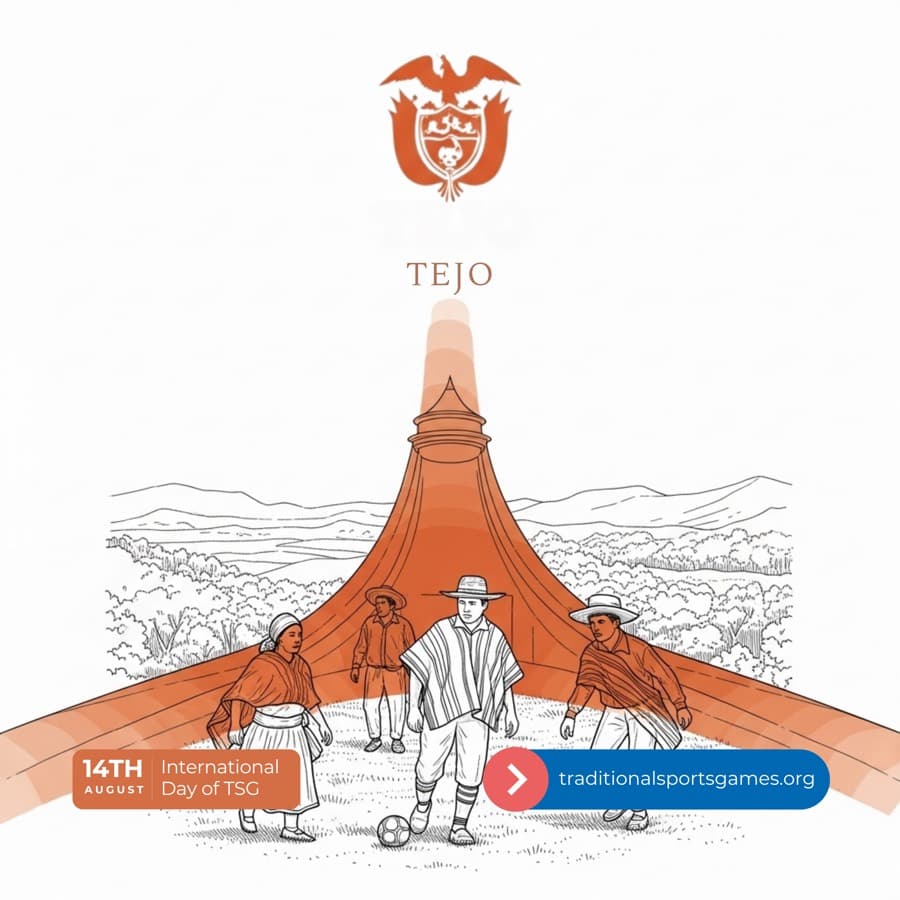
Tejo and Rayuela: Explosive Traditions of South America Tejo is a spectacular traditional Colombian sport with a rich cultural past and powerful visual appeal. Players throw a metal puck (called a tejo) at a clay board with paper targets filled with gunpowder, causing small explosions when hit. A related Chilean version, Rayuela, while similar in aim and form, excludes gunpowder and is honored every year on July 19 as the National Day of Rayuela in Chile. Both games promote intergenerational transmission, community participation, and cultural identity. Historical Background and Cultural Significance Tejo traces back to the Pre-Columbian era, originally practiced by the indigenous Muisca people of the Andean region. The Spanish colonial period influenced the game’s transformation with the addition of gunpowder. Tejo has since evolved into Colombia’s national sport, symbolizing resilience, unity, and cultural continuity. Rayuela, though less explosive, reflects similar themes of precision, heritage, and local pride in Chilean society. Gameplay and Rules
Tejo players throw a heavy metal puck toward a clay-covered target board. The board contains small triangular paper packets called mechas filled with gunpowder. Points are scored for hitting the target, the mechas (explosions), or landing closest to the center. Rayuela uses a simpler layout: players throw disks to land closest to a target line marked on the ground. Both games can be played in teams and include turn-based rounds and point systems.
Strategic and Social Dynamics Tejo is not only a sport of aim but of community bonding. It requires calmness under pressure and promotes friendly competition. In rural and urban regions alike, it functions as a social practice rooted in civil society engagement and cultural diversity. Rayuela, on the other hand, has become a staple at national festivals and family events, encouraging peaceful interaction and inclusive education. Educational and Sustainable Development Benefits
SDG 4 (Quality Education): Helps teach indigenous knowledge and historical context through play. SDG 5 (Gender Equality): Played by all genders in inclusive spaces and festivals. SDG 10 (Reduced Inequalities): Involves people from different social and economic backgrounds. SDG 11 (Sustainable Cities and Communities): Supports cultural identity in both rural and urban settings. SDG 16 (Peace and Justice): Encourages sportsmanship, dialogue, and cultural celebration. SDG 17 (Partnerships): Strengthens collaborations between communities and cultural institutions.
Similar Traditional Games Tejo and Rayuela share common heritage elements with other traditional sports and games (TSG) such as:
Asparezoba (Georgia) – An equestrian aiming sport Angkun (Cambodia) – A seed-throwing game requiring accuracy and timing Aizkolaritza (Basque Country) – A traditional wood-chopping competition
Call to Action: Preserve and Participate Traditional sports like Tejo and Rayuela are not just games — they are living symbols of identity, heritage, and community. Let us join hands to safeguard them through education, inclusive events, and civil engagement. Be part of the movement to preserve these culturally vibrant games. Get Involved Benefits of Joining Support ICTSG About ICTSG: The International Council of Traditional Sports and Games (ICTSG) is dedicated to preserving, promoting, and revitalizing traditional sports and games as powerful tools for education, peace, and sustainable development.
About Us History Contact
When a sport disappears, it is like a language no longer spoken - its stories, values, and lessons risk being lost forever. When we revive a game, we revive a culture.
Khalil Ahmed Khan - President, ICTSG