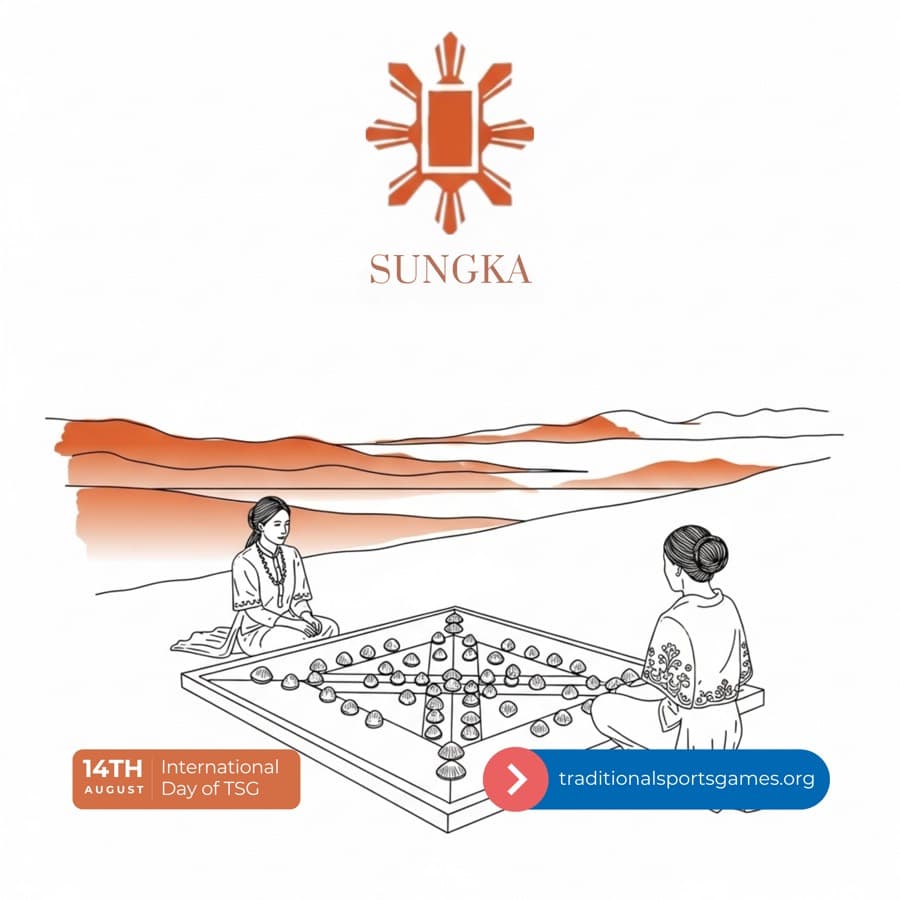
Sungka: A Traditional Filipino Game of Strategy, Culture, and Intergenerational Wisdom Sungka is a traditional Filipino mancala game played on a carved wooden board with shells or stones. More than a recreational pastime, Sungka represents traditional sports and games (TSG) that promote indigenous knowledge, intangible heritage, and community engagement passed down through generations. Historical Background Rooted in Southeast Asian culture, Sungka has been part of Filipino life for centuries. It is traditionally played in barangay halls, home verandas, and public spaces using a distinct wooden board (usually shaped like a boat) with seven small pits on each side and two larger “head” pits. As a game with deep cultural symbolism, it mirrors agricultural cycles, strategic thinking, and community values. Gameplay Rules
Played by two individuals facing each other with a board containing 14 small holes and two large storehouses (head holes). Each of the seven small holes on a player's side is filled with seven shells or stones. Players take turns picking up all the pieces in one hole and distributing them counterclockwise. The aim is to collect the most shells in one's own head pit while applying strategy to skip or block the opponent's moves. The game ends when all pits are empty; the player with the most pieces in their storehouse wins.
Cultural Significance and Social Practices Sungka is more than entertainment—it is a reflection of Filipino cultural identity. Traditionally played during family gatherings or community fiestas, it promotes intergenerational transmission of values, strategy, and patience. It is inclusive of all ages and genders, supporting gender equality and social cohesion. Strategic, Educational, and Developmental Benefits
Sharpens arithmetic and logical reasoning skills in children and youth. Reinforces hand-eye coordination and cognitive planning. Encourages mindfulness, patience, and healthy competition. Accessible, using locally available and sustainable materials. Promotes inclusive education through experiential learning.
Alignment with UNESCO Goals Sungka strongly aligns with UNESCO’s mission to safeguard intangible cultural heritage and supports the following Sustainable Development Goals (SDGs):
SDG 4 – Quality Education: Supports informal education, critical thinking, and cultural literacy. SDG 5 – Gender Equality: A game inclusive of all genders and identities. SDG 10 – Reduced Inequalities: Accessible to all socio-economic backgrounds. SDG 11 – Sustainable Cities and Communities: Promotes cultural heritage and community-based recreation. SDG 16 – Peace, Justice and Strong Institutions: Encourages fair play, rule-following, and social bonding. SDG 17 – Partnerships for the Goals: Facilitates cooperation among educators, cultural workers, and NGOs.
Similar Traditional Games Around the World
Oware – Ghana Bao – Tanzania Congkak – Malaysia
Contribution to Global Health and Civil Society Sungka supports global health by offering a low-cost, screen-free, and stress-reducing activity. It encourages civil society engagement by reviving public spaces and enhancing community interaction through heritage play. Call to Action: Safeguard Sungka for Future Generations Sungka embodies strategy, culture, and social learning. By practicing, teaching, and sharing Sungka, we contribute to cultural preservation, education, and youth empowerment. Join us in keeping this heritage alive and relevant. Get Involved Benefits of Joining Support ICTSG
About ICTSG: The International Council of Traditional Sports and Games (ICTSG) works globally to preserve and promote traditional sports like Sungka. Through cultural safeguarding and education, ICTSG empowers communities to share their heritage and foster global understanding. About Us | History | Contact
When a sport disappears, it is like a language no longer spoken - its stories, values, and lessons risk being lost forever. When we revive a game, we revive a culture.
Khalil Ahmed Khan - President, ICTSG