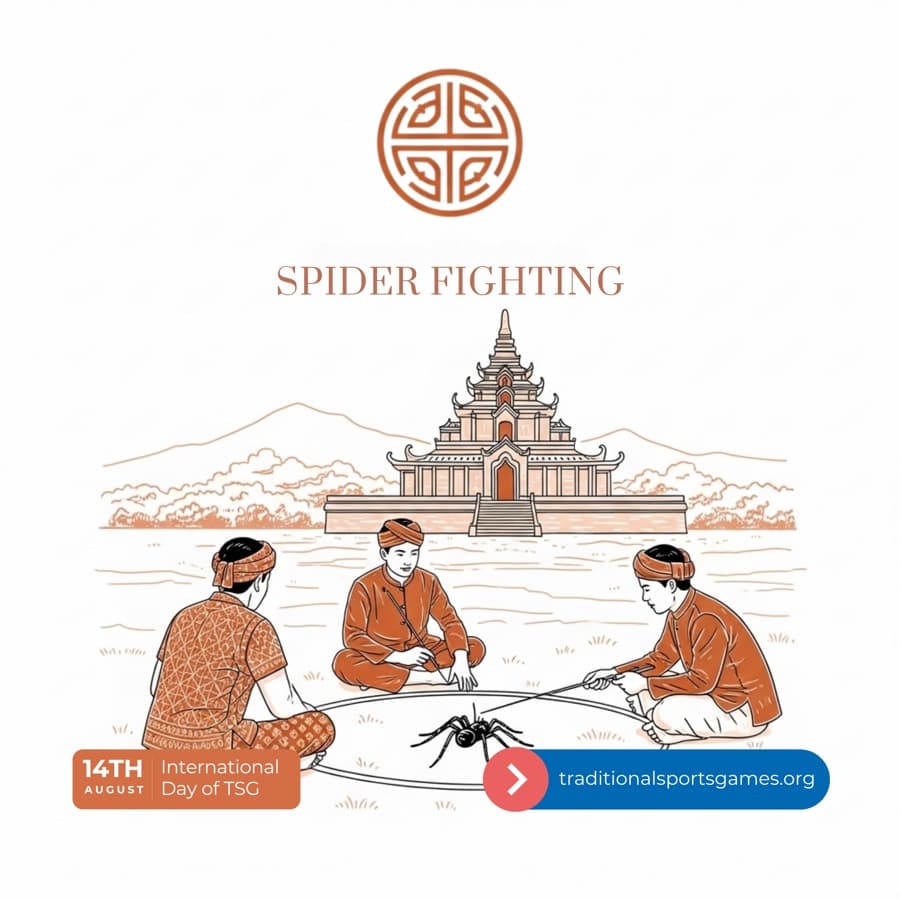
Spider Fighting: A Unique Traditional Game from the Philippines Spider Fighting, a captivating traditional sport and game (TSG) in the Philippines, is a vivid expression of indigenous knowledge and rural childhood creativity. Popular in many Southeast Asian communities, it represents a form of play deeply rooted in nature, culture, and community participation. Recognized as part of the intangible cultural heritage, the game is an educational and strategic activity passed down through generations. Historical Background Spider fighting dates back several decades in rural Philippine communities. Often played after school or during harvest breaks, children would explore bushes and trees in search of spiders, a practice that encouraged intergenerational transmission of ecological knowledge and patience. This game embodies social practices that value observation, care, and strategic thinking. Gameplay Rules and Structure
Players capture spiders (typically from the genus Araneidae) found in rural fields or bushes. Each spider is housed in matchboxes or makeshift containers, often lovingly cared for by young owners. Fights take place on a horizontal stick or twig, where two spiders are placed at opposite ends. The first spider to entangle or push the opponent off the stick is considered the winner. Games are often informal but governed by mutual respect and unwritten rules among players.
Cultural and Educational Significance Spider Fighting nurtures values such as respect for nature, strategy, and discipline. It serves as a safe and accessible form of rural entertainment, requiring no commercial tools—just observation, patience, and resourcefulness. More than a game, it reinforces inclusive education and rural children’s connection to biodiversity. Strategic Aspects and Benefits
Environmental Education: Builds understanding of spiders’ behavior, care, and natural habitats. Youth Empowerment: Promotes decision-making, patience, and self-confidence among children. Social Skills: Encourages peer interaction, negotiation, and civil society engagement. Creativity and Innovation: Players create spider homes, tracking sheets, and care routines. Low Barrier to Entry: Requires no financial cost, making it inclusive for all socioeconomic groups.
Safeguarding and UNESCO SDGs Despite its informal nature, Spider Fighting aligns with UNESCO’s mission to protect intangible cultural heritage and empower communities through localized tradition. It supports the following Sustainable Development Goals (SDGs):
SDG 4 – Quality Education: Promotes cultural learning and ecological literacy. SDG 5 – Gender Equality: Encourages participation across gender lines in shared play. SDG 10 – Reduced Inequalities: Makes recreational learning accessible in rural and marginalized areas. SDG 11 – Sustainable Cities and Communities: Connects youth with local environmental traditions. SDG 16 – Peace and Justice: Reinforces fairness and conflict resolution in communal play. SDG 17 – Partnerships: Inspires collaboration among educators, parents, and cultural bodies for preservation.
Community Participation and Intergenerational Legacy This traditional game fosters deep community participation and offers a powerful example of intergenerational knowledge transfer. Older siblings or elders often teach spider handling skills to younger players, strengthening bonds and local identity. In this way, Spider Fighting becomes not only play, but also a performing art of observation, movement, and strategy. Similar Traditional Games
Sepak Takraw – Ball sport of Southeast Asia Gasing – Traditional top-spinning game from Malaysia Ekasi Games – Township youth games in South Africa
Call to Action Spider Fighting is more than a game—it is a window into community wisdom, local ecology, and the joy of heritage. Help safeguard this unique cultural tradition by promoting awareness, educational initiatives, and inclusive participation at all levels. Get Involved Benefits of Joining Support ICTSG
About ICTSG The International Council of Traditional Sports and Games (ICTSG) works globally to safeguard cultural identity through indigenous sports. Partnering with communities, UNESCO, and civil society, ICTSG promotes sustainable heritage practices. Explore our About Us, History, and Contact.
When a sport disappears, it is like a language no longer spoken - its stories, values, and lessons risk being lost forever. When we revive a game, we revive a culture.
Khalil Ahmed Khan - President, ICTSG