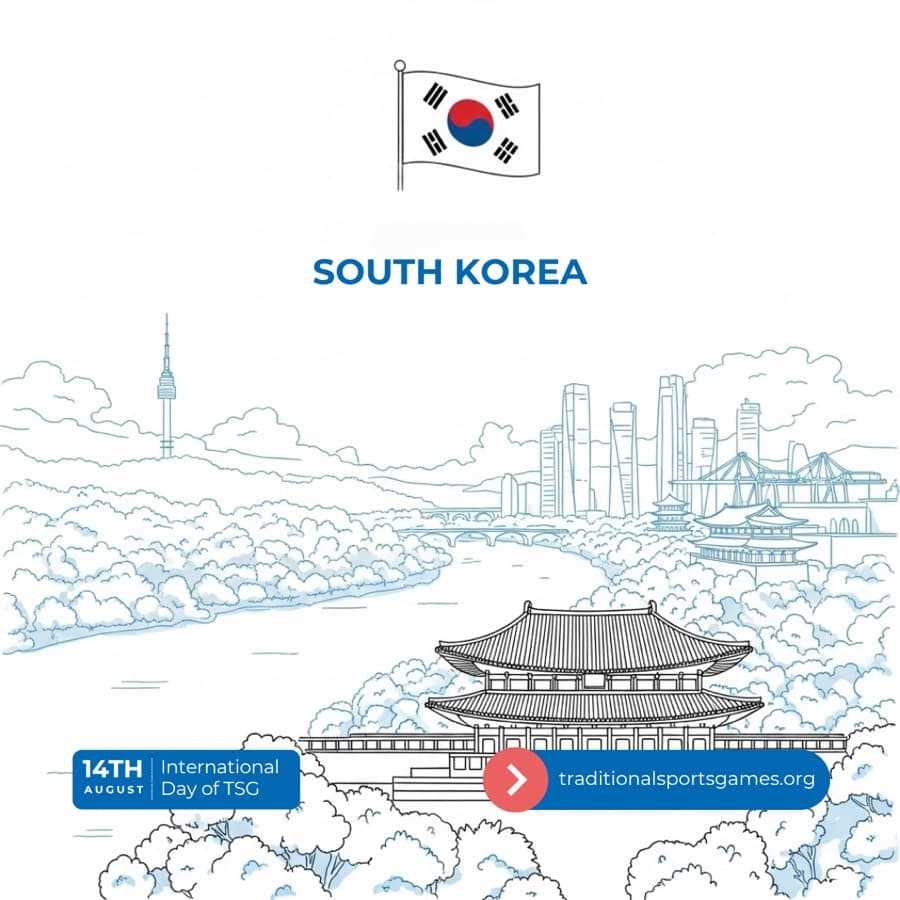
Positions Open with South Korea Chapter 1. Chapter President for South KoreaApply Now 2. General Secretary for South KoreaApply Now 3. Information & Communications Lead for South KoreaApply Now Pre‑Qualification Checklist Benefits & Perks Responsibilities
South Korea – Founding Member of ICTSG Delegation at 4th Collective Consultation Meeting South Korea was represented by Kim Jong Tae, Jung Han Kun, and Lee Jong Hak at the UNESCO‑hosted 4th Collective Consultation Meeting on Traditional Sports and Games, held on 13–14 August 2018 at the Sheraton Grand Istanbul Ataşehir in Turkey. As a Member of the Ad‑hoc Advisory Committee (AAC), South Korea helped officially endorse the formation of ICTSG. Geographic & Cultural Significance Located at the nexus of East Asia, South Korea's rich cultural tapestry spans millennia. The Korean peninsula’s four distinct seasons influence traditional festivals and ethnosports. This seasonal diversity has shaped iconic activities such as Yutnori during winter celebrations and Juldarigi during agricultural festivities. Traditional & Indigenous Sports of South Korea
Ssireum: Traditional wrestling in a sandy ring; combines strength and technique for rural gatherings :contentReference[oaicite:3]{index=3}. Yutnori: Ancient board game using four sticks, popular during Lunar New Year since Three Kingdoms period :contentReference[oaicite:4]{index=4}. Juldarigi: Communal tug‑of‑war with rice‑straw ropes, tied to agricultural rituals; on UNESCO’s Intangible Heritage List since 2015 :contentReference[oaicite:5]{index=5}. Neolttwigi: Korean seesaw game promoting balance and teamwork, especially among women at festivals :contentReference[oaicite:6]{index=6}. Jegichagi: Shuttlecock‑kicking; winter pastime with origins in Goguryeo martial arts :contentReference[oaicite:7]{index=7}. Ddakji: Paper tile flipping game, gaining modern fame via “Squid Game” :contentReference[oaicite:8]{index=8}. Tuho: Royal arrow‑tossing into a pot; ritual game dating back to Goryeo dynasty :contentReference[oaicite:9]{index=9}.
South Korea’s Key Role in ICTSG Formation Nation’s AAC membership added authoritative weight to ICTSG’s founding. South Korea presented living examples of ethnosports—such as Ssireum, Yutnori, Juldarigi—that aligned with UNESCO’s criteria for cultural preservation, shaping ICTSG’s mission to safeguard indigenous games worldwide. Weather & Climate Conditions Influenced by four distinct seasons, South Korea hosts ethnosport events aligned with weather patterns: Yutnori and Jegichagi during cold winters, Juldarigi in spring’s planting season, and Neolttwigi amid warm festival weather. Seasonal variety allows year-round practice of cultural games under appropriate conditions. UN SDG Alignment South Korean traditional games directly support key UN SDGs:
SDG 3: Enhances physical well‑being through active participation in Ssireum and Neolttwigi. SDG 4: Encourages heritage learning via youth engagement in Korean ethnosports. SDG 5: Promotes gender equality through mixed participation in cultural games like Neolttwigi. SDG 11 & 16: Strengthens community cohesion and cultural identity through community-based ethnosports festivals.
Historical Importance & Cultural Transmission Games like Yutnori have been linked to celestial beliefs since the Three Kingdoms (57 BCE‑668 CE), while Juldarigi reflects agrarian cycles dating back 500 years. These games are oral‑history vessels that connect modern Koreans to past communal rituals. Their inclusion in ICTSG ensures preservation and engagement of new generations with Korean cultural heritage. Call to Action Join us in preserving South Korea’s vibrant ethnosports heritage. Volunteer, sponsor, or participate in events like Ssireum, Yutnori, Juldarigi, and Jegichagi to ensure these cultural legacies thrive across generations. Get Involved Benefits of Joining Support ICTSG
About ICTSG: The International Council of Traditional Sports and Games (ICTSG) is dedicated to preserving, promoting, and revitalizing traditional sports and games as powerful tools for education, peace, and sustainable development.
About Us History Contact
When a sport disappears, it is like a language no longer spoken - its stories, values, and lessons risk being lost forever. When we revive a game, we revive a culture.
Khalil Ahmed Khan - President, ICTSG