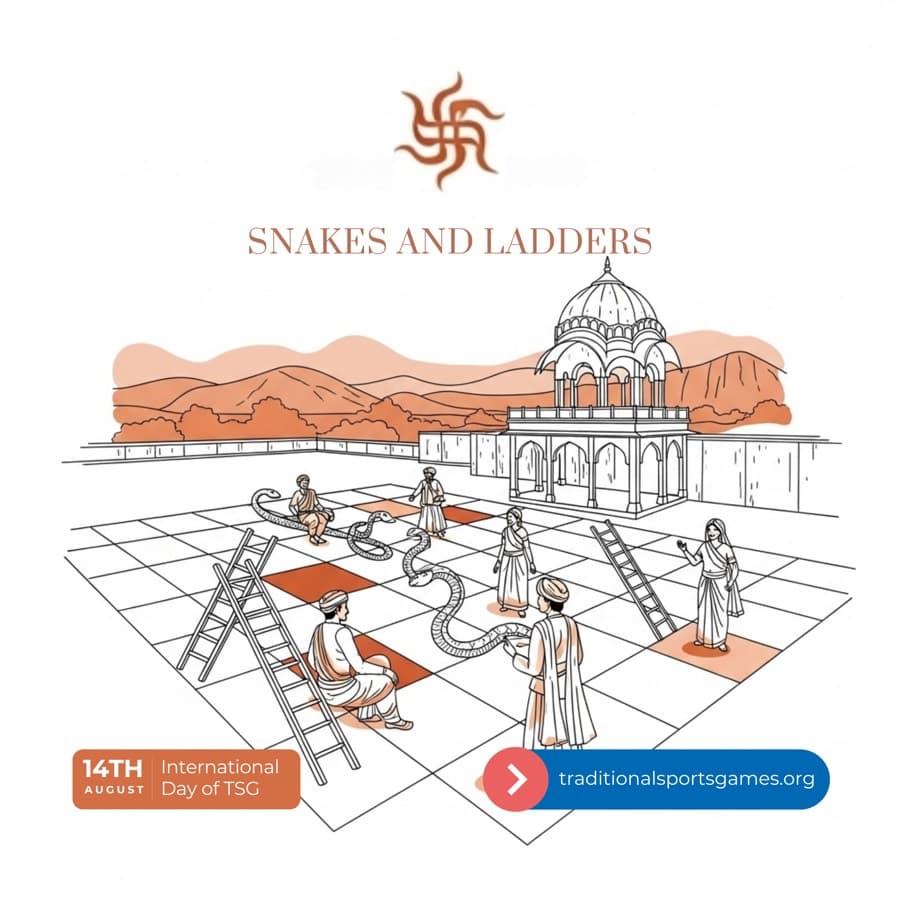
Snakes and Ladders: India’s Timeless Board Game of Morals and Destiny Snakes and Ladders is a traditional board game from India that reflects the philosophical and moral beliefs of ancient culture. Originally called "Moksha Patam," the game was created to teach life lessons about karma, virtue, and the consequences of one’s actions. Today, it is recognized globally as a fun, educational, and value-rich traditional sport and game (TSG). Historical Background Rooted in ancient Indian culture, Snakes and Ladders was more than entertainment—it was a symbolic teaching tool designed by spiritual leaders. The ladders represented virtues like honesty and kindness, while the snakes symbolized vices such as anger and greed. The goal was not just to win but to reach 'moksha' (liberation), embodying India’s indigenous knowledge and intangible heritage. Gameplay Rules
Players take turns rolling a die and moving their token accordingly on a numbered grid (typically 1–100). Ladders allow players to climb ahead, while snakes send them downward. The first player to reach the final square wins, but the game’s essence lies in the journey and moral learning.
Cultural Significance and Social Practice This game fosters intergenerational transmission and is often played by children and elders together. As a social practice, it nurtures ethical behavior, patience, and mindfulness. It serves as a simple, inclusive form of civil society engagement through collective learning and storytelling. Strategic and Educational Value
Teaches decision-making and emotional control. Promotes moral development and cultural reflection. Encourages numeracy and basic counting for young children. Supports inclusive education with simple, universally adaptable rules.
Alignment with UNESCO’s Mission and SDGs Snakes and Ladders supports UNESCO’s goal to protect cultural diversity and safeguard intangible cultural heritage through community participation and education. It contributes to several Sustainable Development Goals (SDGs):
SDG 4 – Quality Education: Promotes values-based and informal learning. SDG 5 – Gender Equality: Accessible and engaging for all genders. SDG 10 – Reduced Inequalities: Offers equitable access to cultural learning regardless of background. SDG 11 – Sustainable Cities and Communities: Revives traditional community engagement tools. SDG 16 – Peace, Justice, and Strong Institutions: Encourages understanding, patience, and ethics. SDG 17 – Partnerships: Builds collaborations between educators, families, and institutions to preserve TSG.
Benefits and Community Impact As a low-cost, accessible game, Snakes and Ladders plays a vital role in youth empowerment and global health by encouraging screen-free interaction, emotional intelligence, and traditional knowledge-sharing. Communities continue to adopt it in classrooms, households, and rehabilitation centers for its versatility and moral significance. Explore Similar Traditional Games
Ludo – India Shisima – Kenya Carpet Game – Middle East
Call to Action: Preserve and Participate Snakes and Ladders is more than a childhood pastime—it is a tool for heritage, peace, and education. Join us in safeguarding such traditional games for future generations by sharing, teaching, and celebrating their cultural depth and universal appeal. Get Involved Benefits of Joining Support ICTSG
About ICTSG: The International Council of Traditional Sports and Games (ICTSG) is committed to preserving, promoting, and reviving indigenous games like Snakes and Ladders. By connecting communities and advocating cultural education, ICTSG plays a vital role in global heritage protection. About Us | History | Contact
When a sport disappears, it is like a language no longer spoken - its stories, values, and lessons risk being lost forever. When we revive a game, we revive a culture.
Khalil Ahmed Khan - President, ICTSG