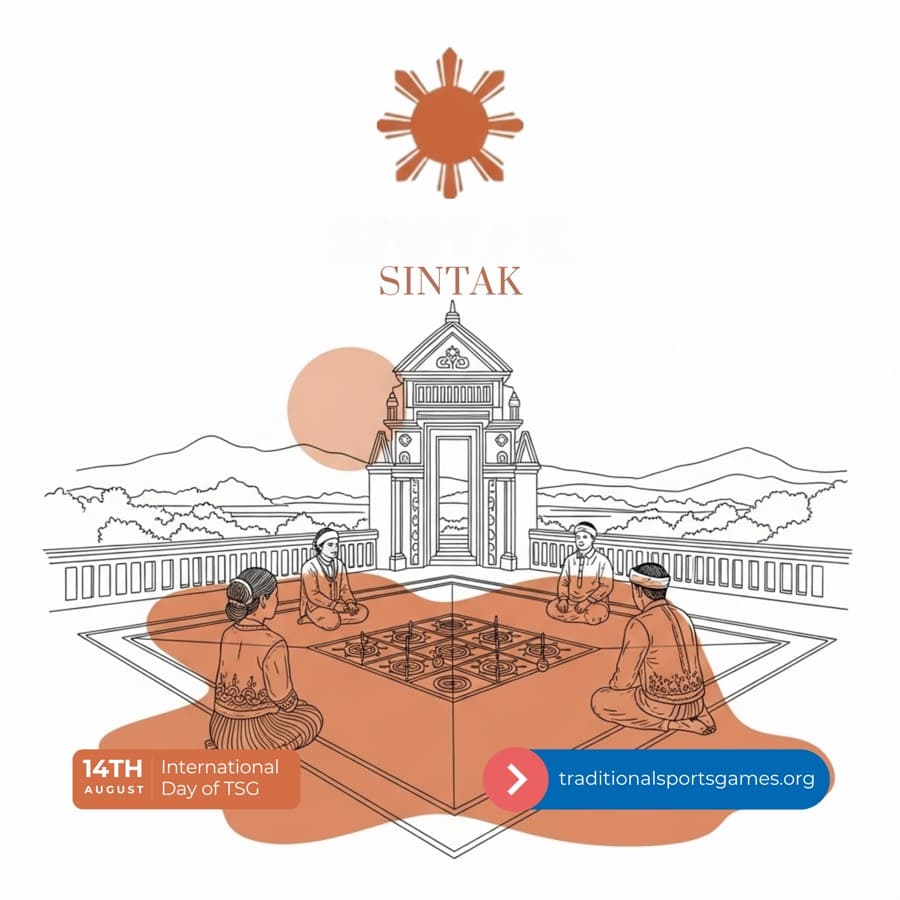
Sintak: Traditional Filipino Throwing Game Reviving Indigenous Wisdom and Community Bonds Sintak is a vibrant traditional Filipino throwing game that has been passed down for generations. Deeply rooted in traditional sports and games (TSG), Sintak is a culturally inclusive activity that embodies indigenous knowledge, promotes intangible heritage, and sustains local customs while encouraging youth empowerment and community participation. Historical Background Sintak traces its origins to rural Filipino communities where children and adults alike would gather to play this simple yet strategic game. Traditionally played on soft earth or sandy ground, Sintak utilizes small pebbles or seeds as projectiles, symbolizing the ingenuity and resourcefulness of native traditions. Gameplay Rules and Mechanics
A shallow pit or marked circle is drawn on the ground, serving as the target zone. Players are given a set number of pebbles or small stones known as “sintak.” From a fixed distance, players take turns flicking or tossing the sintak stones into the pit. Scoring is based on:
Accuracy of stones landing within the target area Number of stones successfully flicked inside per round
The player with the most successful throws wins the game.
Cultural Significance Sintak represents a shared cultural memory and collective heritage of the Filipino people. As an accessible and inclusive game, it promotes civil society engagement, reinforces social practices, and creates a vibrant space for intergenerational transmission of indigenous wisdom and storytelling. Strategic and Educational Value
Improves hand-eye coordination and fine motor skills in children. Encourages spatial reasoning and strategic planning through informal play. Promotes social-emotional skills like patience, turn-taking, and cooperation. Strengthens familial and peer relationships through shared recreational experience. Supports inclusive education through culturally grounded pedagogy.
Community Impact and Sustainability With minimal environmental impact, Sintak utilizes natural and readily available materials, promoting sustainable development and eco-conscious recreation. Reviving this game creates opportunities for cultural festivals, school events, and community-based activities that enrich local identity and pride. Similar Traditional Games Around the World
Holen (Philippines – Marble Game) Kabaddi (South Asia – Tag Sport) Gilli Danda (South Asia – Bat and Ball)
These games reflect diverse yet connected traditions that use simple objects for recreational learning and community-building. Supporting UNESCO’s Sustainable Development Goals (SDGs)
SDG 4: Delivers quality, inclusive education through cultural literacy. SDG 5: Encourages equal participation of all genders in traditional games. SDG 10: Supports equity by valuing marginalized cultural practices. SDG 11: Revitalizes sustainable communities through indigenous games. SDG 16: Builds peaceful and inclusive community engagement. SDG 17: Strengthens partnerships for heritage safeguarding and youth development.
Call to Action Reclaim the joy, strategy, and heritage of Sintak. Join ICTSG and global advocates in reviving traditional games to inspire future generations. Let's celebrate cultural identity, community resilience, and inclusive education—one game at a time. Get Involved Benefits of Joining Support ICTSG
About ICTSG: ICTSG supports the revival and protection of traditional sports and games worldwide. Through education, collaboration, and heritage safeguarding, we foster community health, youth inclusion, and cultural sustainability. About Us | History | Contact
When a sport disappears, it is like a language no longer spoken - its stories, values, and lessons risk being lost forever. When we revive a game, we revive a culture.
Khalil Ahmed Khan - President, ICTSG