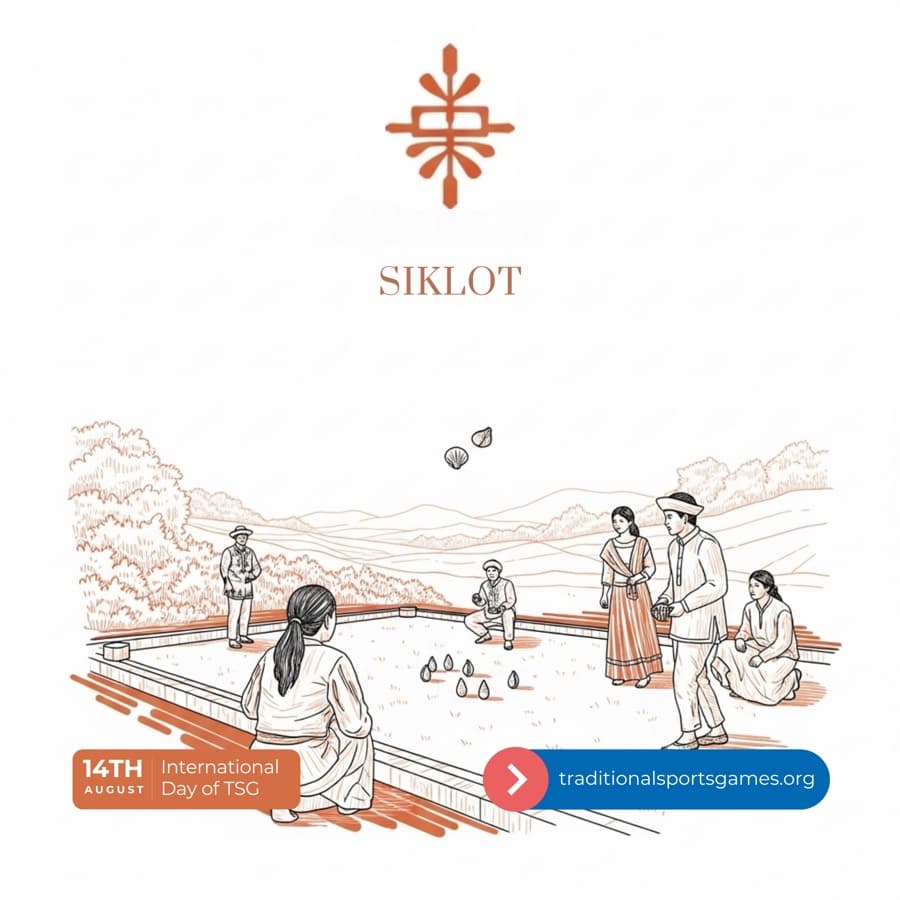
Siklot: Philippine Throwing Game Nurturing Indigenous Wisdom, Unity & Cultural Legacy Siklot is a treasured traditional sport and game (TSG) from the Philippines that blends precision, local ingenuity, and play. As an important form of indigenous knowledge and intangible heritage, it fosters intergenerational transmission, inclusive education, and strong community bonds. Historical Background Originating in rural Filipino villages, Siklot was traditionally played during afternoons or festive gatherings. Players used plant-based throwing discs—often carved from coconut shells or bamboo rim—and passed techniques from grandparents to grandkids. It stands as a resilient example of folk creativity and resourcefulness. Gameplay Rules and Mechanics
Each player holds a flat disc (2–4 inches wide), made from bamboo or shell materials. A target circle is drawn in the dirt, approximately 2 meters away from the throwing line. Players alternate throwing their discs, aiming to land closest to or within the circle. Scoring systems can vary:
Points for disc inside the circle Extra points for closest distance
Rounds continue until a player reaches a set point total or wins best of rounds.
Cultural Significance Beyond sport, Siklot is a vehicle for social practices and collective enjoyment. In community gatherings and local events, it promotes civil society engagement, respect for traditions, and friendly competition. Its inclusive nature encourages participation across ages and backdrops. Strategic and Educational Value
Develops fine motor control, precision, and hand-eye coordination. Teaches estimation, geometry, and spatial awareness through informal learning. Promotes mental focus, patience, and emotional regulation. Fosters youth empowerment by encouraging skill mastery and self-confidence. Provides a foundation for respect, turn-taking, and healthy competition.
Community Impact and Sustainability As a game based on biodegradable materials, Siklot supports environmental mindfulness and sustainable traditions. It strengthens community participation as players gather informally in public spaces, schools, and festivals—reviving cultural identity and shared purpose within communities. Connections to Similar Traditional Games Worldwide
Boules/Pétanque (France) Newton's Apples (Americas) La Pierre (France/Savoy)
Such global parallels demonstrate the universal value of simple, skill-based tossing games across cultures. Supporting UNESCO’s Sustainable Development Goals
SDG 4: Enhances inclusive education through outdoor play and cultural learning. SDG 5: Encourages gender-inclusive play in community settings. SDG 10: Reduces cultural inequity by recognizing folk traditions. SDG 11: Builds sustainable, culturally rich communities. SDG 16: Promotes peaceful interaction and structured play. SDG 17: Fosters global partnerships to safeguard intangible heritage.
Call to Action Siklot is more than a backyard game—it’s a living cultural asset. Join the global movement with ICTSG to revive, celebrate, and sustain traditional sports for a more inclusive, healthy, and culturally diverse future. Get Involved Benefits of Joining Support ICTSG
About ICTSG: ICTSG champions traditional sports and games, fostering cultural resilience, community health, and global solidarity through heritage-based education and inclusive practices. About Us | History | Contact
When a sport disappears, it is like a language no longer spoken - its stories, values, and lessons risk being lost forever. When we revive a game, we revive a culture.
Khalil Ahmed Khan - President, ICTSG