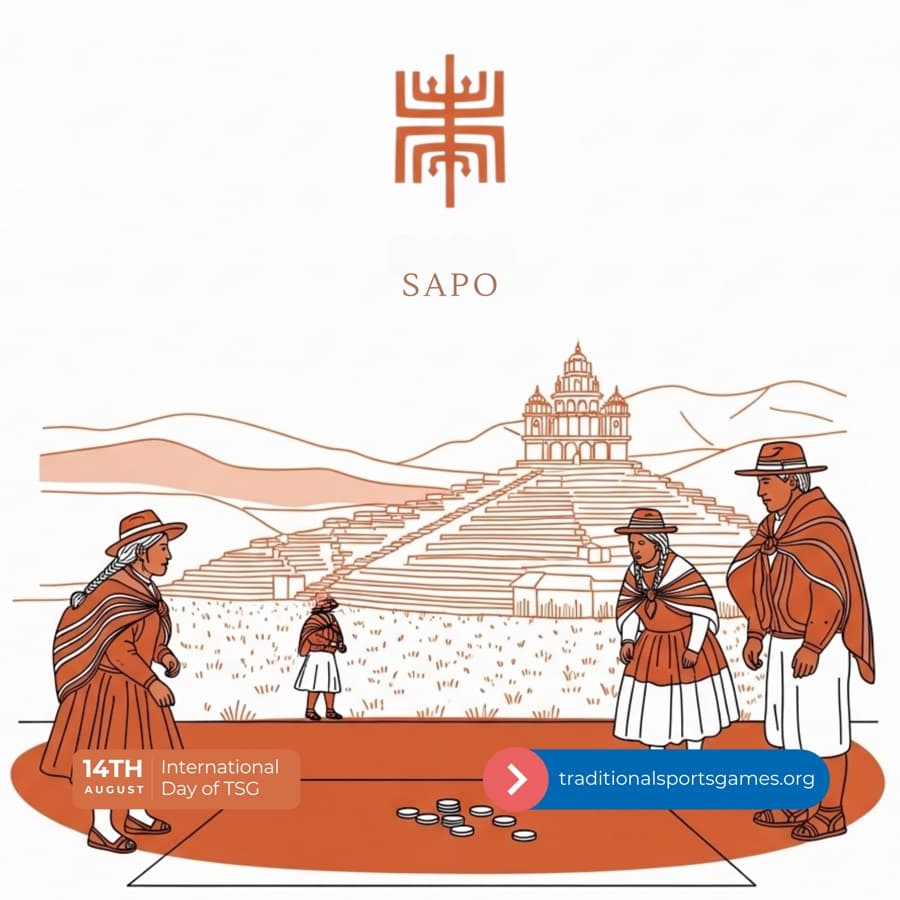
Sapo: Traditional Pub Game of Peru Sapo is a culturally rich traditional game from Peru, often played in pubs or social gatherings, where players aim to toss brass chips into holes on a wooden board — with the "toad" hole being the most prestigious target. Its origins trace back to the ancient Inca civilization and it remains especially popular in Lima and Cusco. Historical and Cultural Significance The game’s roots are believed to stem from the Inca tradition of throwing stones into water to invoke prosperity. Over centuries, Sapo evolved into a recognized form of intangible heritage and indigenous knowledge, encapsulating Andean beliefs and Peruvian social practices. Today, Sapo is much more than a recreational activity — it is a channel for intergenerational transmission, community participation, and cultural safeguarding, aligning with the International Council of Traditional Sports and Games (ICTSG) and UNESCO’s efforts to preserve heritage. Gameplay and Rules
A traditional wooden Sapo board has multiple holes, each with different point values. The central feature is a metal toad figure with an open mouth — the highest scoring hole. Players stand at a distance and toss brass coins or chips towards the board. Scoring is based on where the chips land — the toad’s mouth yields the most points. Games are played in rounds, either solo or in teams, encouraging social engagement.
Strategic and Social Value Though based on luck and aim, Sapo also requires precise technique and experience. The game fosters social bonding, peaceful competition, and inclusive participation — making it a living example of civil society engagement and performing arts in traditional sports. Educational and Developmental Benefits
SDG 4 (Quality Education): Promotes awareness of cultural heritage through active learning. SDG 5 (Gender Equality): Accessible to all genders in community and school events. SDG 10 (Reduced Inequalities): Encourages equal participation across age and income groups. SDG 11 (Sustainable Communities): Strengthens cultural identity in local urban and rural settings. SDG 16 (Peace & Inclusion): Encourages respectful gameplay and social harmony. SDG 17 (Partnerships): Links institutions and communities for heritage safeguarding.
Similar Games from Around the World Sapo shares a communal and skill-based nature with other traditional games such as:
Angkun (Cambodia) Balle au Tambourin (France) Behempas (Indonesia)
Call to Action Preserving Sapo is a shared responsibility. Let us work together to safeguard this unique game for future generations. Whether you’re an educator, cultural advocate, or community member — your role in promoting traditional sports matters. Get Involved Benefits of Joining Support ICTSG About ICTSG: The International Council of Traditional Sports and Games (ICTSG) is dedicated to preserving, promoting, and revitalizing traditional sports and games as powerful tools for education, peace, and sustainable development.
About Us History Contact
When a sport disappears, it is like a language no longer spoken - its stories, values, and lessons risk being lost forever. When we revive a game, we revive a culture.
Khalil Ahmed Khan - President, ICTSG