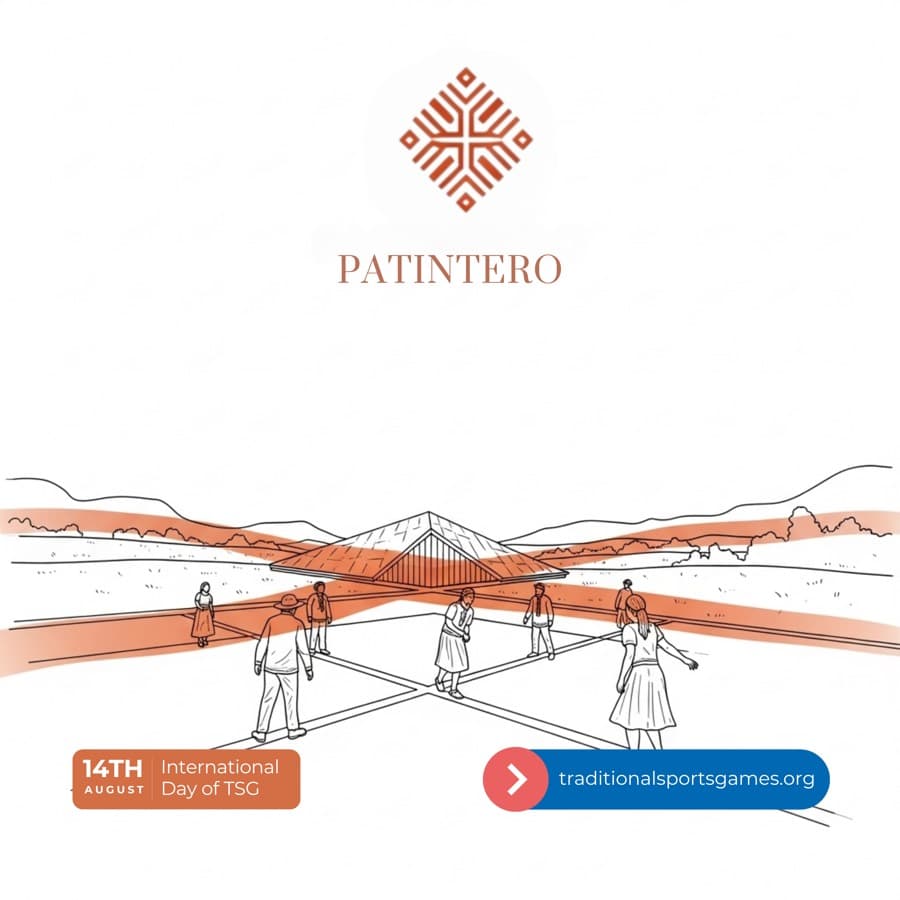
Patintero: A Traditional Filipino Game of Agility, Strategy, and Cultural Transmission Patintero, also known as "Crossing Lines," is one of the most beloved traditional sports and games (TSG) in the Philippines. It combines physical agility, teamwork, and critical thinking, making it a staple of Filipino childhood and an important expression of intangible heritage and indigenous knowledge. Historical Background Rooted in pre-colonial Filipino society, Patintero was commonly played on moonlit nights by children in barangay neighborhoods. Traditionally drawn with chalk or charcoal on village streets, the game embodies the Filipino values of camaraderie, respect, and strategic competition. As a social practice, it is deeply embedded in community life and intergenerational transmission. Gameplay Rules
The game is played on a rectangular grid drawn on the ground, usually with 4–6 horizontal and 1 vertical line dividing the space into equal sections. Two teams compete: taggers and runners. Taggers guard the lines while runners attempt to cross the grid back and forth without being tagged. Only feet on the lines are allowed for taggers; stepping outside invalidates their tag. Teams switch roles after all runners are tagged or after a set time.
Cultural Significance Patintero is more than a game—it is a performance of heritage, resilience, and collective identity. It teaches children cooperation, patience, and strategic planning. It highlights how performing arts and traditional play serve as tools of cultural learning and expression. Strategic and Physical Benefits
Enhances spatial awareness and reflexes. Promotes team strategy and quick decision-making. Builds endurance and coordination in youth. Supports inclusive participation regardless of gender or skill level.
Educational and Community Value Aligned with UNESCO’s Sustainable Development Goals (especially SDG 4, 5, 10, 11, 16, and 17), Patintero fosters:
Inclusive education by integrating play with values and leadership training. Youth empowerment through non-digital engagement and cultural pride. Global health by encouraging physical activity and outdoor recreation. Civil society engagement by involving parents, elders, and peers in communal play.
Comparative Cultural Context Many global communities share similar traditional games rooted in line-crossing and tagging strategies. Explore:
Kho Kho – India Surr – Pakistan Shinney – North America
Safeguarding Patintero for Future Generations Revitalizing traditional games like Patintero contributes to safeguarding cultural diversity and intangible heritage. Initiatives by the International Council of Traditional Sports and Games (ICTSG) promote these values through global partnerships, education, and community-based preservation. Get Involved Benefits of Joining Support ICTSG
About ICTSG: The International Council of Traditional Sports and Games (ICTSG) works globally to safeguard, promote, and support traditional games as tools for cultural exchange, youth development, and heritage preservation. About Us | History | Contact
When a sport disappears, it is like a language no longer spoken - its stories, values, and lessons risk being lost forever. When we revive a game, we revive a culture.
Khalil Ahmed Khan - President, ICTSG