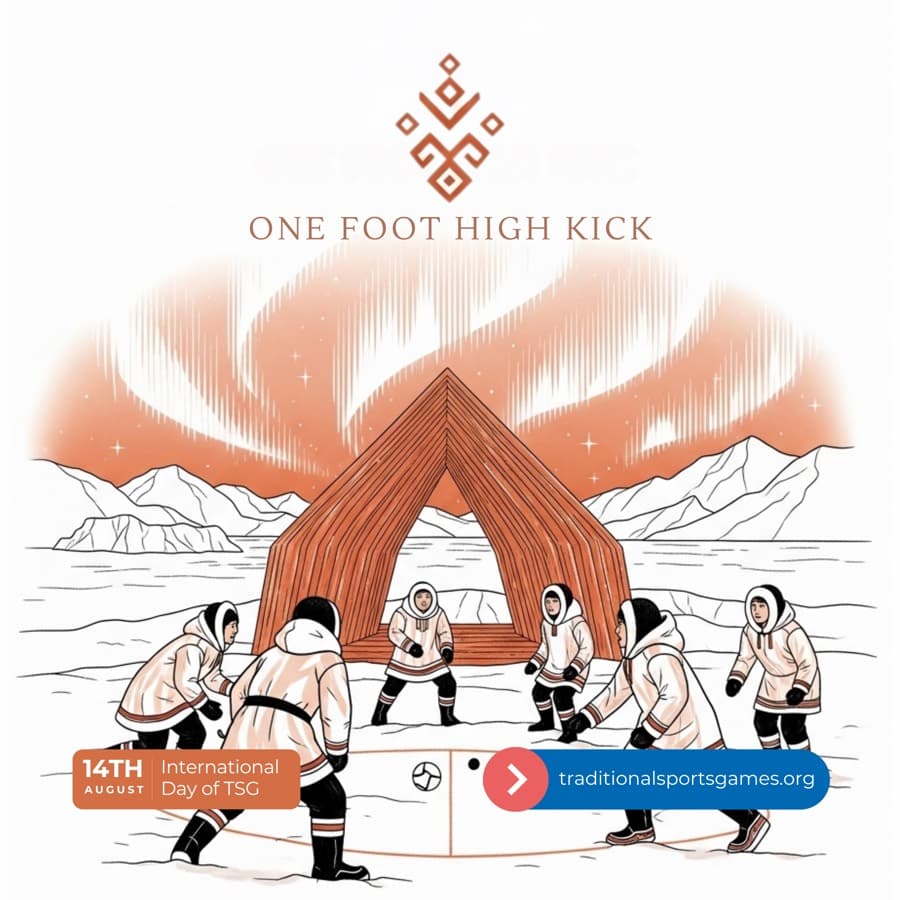
One-Foot High Kick: Celebrating Indigenous Balance and Strength through Arctic Traditional Games The One-Foot High Kick is a powerful representation of Indigenous ingenuity, resilience, and athleticism, rooted in the circumpolar regions of North America. Practiced by Inuit and other Arctic peoples, this game involves jumping, running, walking, balancing, and kicking—all in a single motion. As a respected traditional sport and game (TSG), it reflects generations of indigenous knowledge and stands as a living example of intangible cultural heritage safeguarded through sport. Historical Background Originally rooted in Inuit hunting traditions, the One-Foot High Kick was used to communicate a successful hunt from afar. The kick's height represented the hunter's success and was a visual signal to the community. Over time, it evolved into a cultural competition during celebrations, including the Arctic Winter Games. The game has become a globally recognized element of Indigenous heritage and is still taught and played through intergenerational transmission. Gameplay and Rules Players jump off both feet and attempt to kick a suspended target with one foot, landing on that same foot without losing balance. The target is raised progressively higher as the game continues.
Performed indoors or outdoors using traditional or modern materials. Players must land on the same foot they used to kick the target. Balance, leg strength, and coordination are essential. Judges assess accuracy, control, and height of the kick.
Cultural and Strategic Importance This game is more than athletic display—it is a social practice embedded with meaning. The One-Foot High Kick serves as a bridge between generations, preserving language, symbolism, and ancestral skills. Its strategic aspects emphasize discipline, patience, and precision. Its cultural value lies in the collective pride and identity it nurtures among Indigenous youth. Physical and Educational Benefits
Improves core strength and muscle control. Enhances balance, coordination, and agility. Supports mental focus and physical timing. Encourages inclusive education through traditional knowledge-sharing. Boosts youth confidence and group cooperation in school and community settings.
Community Participation and Legacy Across Arctic communities, the One-Foot High Kick continues to unite youth and elders through celebration and competition. It has been integrated into educational programs, public events, and youth workshops, fostering civil society engagement and cultural continuity. Alignment with UNESCO SDGs This traditional sport aligns with key UNESCO Sustainable Development Goals:
SDG 4 – Quality Education: Promotes traditional learning and skills development. SDG 5 – Gender Equality: Accessible to all genders equally across Arctic regions. SDG 10 – Reduced Inequalities: Highlights underrepresented Indigenous sports. SDG 11 – Sustainable Cities and Communities: Preserves local cultural identities. SDG 16 – Peace and Strong Institutions: Strengthens local traditions through participatory games. SDG 17 – Partnerships for the Goals: Encourages cross-cultural exchange and partnerships through sport diplomacy.
Global Parallels – Similar Traditional Games
Pelota Purépecha (Mexico) – Involves coordinated movement and agility. Ulak Tartysh (Central Asia) – Demands balance and strategic speed on horseback. Sepak Takraw (Southeast Asia) – A foot-based jumping game requiring timing and precision.
Call to Action – Preserve, Participate, and Educate The One-Foot High Kick is more than sport—it is an Indigenous legacy that continues to thrive. Support its preservation, education, and participation by engaging your community, schools, and local youth programs. These traditional games are vital for a more culturally aware and connected future. Get Involved Benefits of Joining Support ICTSG About ICTSG: The International Council of Traditional Sports and Games (ICTSG) is dedicated to preserving, promoting, and revitalizing traditional sports and games as powerful tools for education, peace, and sustainable development.
About Us History Contact
When a sport disappears, it is like a language no longer spoken - its stories, values, and lessons risk being lost forever. When we revive a game, we revive a culture.
Khalil Ahmed Khan - President, ICTSG