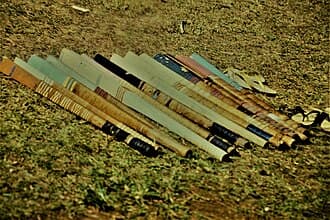
The Pacific Ocean region is home to some of the world's most distinctive and least-documented traditional sports and games. Among these, Kiklli Miklii — a traditional ball sport practised in island communities across Micronesia and Polynesia — represents a form of traditional play that is deeply embedded in community life, seasonal celebration, and the social fabric of Pacific cultures.
Pacific Traditional Sports: A World Apart
The Pacific Islands' traditional sports ecosystem is shaped by the maritime environment that defines life in Oceania. Many traditional sports are connected to navigation, fishing, agriculture, and the seasonal rhythms of island life. They are played during festivals and ceremonial gatherings, often serving social functions that extend far beyond competition — conflict resolution, marriage ceremonies, inter-island diplomacy, and rites of passage.
Kilikiti: Samoa's National Sport
Among the Pacific's most celebrated traditional sports is Kilikiti — Samoan cricket — which has been played in Samoa for over 150 years following its introduction by British missionaries and its radical transformation by Samoan communities. Kilikiti is played with teams of unlimited size, handmade bats of distinctive triangular shape, and a rubber ball, on any convenient open space. The game is accompanied by music, dance, and elaborate feasting, making it one of the world's most purely celebratory sporting forms.
ICTSG and Pacific Traditional Sports
The International Council of Traditional Sports and Games' Pacific region is coordinated by Harko H. Brown, whose work documents and promotes the full breadth of Pacific sporting heritage — from Maori waka ama (outrigger canoe racing) and traditional surfing in Hawaii to indigenous games of Melanesia and Micronesia.
ICTSG works with the Secretariat of the Pacific Community and island nation governments to ensure that Pacific traditional sports receive recognition and protection equivalent to the global profile of their cultural significance.
Cultural Dimensions of Pacific Traditional Sports
In Pacific cultures, traditional sports are rarely separated from their social, spiritual, and environmental contexts. Play is a form of teaching: teaching young people their place in community hierarchies, their relationships to the land and sea, and the values — generosity, resilience, cooperative excellence — that sustain island life in a vast ocean.
Preserving these games is not merely a matter of cultural curiosity. It is an act of environmental and social intelligence, maintaining living systems of knowledge about how human communities survive and flourish in one of the world's most demanding ecosystems.
When a sport disappears, it is like a language no longer spoken - its stories, values, and lessons risk being lost forever. When we revive a game, we revive a culture.
Khalil Ahmed Khan - President, ICTSG