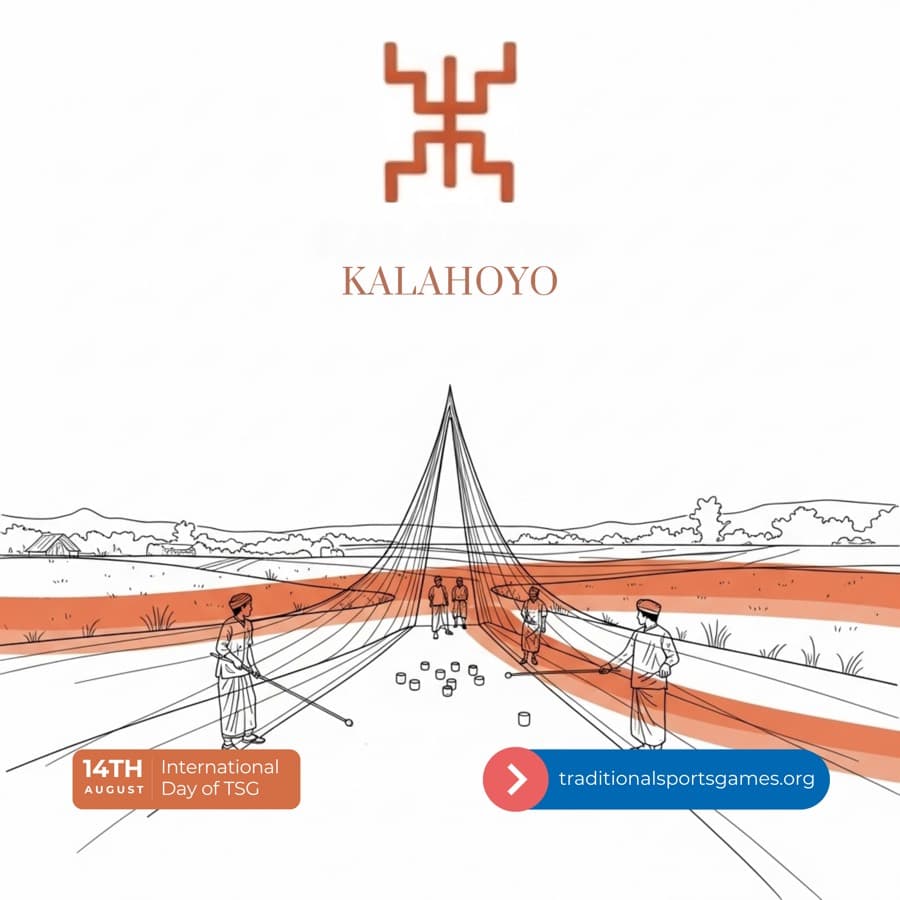
Kalahoyo: Reviving the Filipino Throwing Game that Preserves Indigenous Heritage and Cultural Unity Kalahoyo is a traditional sport and game (TSG) from the Philippines that encapsulates the beauty of indigenous simplicity and strategic play. Often enjoyed by Filipino children in rural communities, it involves the use of small stones or objects thrown into a hole, emphasizing precision, timing, and focus. As an intangible heritage, Kalahoyo is deeply rooted in Filipino community life, reinforcing social practices, inclusive education, and intergenerational transmission of indigenous knowledge. Recognizing its educational and cultural value aligns with UNESCO’s broader mission of safeguarding cultural diversity and sustainable development. Historical Background Historically, Kalahoyo was popular among children in provinces where playtime involved minimal resources. A shallow hole was dug in the ground, and players used small stones, nuts, or shells as throwing pieces. The game was commonly played in schoolyards or open fields, often passed down from older siblings or grandparents. Gameplay Rules and Mechanics
Dig a shallow hole (around 4 inches in diameter) in the center of a play area. Each player chooses a unique throwing object—typically a stone or a shell. Players take turns throwing their object from a fixed distance, aiming to land it directly into the hole. The closest or most accurate throw wins, with different variations including elimination rounds or scoring systems. The game continues in rounds, testing accuracy and consistency.
Cultural and Educational Significance Kalahoyo teaches discipline, patience, and observational skills. It promotes community participation and is often used as a platform for youth empowerment through cultural learning. Elders passing the game to the younger generation strengthens intergenerational bonds and honors oral tradition. Strategic Aspects and Skill Development
Improves hand-eye coordination and spatial judgment. Teaches risk assessment and reward-based decision-making. Fosters patience, mental focus, and healthy competition. Encourages respectful group dynamics and turn-taking. Stimulates creative problem-solving using local resources.
Community Impact and Safeguarding Heritage As a game that requires no commercial equipment, Kalahoyo supports sustainable practices and local knowledge. It encourages children to engage with their environment, promoting global health through active, outdoor play while cultivating pride in cultural identity. Global Connections and Similar Games Traditional games like Kalahoyo are found worldwide, reflecting shared global values. Similar games include:
Kokla Chapati (India) Izimbungulu (South Africa) La Pierre (France)
Contributions to UNESCO’s SDGs
SDG 4: Enhances cultural learning and lifelong skills. SDG 5: Provides equitable participation across gender. SDG 10: Reduces inequality through shared heritage. SDG 11: Promotes inclusive and resilient communities. SDG 16: Encourages peaceful, inclusive play environments. SDG 17: Fosters global partnerships to protect indigenous heritage.
Call to Action: Preserve and Promote Help us keep the spirit of Kalahoyo alive. Traditional games are not relics—they are living bridges to a more inclusive and sustainable future. Join ICTSG in preserving indigenous sports, fostering inclusive education, and empowering youth worldwide. Get Involved Benefits of Joining Support ICTSG
About ICTSG: ICTSG is a global alliance committed to preserving traditional sports and games (TSGs), fostering unity, and enhancing community wellbeing through education and heritage-based recreation. About Us | History | Contact
When a sport disappears, it is like a language no longer spoken - its stories, values, and lessons risk being lost forever. When we revive a game, we revive a culture.
Khalil Ahmed Khan - President, ICTSG