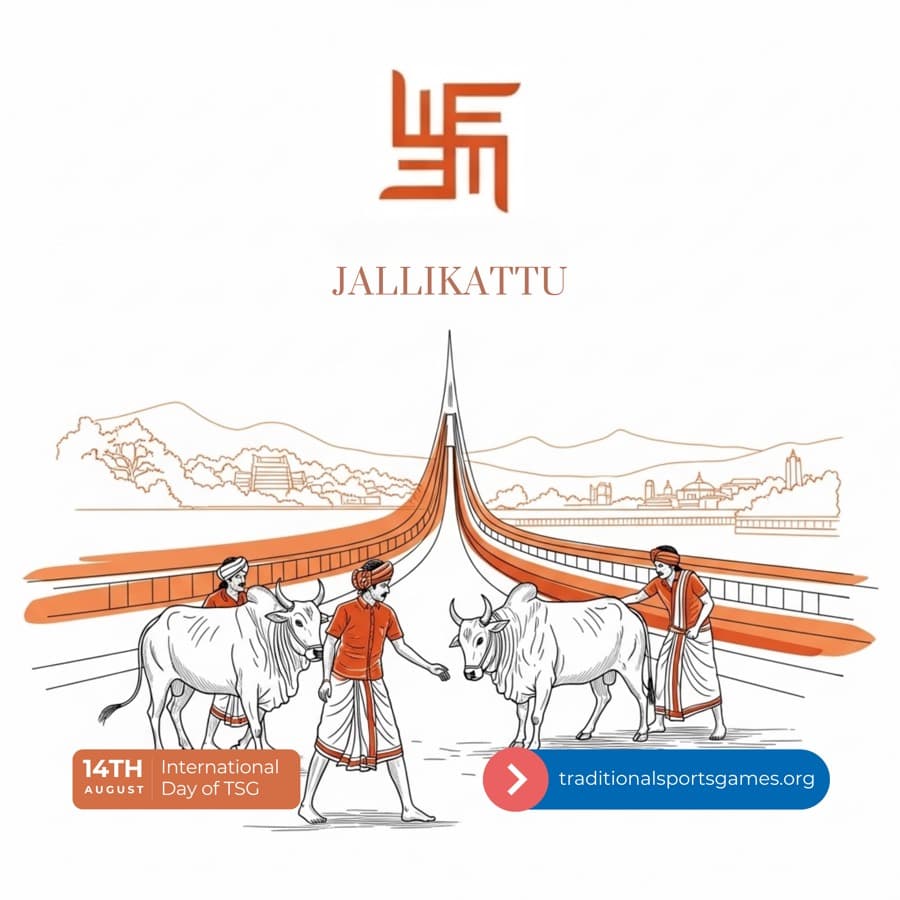
Jallikattu: The Traditional Bull-Taming Festival of Tamil Nadu Jallikattu is a revered traditional sport and game (TSG) of Tamil Nadu, India, that showcases a unique blend of indigenous knowledge, courage, and cultural identity. Recognized for its deep intangible heritage value, it aligns with UNESCO’s mission to safeguard ancestral practices through community participation and intergenerational continuity. Historical and Cultural Background With historical references dating back over 2,000 years, Jallikattu is celebrated annually during the Pongal festival, honoring the agrarian roots of Tamil culture. It symbolizes valor, honor, and the bond between rural communities and native bull breeds. The event is a powerful expression of cultural diversity and social practice unique to southern India. Gameplay and Structure
The game takes place in an open arena or village square during Pongal. Specially bred bulls are released one by one from a narrow gate called the "Vaadi Vaasal." Participants, known as "tamarai," attempt to embrace the bull’s hump and hold on for a specified time or distance. The bull is never harmed; the event emphasizes respect and tradition over violence. Victory lies in both agility and understanding of bull behavior—hallmarks of indigenous sportsmanship.
Cultural Significance Jallikattu is more than sport—it is a celebration of agricultural heritage, the preservation of indigenous cattle breeds like the Kangayam and Pulikulam, and a reflection of rural pride. It promotes intergenerational transmission of traditional skills and strengthens community identity. Educational Value and Social Impact
Inclusive Education: Encourages youth to engage with heritage through participatory learning. Youth Empowerment: Builds confidence, discipline, and leadership through traditional practice. Global Health: Fosters physical activity in a cultural setting, reducing sedentary lifestyles. Civil Society Engagement: Acts as a community festival, uniting diverse stakeholders in cultural celebration.
UNESCO Sustainable Development Goals (SDGs) Alignment
SDG 4 – Quality Education: Experiential cultural learning for youth. SDG 5 – Gender Equality: Increasing participation of women in planning and festival organization. SDG 10 – Reduced Inequalities: Promotes rural inclusion and equitable representation. SDG 11 – Sustainable Cities and Communities: Strengthens cultural resilience through traditional festivals. SDG 16 – Peace and Justice: Non-violent, regulated engagement encouraging respect and unity. SDG 17 – Partnerships for Goals: Collaboration between heritage bodies, NGOs, and cultural institutions.
Strategic and Ethical Considerations Modern Jallikattu is governed by strict safety regulations and ethical treatment of animals, supported by local governments and cultural custodians. The event is an evolving platform for cultural expression that blends tradition with contemporary values of animal welfare and civil discourse. Similar Traditional Sports Across Regions
Mukna – Indigenous wrestling from Manipur, India Kho Kho – Indian team chase game with rural roots Kalaripayattu – Martial art of Kerala
Community Participation and Heritage Safeguarding By involving elders, youth, and local institutions, Jallikattu becomes a powerful tool for safeguarding intangible heritage. It serves as a vibrant example of how social practices and performing arts can reinforce community bonds, especially in underrepresented rural areas. Call to Action Help preserve and celebrate Jallikattu as a beacon of cultural endurance and human-animal harmony. Join hands with communities, educators, and global advocates to keep traditional sports alive for future generations. Get Involved Benefits of Joining Support ICTSG
About ICTSG The International Council of Traditional Sports and Games (ICTSG) promotes cultural sustainability by safeguarding traditional games. Supporting youth, peace, and civil society engagement, ICTSG unites cultures through sport. Explore our About Us, History, and Contact.
When a sport disappears, it is like a language no longer spoken - its stories, values, and lessons risk being lost forever. When we revive a game, we revive a culture.
Khalil Ahmed Khan - President, ICTSG