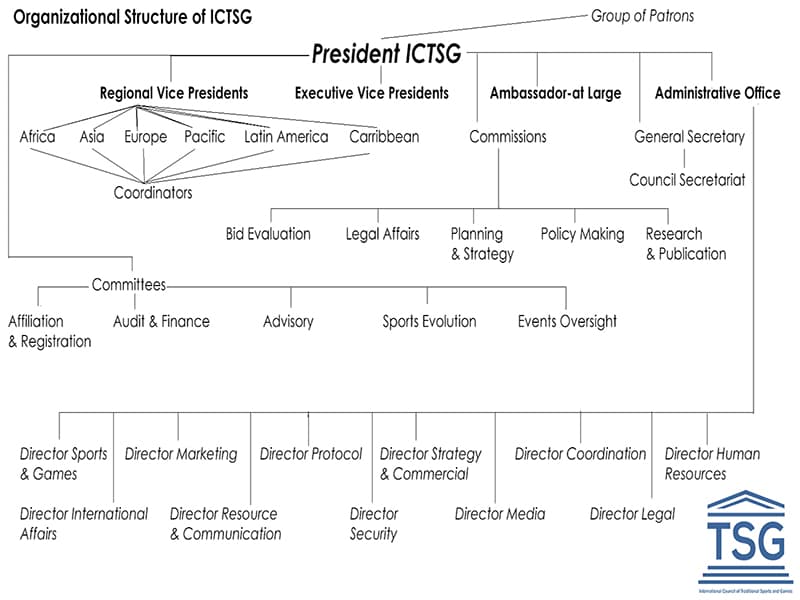
The International Council of Traditional Sports and Games (ICTSG) is the world's leading organization dedicated to the preservation, promotion, and global recognition of traditional sports and games as expressions of living cultural heritage. Established in 2018 following more than two decades of UNESCO-facilitated consultations, ICTSG is headquartered in Hollywood, Florida, USA, and operates regional networks across Africa, Asia, Europe, the Americas, the Arab World, and Oceania.
What is ICTSG?
ICTSG serves as the global platform through which traditional sports communities, national governments, academic institutions, and international organizations collaborate to document, safeguard, and celebrate the world's rich diversity of traditional and indigenous sporting practices.
The organization was formally constituted at the Fourth Collective Consultation on Traditional Sports and Games, held in Istanbul, Turkey, in August 2018. At that historic gathering, representatives from over 40 countries ratified ICTSG's founding statutes and elected its first governing leadership. Khalil Ahmed Khan of Pakistan was elected as President, a role he continues to hold. Joel Bouzou, four-time Olympic Modern Pentathlon competitor and founder of Peace and Sport, serves as Ambassador-at-Large.
Why Traditional Sports and Games Matter
Traditional sports and games are far more than recreational activities. They are vessels of intangible cultural heritage that encode a community's values, history, ecological knowledge, and social bonds. A game of Kabaddi in South Asia, a bout of traditional wrestling in Mongolia's Naadam festival, a round of Capoeira in Brazil, or a session of Pencak Silat in Indonesia -- each carries centuries of tradition and identity.
When a traditional sport disappears, it can signal the erosion of the culture that gave it life. Conversely, reviving and sustaining a traditional sport strengthens community cohesion, transmits cultural knowledge across generations, and contributes to the diversity of humanity's shared cultural heritage.
ICTSG was founded on the conviction that these living traditions deserve the same degree of international recognition and protection accorded to tangible cultural monuments.
ICTSG's Core Functions
Documentation: ICTSG maintains the world's most comprehensive online encyclopedia of traditional sports and games, cataloguing over 160 disciplines by region, cultural group, rules, history, and at-risk status. This archive serves as a global reference for researchers, governments, and communities.
Advocacy and Policy: ICTSG engages with UNESCO, the United Nations, the International Olympic Committee, World Games, and national governments to advocate for the inclusion of traditional sports in cultural heritage legislation, school curricula, and national sports policies.
Elevation: Through the SRETS Framework (Six-Stage Elevation Framework for Traditional Sports), ICTSG provides a structured pathway for elevating traditional sports from community-level practice to international recognition, up to and including UNESCO Intangible Cultural Heritage listing.
Capacity Building: ICTSG supports the establishment of National Chapters and Regional Bodies, equipping communities with the tools, training, and institutional frameworks needed to preserve their traditional sporting heritage independently.
Events and Celebration: ICTSG coordinates international events, including the annual TSG Day on August 14, the World Martial and Vigorous Culture Festival (WMVC), and regional championships that bring traditional athletes together across borders.
ICTSG and the United Nations 2030 Agenda
ICTSG's work is explicitly aligned with the United Nations Sustainable Development Goals (SDGs). Traditional sports contribute to SDG 3 (Good Health and Wellbeing), SDG 4 (Quality Education), SDG 10 (Reduced Inequalities), SDG 11 (Sustainable Communities), and SDG 17 (Partnerships) through ICTSG's global network of over 50 National Chapters and dozens of international partner organizations.
Join the Movement
Whether you are a government seeking to develop a national TSG policy, a community wishing to document and protect your ancestral games, a researcher studying intangible cultural heritage, or simply someone who loves traditional sports, ICTSG welcomes your participation.
When a sport disappears, it is like a language no longer spoken - its stories, values, and lessons risk being lost forever. When we revive a game, we revive a culture.
Khalil Ahmed Khan - President, ICTSG