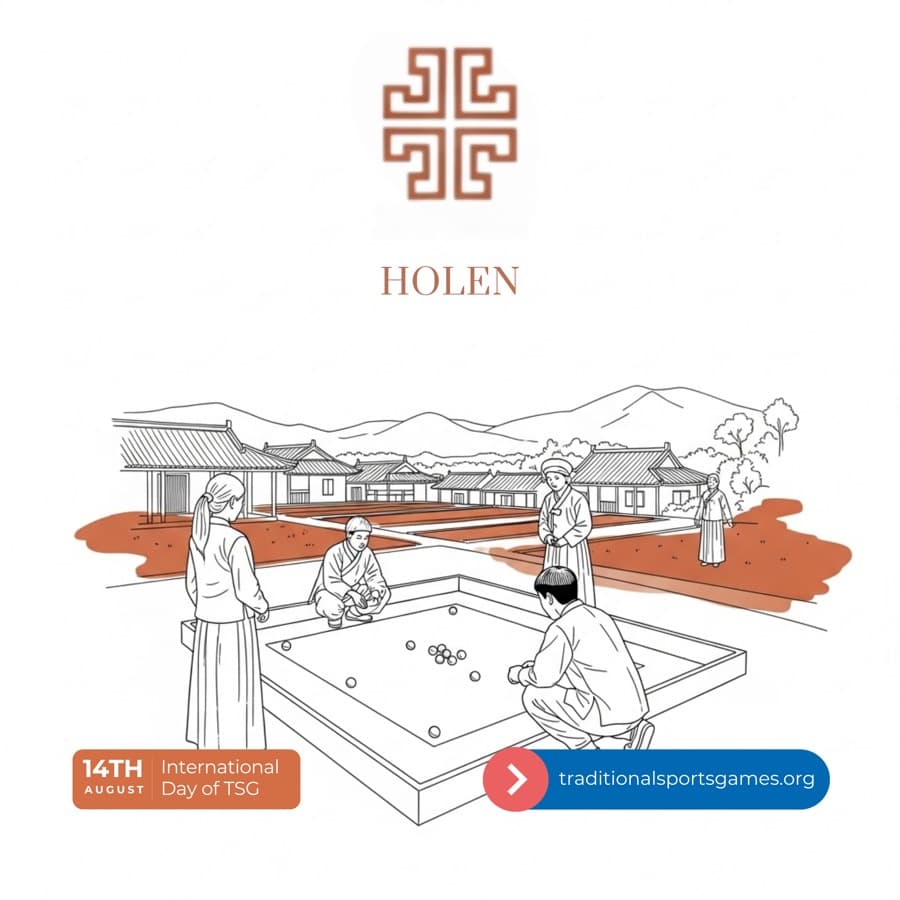
Holen: The Filipino Marble Game Preserving Indigenous Play and Community Bonds Holen is a beloved traditional sport and game (TSG) in the Philippines, played primarily by children using small glass marbles. This simple yet strategic game is more than entertainment—it embodies indigenous knowledge, intangible cultural heritage, and values of precision, sportsmanship, and community participation. Historical Background Holen has roots in rural Filipino communities, where children would gather in unpaved areas, especially near schools or under shaded trees, to play using hand-dug holes and glass marbles. The name "Holen" itself is derived from the Filipino word for "marbles" and was influenced by traditional Western games, adapted to local culture and materials. Gameplay Rules and Format
Players each contribute an agreed number of marbles to the “pot.” A small hole is dug in the ground — usually 2 to 3 inches wide. Players take turns flicking their marbles toward the hole or towards the opponent’s marbles to hit and claim them. Accuracy and flicking techniques determine a player’s success in knocking marbles into the hole or out of the play area. The winner collects the most marbles or achieves a predefined objective.
Cultural Significance Holen reinforces social practices such as turn-taking, rule observance, and respectful interaction. It strengthens bonds between children of various backgrounds, and its low-cost nature makes it accessible across social classes, promoting inclusive education and youth empowerment. Strategic and Educational Value
Enhances fine motor skills and hand-eye coordination. Teaches angles, force, and distance estimation through experiential learning. Instills patience, focus, and competitive ethics. Promotes intergenerational transmission as older children or adults often introduce the game to younger players. Provides a foundation for cooperative and civil engagement during recreational play.
Community Impact and Sustainability As a sustainable game requiring minimal materials, Holen supports environmental awareness and localized recreation. It fosters cultural diversity and civil society engagement by encouraging interaction among youth in public and communal spaces. The revival of such games contributes to safeguarding intangible heritage aligned with UNESCO’s cultural mission. Connections to Similar Global Games Holen mirrors other marble-based traditional games from around the world, reinforcing our shared global heritage. Examples include:
Billes (France) Kanicas (Spain) Kanche (India)
Contributing to UNESCO’s Sustainable Development Goals
SDG 4: Promotes inclusive, equitable education through cultural learning. SDG 5: Encourages gender participation in community-based games. SDG 10: Reduces inequality by embracing indigenous and rural play. SDG 11: Builds sustainable communities through heritage conservation. SDG 16: Fosters peaceful and just interaction through structured play. SDG 17: Supports global collaboration for traditional game preservation.
Call to Action Preserving traditional games like Holen is vital to keeping cultural knowledge alive. Whether as a teacher, policymaker, youth leader, or enthusiast, your role in safeguarding such intangible heritage is invaluable. Be part of the movement. Get Involved Benefits of Joining Support ICTSG
About ICTSG: ICTSG is a global leader in protecting traditional sports and games (TSGs), promoting education, inclusion, and peace through heritage play. About Us | History | Contact
When a sport disappears, it is like a language no longer spoken - its stories, values, and lessons risk being lost forever. When we revive a game, we revive a culture.
Khalil Ahmed Khan - President, ICTSG