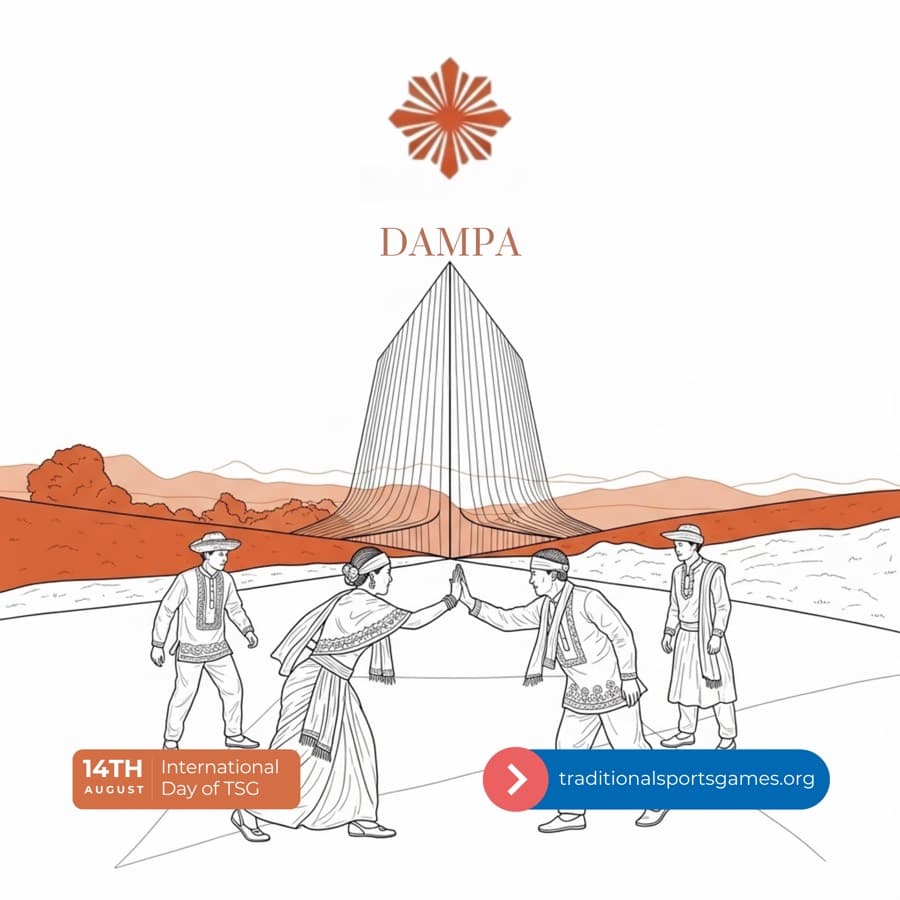
Dampa: The Filipino Rubber Band Game Keeping Indigenous Play Alive Dampa is a traditional Filipino game involving rubber bands and hand-slapping skills, widely played by children across the Philippines. As a key example of traditional sports and games (TSG), Dampa embodies indigenous knowledge, social bonding, and the cultural creativity of Filipino communities. Historical Background Dampa evolved in urban and rural neighborhoods as a low-cost, accessible form of entertainment. Using rubber bands as game pieces, it became popular due to its simplicity and the excitement it generated among school-age children. Played mostly in schoolyards and street corners, Dampa has remained part of the intangible cultural heritage of Filipino youth. Gameplay and Rules Dampa is typically played on flat ground. The goal is to hit a pile of rubber bands placed on the floor using a snapped hand slap to win them.
Players create a stack of rubber bands (the “pot”) They take turns snapping their hand close to the floor to hit the rubber bands Rubber bands knocked out of the marked area are collected by the player Players can take multiple turns based on successful hits
Cultural Significance and Social Practices Dampa promotes social interaction, negotiation, and creativity. Children learn to strategize and develop dexterity, while older players often pass down their own techniques, contributing to intergenerational transmission of skills. The game supports inclusive education as it requires no expensive materials and is open to all genders and age groups. Educational and Strategic Benefits
Improves hand-eye coordination and motor skills Encourages problem-solving and logical thinking Develops strategic play and competitive awareness Supports youth empowerment through self-expression and confidence building Creates platforms for community participation and bonding
UNESCO and the Sustainable Development Goals (SDGs) As a living tradition, Dampa aligns with UNESCO’s vision for safeguarding intangible heritage and contributes to the achievement of several Sustainable Development Goals:
SDG 4: Quality Education – through culturally rooted, play-based learning SDG 5: Gender Equality – open and accessible to all SDG 10: Reduced Inequalities – inclusive and free to play SDG 11: Sustainable Cities and Communities – strengthens local identity SDG 16: Peace and Justice – fosters social cooperation SDG 17: Partnerships – connects families, schools, and civil society
Related Traditional Games Explore other low-cost, high-impact traditional games from various cultures that emphasize skill and social play:
Pit-Pat (Europe) Siklot (Philippines) Lichen (India)
Call to Action: Safeguard Dampa and Support Traditional Games Let’s preserve Dampa and other indigenous games as part of our shared human heritage. Join the movement to integrate traditional sports into educational and community development programs while celebrating cultural diversity and youth empowerment. Get Involved Benefits of Joining Support ICTSG
About ICTSG The International Council of Traditional Sports and Games (ICTSG) is dedicated to promoting and preserving the world’s traditional games, fostering peace, unity, and intergenerational knowledge through inclusive education and cultural heritage. About Us History Contact
When a sport disappears, it is like a language no longer spoken - its stories, values, and lessons risk being lost forever. When we revive a game, we revive a culture.
Khalil Ahmed Khan - President, ICTSG