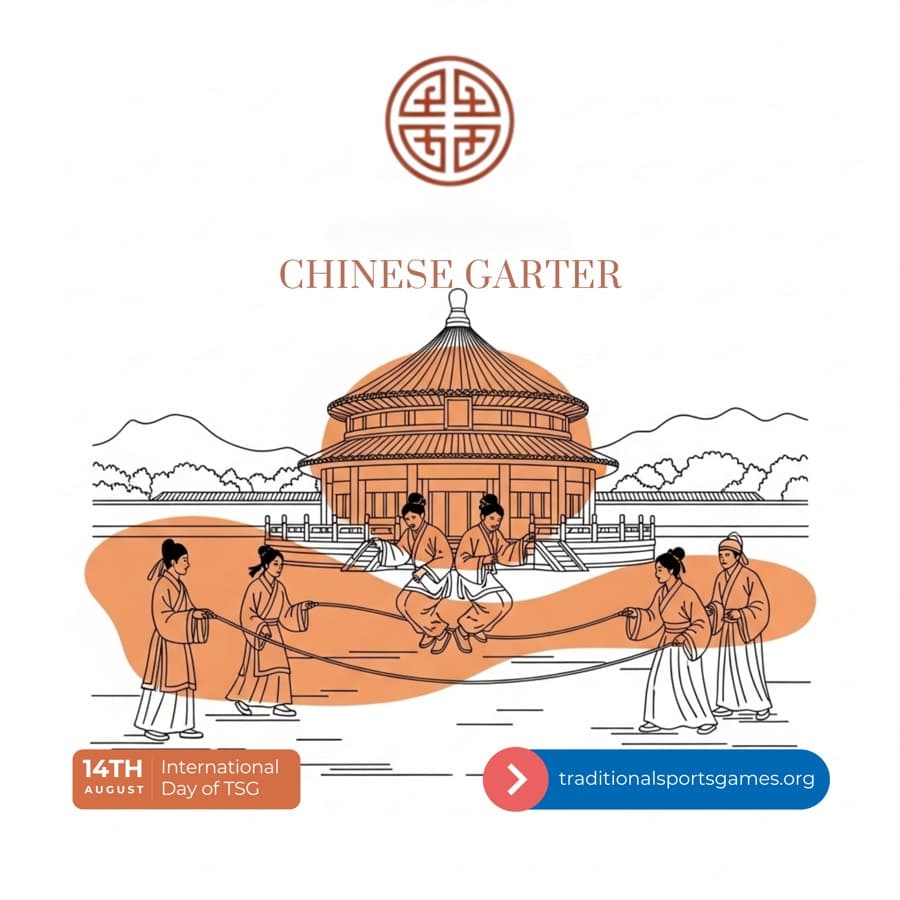
Chinese Garter: Celebrating Filipino Traditional Maneuvering Games for Cultural Identity and Global Inclusion The Chinese Garter is a vibrant traditional sports and games (TSG) activity from the Philippines that exemplifies rhythm, agility, and communal joy. Played mostly by children, especially girls, it encourages flexibility and coordination through structured jumping sequences over a stretched garter. It reflects the rich intangible heritage of Filipino communities and reinforces values of inclusivity, indigenous knowledge, and community participation. Historical Background With roots tracing back to East Asian influences blended with Filipino street play, Chinese Garter became popular across Philippine schoolyards and neighborhoods during the mid-20th century. It thrived in low-resource settings due to its minimal equipment and high engagement, supporting intergenerational transmission of cultural recreation. Gameplay Rules and Setup
A long garter (elastic band or rope) is stretched horizontally between two players, usually beginning at ankle height. A third player jumps in a choreographed pattern without touching the garter or falling. The difficulty increases progressively: from ankles to knees, hips, shoulders, head, and even raised arms. Players eliminated by a mistake wait for their next turn, while successful jumpers advance to the next level.
Cultural and Social Significance Chinese Garter strengthens social practices such as teamwork, cooperation, and community bonding. Its rhythmic movements echo performing arts, often accompanied by clapping or chanting. This maneuvering game enhances gender equality and inclusive education, with all genders and ages encouraged to participate in a non-competitive, joyous setting. Benefits and Strategic Aspects
Develops balance, flexibility, and stamina. Boosts rhythm, coordination, and muscle memory. Fosters cooperation, resilience, and cultural appreciation. Encourages creativity in movement and expression. Serves as a low-cost, inclusive tool for youth empowerment and wellness.
Educational Value and Community Engagement As a community-led initiative, Chinese Garter plays a key role in informal education. It provides an avenue for civil society engagement through intergenerational teaching, supports inclusive pedagogies, and cultivates cultural pride. Its versatility makes it adaptable to modern school programs focused on heritage preservation and physical education. Global Similarities and Cross-Cultural Parallels
Elastic Rope Jump (China) Jumping Games (Various regions) Siklot (Philippines – Reflex and Dexterity Game)
These games, though regionally distinct, underline a universal childhood experience of movement, joy, and cultural identity. UNESCO SDG Alignment
SDG 4: Promotes inclusive and equitable education through cultural play. SDG 5: Empowers girls and encourages gender balance in traditional games. SDG 10: Ensures equal opportunity and reduces inequalities in community recreation. SDG 11: Supports sustainable community spaces where cultural games are practiced. SDG 16: Encourages peace and inclusive social environments through play. SDG 17: Strengthens global partnerships to safeguard intangible heritage.
Call to Action Join us in preserving and promoting traditional games like Chinese Garter to strengthen cultural identity, global health, and youth development. Every leap taken honors our past and energizes our future. Get Involved Benefits of Joining Support ICTSG
About ICTSG: ICTSG is a global advocate for traditional sports and games, working to preserve intangible heritage, promote inclusive education, and strengthen global cultural diversity. About Us | History | Contact
When a sport disappears, it is like a language no longer spoken - its stories, values, and lessons risk being lost forever. When we revive a game, we revive a culture.
Khalil Ahmed Khan - President, ICTSG