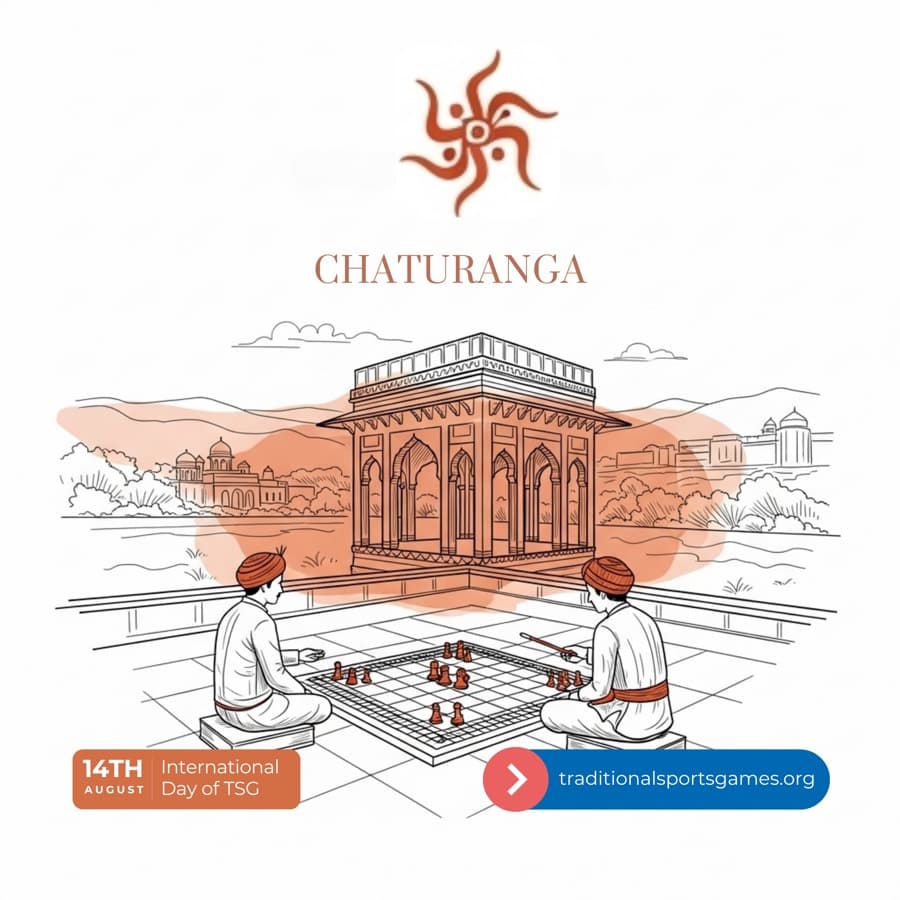
Chaturanga: India’s Ancient Strategic Board Game and the Origin of Chess Chaturanga, one of the oldest known board games in the world, originated in India during the 6th century. Revered as the precursor to modern chess, this traditional Indian game reflects the country’s profound contributions to global traditional sports and games (TSG) and strategic thinking. Historical Background Chaturanga—meaning "four limbs" in Sanskrit, referencing the four divisions of an army (infantry, cavalry, elephants, and chariots)—is believed to have emerged during the Gupta Empire. It represents early warfare simulation and evolved over centuries into Shatranj in Persia, and eventually into today’s chess. Gameplay Rules Chaturanga was played on an 8x8 board, similar to modern chess, but with differences in movement and rules:
Each player commanded four key unit types—infantry (pawns), cavalry (knights), elephants (bishops), and chariots (rooks). The game was for two or four players, with alliances and individual strategies. Victory came from capturing the Raja (king), symbolizing leadership and strategic mastery.
Cultural Significance and Intangible Heritage Chaturanga serves as a profound example of intangible cultural heritage, blending indigenous knowledge with early mathematics, logic, and military science. As a symbol of cultural diversity, it transcended regional boundaries and became a global intellectual tradition. Strategic and Educational Value
Promotes critical thinking, long-term planning, and problem-solving. Teaches ethical decision-making through consequences in gameplay. Encourages inclusive education by being accessible across age groups and cultures. Supports intergenerational transmission of cultural stories and moral lessons.
Chaturanga and the Sustainable Development Goals As part of UNESCO’s mission to safeguard traditional knowledge systems and encourage global harmony, Chaturanga aligns with several Sustainable Development Goals (SDGs):
SDG 4 – Quality Education: Enhances cognitive skills and historical awareness. SDG 5 – Gender Equality: Accessible to all genders in contemporary adaptations. SDG 10 – Reduced Inequalities: Bridges cultural gaps through shared heritage. SDG 11 – Sustainable Communities: Preserves local games as living traditions. SDG 16 – Peace and Justice: Promotes understanding through non-violent simulation. SDG 17 – Partnerships: Connects global communities through common play traditions.
Global Connections and Similar Games Chaturanga’s influence is evident in many traditional strategy games globally. Explore similar games and their heritage roots:
Shatranj – Persia Makruk – Thailand Xiangqi – China
Community Participation and Modern Relevance Reviving Chaturanga in schools, community centers, and digital platforms fosters community participation, civil society engagement, and youth empowerment. The game cultivates mindfulness, cultural literacy, and social harmony—offering mental health benefits aligned with global health goals. Call to Action: Revive and Safeguard Chaturanga Preserving Chaturanga ensures future generations appreciate ancient wisdom and cultural unity. Join the movement to revive traditional games as tools for peace, education, and inclusive development. Get Involved Benefits of Joining Support ICTSG
About ICTSG: The International Council of Traditional Sports and Games (ICTSG) is dedicated to preserving, promoting, and revitalizing traditional and indigenous games globally. It fosters cultural resilience, global unity, and youth leadership through heritage-based sports education. About Us | History | Contact
When a sport disappears, it is like a language no longer spoken - its stories, values, and lessons risk being lost forever. When we revive a game, we revive a culture.
Khalil Ahmed Khan - President, ICTSG