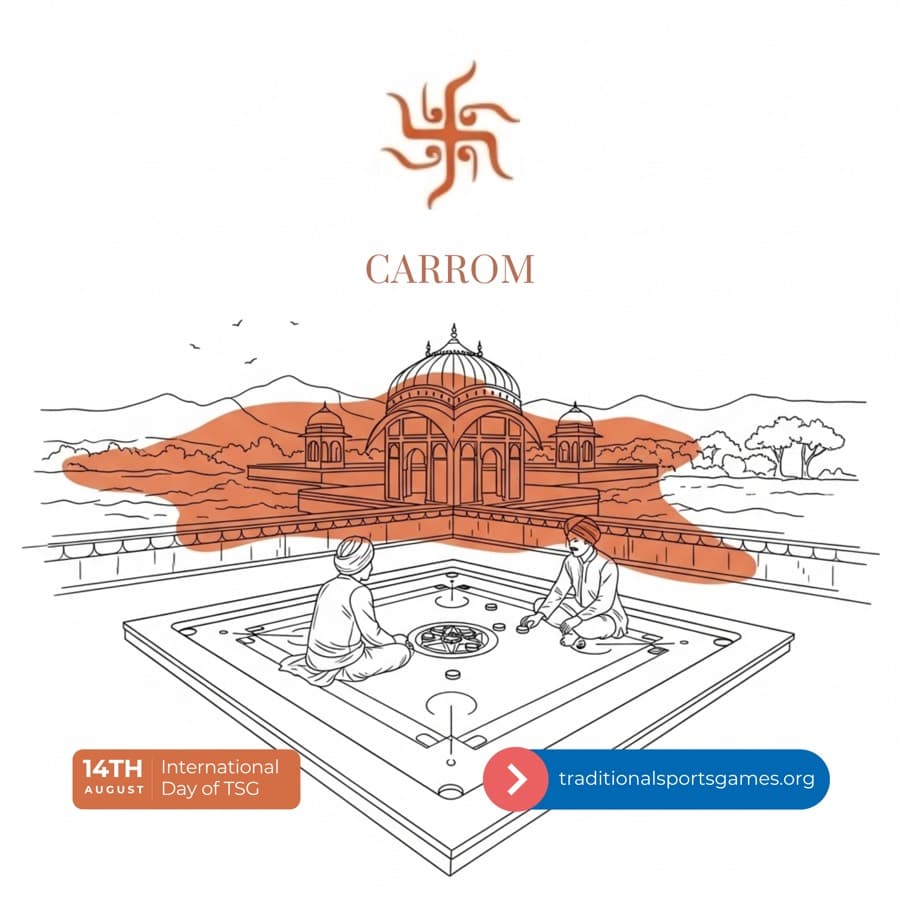
Carrom: India’s Traditional Tabletop Game of Precision and Community Carrom is a beloved tabletop game from India that combines skill, precision, and social interaction. As one of the most widely played traditional sports and games (TSG) across South Asia and beyond, Carrom represents indigenous knowledge and intangible cultural heritage passed through generations. Historical Background Carrom has its roots in 19th-century India and quickly became a household pastime in urban and rural settings alike. It grew in popularity due to its accessibility, affordability, and competitive yet friendly nature. Today, Carrom tournaments are held across Asia, Africa, and Europe, making it a global symbol of cultural diversity and connection. Gameplay Rules and Mechanics Carrom is played on a square wooden board with four corner pockets. Players use a striker to flick lightweight discs called "carrom men" into the pockets.
Played by 2 or 4 players. Each player flicks the striker using finger technique to pocket their colored discs. The queen (red disc) must be covered by pocketing one’s own piece immediately after. The game ends when all pieces are pocketed; points are tallied based on the remaining discs.
Cultural Significance and Social Practices Carrom is more than a game—it's a social practice. Played in homes, schools, and community centers, it fosters intergenerational bonding, friendly competition, and inclusive recreation. As a key element of intangible heritage, Carrom promotes civil society engagement and shared cultural experience. Strategic Aspects and Educational Value
Develops fine motor skills and hand-eye coordination. Enhances focus, patience, and tactical thinking. Promotes inclusive education through peer interaction and cooperation. Encourages respect, sportsmanship, and strategic decision-making.
Alignment with UNESCO’s Mission and SDGs Carrom aligns with UNESCO’s core values of safeguarding traditional knowledge and advancing the Sustainable Development Goals (SDGs):
SDG 4 – Quality Education: Supports informal learning through interactive play. SDG 5 – Gender Equality: Welcomes participation by all genders equally. SDG 10 – Reduced Inequalities: Accessible across economic and geographic barriers. SDG 11 – Sustainable Cities: Strengthens urban community interaction. SDG 16 – Peace and Justice: Encourages ethical gameplay and dialogue. SDG 17 – Partnerships: Provides platforms for local and international collaboration in preserving TSG.
Community Impact and Global Health Benefits Carrom contributes to youth empowerment and community participation. It offers an enjoyable alternative to screen time, supports mental health through social interaction, and reinforces the importance of traditional leisure practices in modern society. Explore Similar Traditional Games
Crokinole – Canada Shisima – Kenya Carpet Game – Middle East
Call to Action: Keep Carrom Alive Join the global effort to safeguard Carrom and other traditional games by participating in tournaments, integrating them into schools, and sharing the knowledge with future generations. Help protect these cultural treasures by becoming part of the movement today. Get Involved Benefits of Joining Support ICTSG
About ICTSG: The International Council of Traditional Sports and Games (ICTSG) is a global organization dedicated to preserving indigenous heritage through education, advocacy, and community engagement. It promotes TSG like Carrom as tools for cultural diplomacy and social sustainability. About Us | History | Contact
When a sport disappears, it is like a language no longer spoken - its stories, values, and lessons risk being lost forever. When we revive a game, we revive a culture.
Khalil Ahmed Khan - President, ICTSG