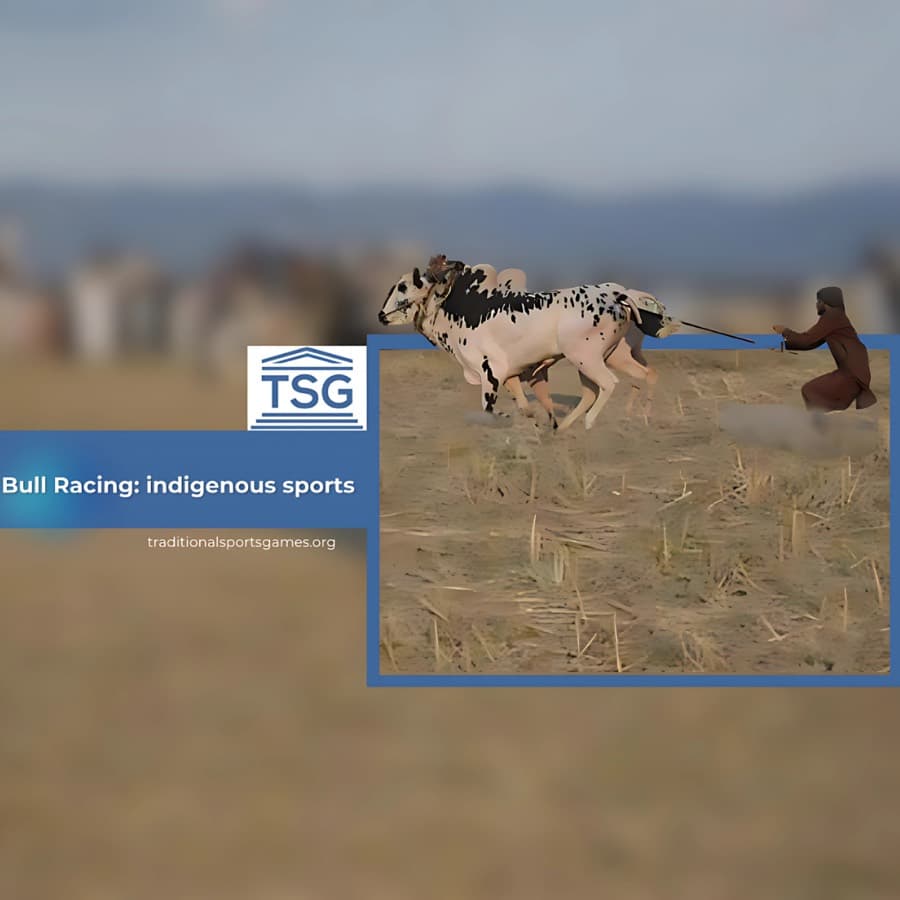
Cart Racing (Bull Racing) The Thrill of Tradition: Bull Racing in Rural Pakistan In the heart of rural Pakistan, where tradition is the heartbeat of community life, bull racing stands as one of the most anticipated and exhilarating traditional sports. Celebrated for its raw energy, ancestral pride, and festive spirit, this dynamic event continues to draw crowds, connect generations, and uphold a legacy that speaks to the deep relationship between humans and animals in agrarian society. A Festival of Strength and Skill Bull racing—particularly popular in Punjab and Sindh—is not merely a contest of speed; it is a celebration of strength, heritage, and rural honor. Landlords, farmers, and spectators gather in the thousands, often from neighboring villages and districts, to witness this thrilling and aggressive sport. Unlike conventional races, the jockey does not ride the bull. Instead, he stands on a small wooden plank (called "thali" or "takhti") attached to the bulls, and is dragged at high speed across the course. This technique requires extraordinary balance, courage, and control, as the jockey must guide the bulls—often weighing over 600 kilograms each—without losing grip or direction. The Race Setup The traditional race is run over a 350-meter-long track, often prepared meticulously in open fields. The course is lined with poles set 10 meters apart, and bulls must be guided through them with precision. This not only tests speed but also steering skill and discipline, both from the bulls and their handler. Only the most well-trained, powerful bulls, raised with care and pride, are brought to compete. Their strength reflects the status and dedication of their owners, many of whom begin training months in advance. The competition becomes an emblem of rural prestige—a matter of honor more than mere sport. Cultural Significance Bull racing is a manifestation of deep-rooted rural values:
It showcases the bond between farmer and animal, a relationship cultivated over years of shared labor.
It reflects the competitive spirit and communal celebration integral to village life.
It offers a platform for local identity, where each village takes pride in its champions.
The event is often accompanied by folk music, local food stalls, and community gatherings, turning it into a cultural festival. Young children, elders, and families participate as observers, storytellers, and cheerleaders, reinforcing the intergenerational transmission of traditional knowledge. Challenges and Preservation Despite its vibrancy, bull racing, like many traditional sports, faces challenges in modern times. Urbanization, modernization of agriculture, and growing concerns around animal welfare have led to decreased visibility and sporadic criticism. However, with responsible practices, proper care for animals, and regulatory oversight, bull racing can be preserved as a legitimate traditional sport that respects both the animal and cultural values. The International Council of Traditional Sports and Games (ICTSG) strongly advocates for such indigenous sports to be safeguarded and promoted—not only for their entertainment value but for their educational, social, and historical significance. By aligning with UNESCO’s Convention for the Safeguarding of Intangible Cultural Heritage, traditional bull racing can be framed as an expression of rural craftsmanship, community solidarity, and ecological balance. A Call to Celebrate and Protect Let us not relegate bull racing to fading memory. Let us document its techniques, honor its practitioners, and ensure its sustainable revival through cultural education and heritage festivals. Support the preservation of bull racing—not as a spectacle, but as a living tradition. Engage communities, train youth, and celebrate the powerful spirit of rural Pakistan. Together, we can ensure this noble game continues to gallop forward into future generations.
When a sport disappears, it is like a language no longer spoken - its stories, values, and lessons risk being lost forever. When we revive a game, we revive a culture.
Khalil Ahmed Khan - President, ICTSG