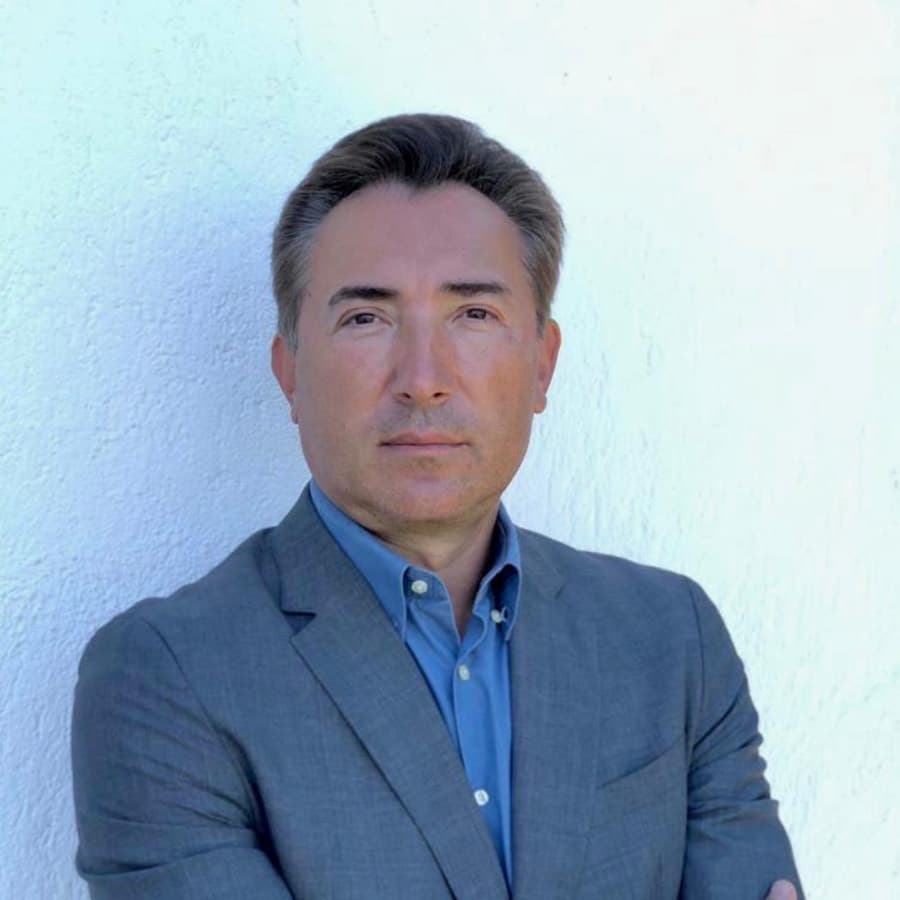
Bulat Galimgereyev - Vice President ICTSG (Europe)Beneath the gilded chandeliers of Cannes’ Hôtel Alexandre III, Bulat Galimgereyev adjusted his cufflinks, the faint scar across his knuckles—a relic of his fifth Dan karate grading—catching the light. Outside, the Mediterranean glittered; inside, diplomats and filmmakers sipped champagne, unaware the hotel’s owner once slept in a Soviet-era dojo, his gi patched at the elbows.“Kime,” Bulat murmured to himself, invoking the karate principle of focus, as he stepped into the lobby. Tonight wasn’t just about luxury. Upstairs, ICTSG’s European delegates awaited—their agenda: safeguarding Mongolian ankle-bone shooting games, Breton gouren wrestling, other fading traditions. To them, Bulat was a paradox: a banker who quoted Sun Tzu’s Art of War during budget talks, a film producer who’d swapped red carpets for grassroots TSG festivals in the Altai Mountains.His journey began in 1980s Almaty, where teenage Bulat rose before dawn to train under a former Soviet karate champion. “Fighting isn’t about fists,” his sensei growled, making him hold kiba-dachi (horse stance) until his legs burned. “It’s about seeing three moves ahead.” Those lessons carried him through the chaos of post-Soviet Kazakhstan. In 1993, as the nation’s first private banks emerged, 30-year-old Bulat founded Texakabank—not with spreadsheets, but with a martial artist’s discipline. Colleagues still recount his 1997 crisis meeting: with rubles collapsing, Bulat performed a kata (form) in the boardroom, then restructured debt like dismantling an opponent’s guard.But finance, he realized, was merely a dojo for bigger battles. In 2009, after selling his stake in Kazkommerzbank, Bulat produced “The Last Eagle Hunter,” a film documenting Kazakh nomads. Critics panned it; nomadic communities screened it in yurts. “Money builds towers,” he told a baffled investor. “Stories build souls.”Now, as ICTSG’s Vice President for Europe, Bulat wove these threads into a tapestry. At 2019’s Astana TSG Summit, he’d stunned delegates by pairing a Cossack championat (wrestling) demo with a VR exhibit funded by his Hong Kong trading firm. “Tradition isn’t a museum,” he’d argued, parrying skeptics like a kumite spar. “It’s a river—we must keep it flowing.”Yet his true mastery lay in bridging worlds. In 2022, when Swiss bankers balked at funding a Georgian lelo burti (medieval rugby) revival, Bulat hosted them at his Cannes hotel. Over Cognac, he screened footage of his karate students—Chechen refugees taught alongside Parisian CEOs. “TSG,” he said, “is the original blockchain. Each game encrypts centuries of trust.” The wire transfer came at dawn.Offstage, Bulat’s life hummed with deliberate contrasts. The man who brokered mining deals for Jade Resources Ltd spent weekends restoring a 16th-century dombra (Kazakh lute), its melodies transporting him to steppes he’d left decades prior. His secret ritual? Each New Year, he performed the Heian Godan kata on his hotel’s rooftop—the same form he’d mastered as a hungry 17-year-old, now framed by the French Riviera’s stars.As dusk fell over Cannes, Bulat greeted ICTSG’s delegates with a warrior’s bow and a banker’s handshake. Later, they’d learn his agenda: a Franco-Kazakh TSG exchange, funded by film royalties and mineral exports. But tonight, he simply raised a toast—“Za zdorovye!”—his voice echoing through marble halls that once seemed galaxies away from a Kazakh dojo’s splintered floors.In Bulat’s world, every venture was a kata: banking, film, hospitality—each movement precise, each breath intentional. And the ultimate aim? Not conquest, but balance—between profit and purpose, heritage and horizon.Social Media links:Instagram:Linkedin:
When a sport disappears, it is like a language no longer spoken - its stories, values, and lessons risk being lost forever. When we revive a game, we revive a culture.
Khalil Ahmed Khan - President, ICTSG