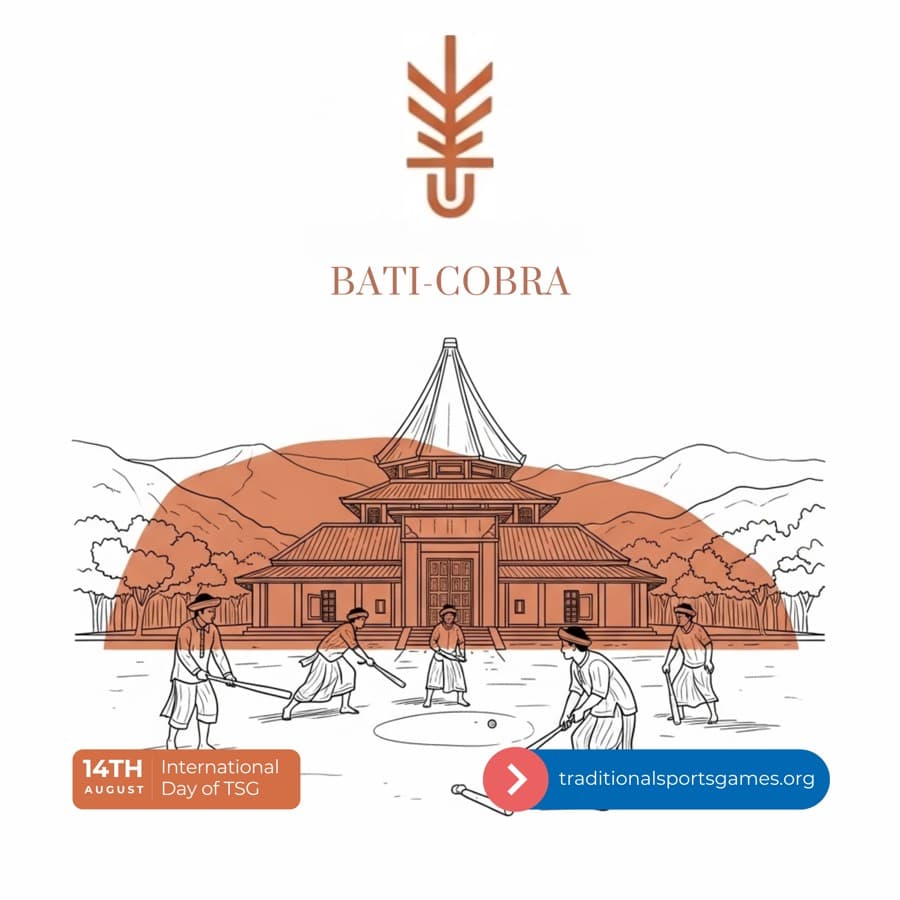
Bati-Cobra: Celebrating Filipino Heritage through a Traditional Stick Game Bati-Cobra is a vibrant traditional sport and game (TSG) originating from the Philippines. Played with sticks and keen reflexes, this indigenous game fosters intergenerational transmission of culture, community participation, and inclusive education. It stands as a living testament to the country’s deep-rooted commitment to intangible cultural heritage. Historical Background Rooted in rural Filipino communities, Bati-Cobra emerged as a communal recreational activity requiring minimal equipment. Traditionally played during afternoons in schoolyards or village open spaces, this stick-based game has survived decades of modernization through oral tradition and active community practice. Gameplay Rules and Format
Two sticks are used: a short stick (about 6 inches) and a longer stick (about 18 inches). The shorter stick is placed on a small hole in the ground and struck by the longer stick to launch it into the air. Once airborne, the player strikes it again to send it flying — this is the “cobra.” Points are scored based on distance or specific zone targets agreed upon by players.
Cultural Significance More than a game, Bati-Cobra is a celebration of Filipino childhood, resourcefulness, and rural ingenuity. It encourages social practices that develop trust, teamwork, and respectful competition. The game is a valuable part of the Philippines’ performing arts of play and reflects deep connections between culture and physical expression. Educational and Strategic Value
Develops hand-eye coordination and motor skills. Teaches measurement, estimation, and spatial awareness. Instills core values such as patience, sportsmanship, and discipline. Provides a playful environment for youth empowerment and learning through action.
Community Impact and Benefits Bati-Cobra revitalizes local traditions and strengthens civil society engagement through community tournaments, school activities, and cultural festivals. It acts as a platform for bridging generations and promoting inclusive education through play. In urbanizing societies, it becomes a tool for reconnecting youth with their roots. Alignment with UNESCO’s Sustainable Development Goals
SDG 4: Promotes inclusive education through cultural gameplay. SDG 5: Encourages participation regardless of gender. SDG 10: Reduces inequality by valuing indigenous traditions. SDG 11: Enhances sustainable community life through cultural practices. SDG 16: Encourages peaceful and inclusive social interaction. SDG 17: Supports global partnerships for cultural preservation.
Connections to Global Traditional Games Bati-Cobra shares common themes with other international stick games, such as:
Gilli Danda (South Asia) Knattleikr (Iceland) Luk-Luk Mei (Southeast Asia)
These global connections emphasize the universality of play and the diversity of traditional sports and games. Call to Action Bati-Cobra continues to inspire future generations to embrace their heritage through active play and cultural celebration. Let us protect this unique piece of Filipino identity. Join global efforts in safeguarding intangible heritage through education, participation, and community action. Get Involved Benefits of Joining Support ICTSG
About ICTSG: The International Council of Traditional Sports and Games (ICTSG) promotes cultural diversity, indigenous heritage, and global cooperation through sports-based education and inclusive programs. About Us | History | Contact
When a sport disappears, it is like a language no longer spoken - its stories, values, and lessons risk being lost forever. When we revive a game, we revive a culture.
Khalil Ahmed Khan - President, ICTSG