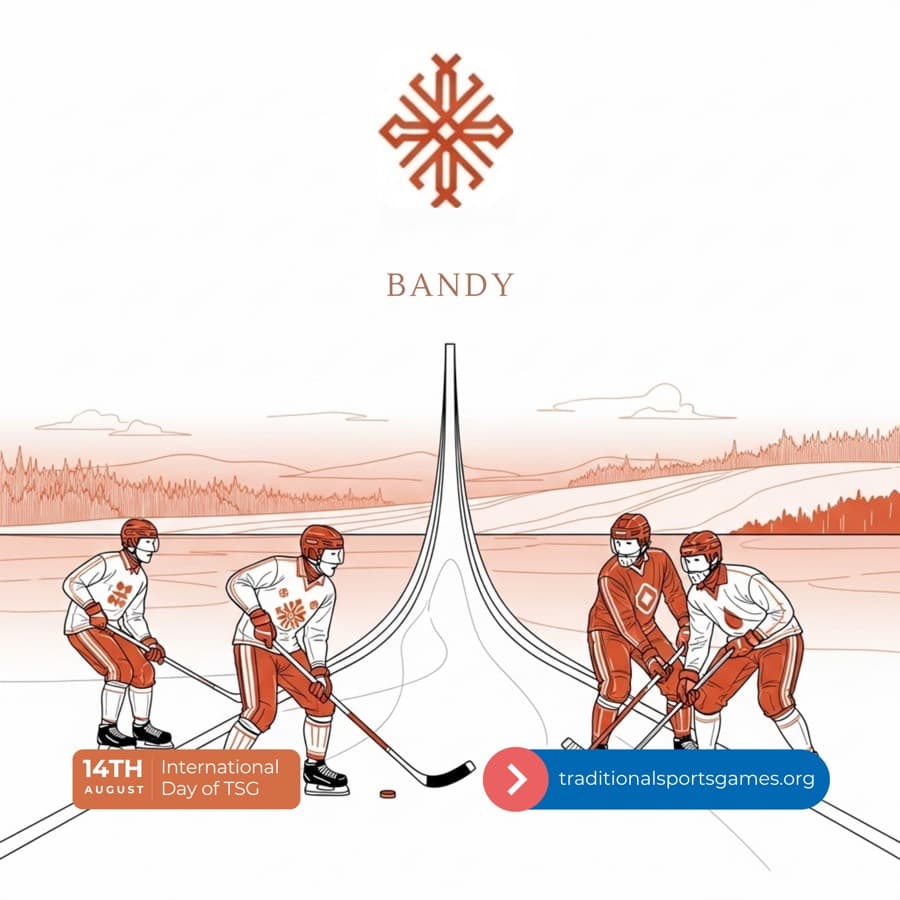
Bandy: A Heritage Sport on Ice Bandy is a traditional winter sport played with a ball on ice, widely practiced in Russia, the United Kingdom, and Estonia. As an ice hockey variant, Bandy is not only a high-energy team game but also a bearer of indigenous knowledge and intangible cultural heritage recognized under ICTSG and UNESCO missions for safeguarding traditional sports and promoting global heritage. Historical Background Emerging in the 18th and 19th centuries across northern Europe, Bandy evolved from rural winter activities. The game became especially popular on frozen lakes and rivers, promoting intergenerational transmission of values, technique, and social practices. It was deeply linked to seasonal festivities and winter gatherings in communities. Gameplay and Rules
Played on a large ice field similar in size to a football pitch. Teams use curved sticks to hit a small orange or red ball into the opposing team's goal. The game is fast-paced and emphasizes teamwork, strategy, and speed. Each team has 11 players, and matches are divided into two halves of 45 minutes each.
Cultural and Strategic Significance Bandy reflects a blend of tradition and sport. It promotes not just entertainment, but also deep cultural roots tied to winter life in cold regions. The game has been a symbol of community participation, inclusive recreation, and cultural identity for centuries. Educational and Social Benefits
Youth Development: Teaches discipline, agility, and cooperative skills. Inclusive Education: Offers equal opportunities for all genders and age groups, aligning with SDG 5 (Gender Equality). Physical Health: Supports global health initiatives and fitness through active play. Cross-cultural Learning: Acts as a medium to preserve intangible heritage and promote cultural diversity.
Global Impact and Safeguarding As a living tradition, Bandy is now supported by institutions such as the ICTSG for its role in preserving local identities, building strong communities, and achieving UNESCO’s Sustainable Development Goals, including:
SDG 4: Quality Education through traditional games in curricula SDG 5: Gender Equality in participation SDG 10: Reducing Inequalities in sport access SDG 11: Sustainable Cities and Communities via cultural preservation SDG 16: Promoting Peaceful Societies through inclusive play SDG 17: Partnerships for global cultural safeguarding
Bandy stands alongside other European traditional sports and games (TSG) like Aizkolaritza and Balle au Tambourin, promoting intercultural dialogue, education, and heritage revitalization. Call to Action Join hands to preserve and promote Bandy and other traditional sports that unite cultures, educate youth, and sustain heritage. Become part of the global movement with ICTSG to keep these games alive for future generations. Get Involved Benefits of Joining Support ICTSG About ICTSG: The International Council of Traditional Sports and Games (ICTSG) is dedicated to preserving, promoting, and revitalizing traditional sports and games as powerful tools for education, peace, and sustainable development.
About Us History Contact
When a sport disappears, it is like a language no longer spoken - its stories, values, and lessons risk being lost forever. When we revive a game, we revive a culture.
Khalil Ahmed Khan - President, ICTSG