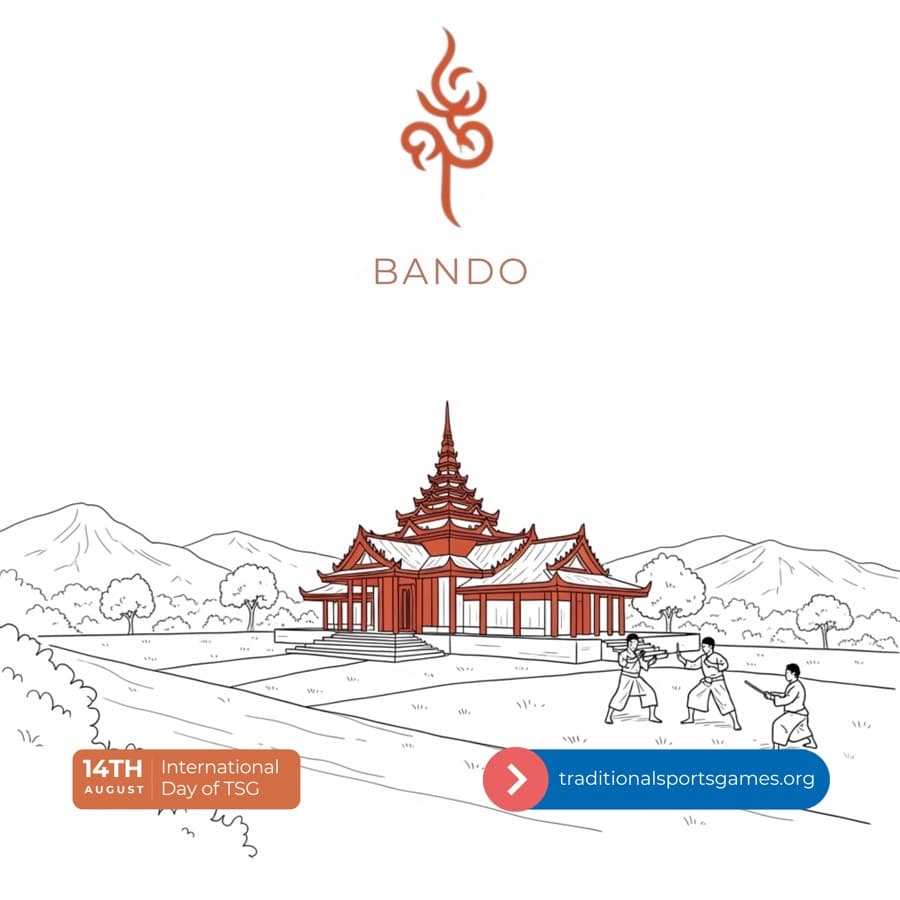
Bando Martial Art of Myanmar: Reviving Cultural Identity Through Traditional Combat Bando is an ancient and revered traditional sport and game (TSG) of Myanmar, embodying the essence of indigenous knowledge, cultural wisdom, and spiritual philosophy. Practiced for centuries, Bando stands as a symbol of Myanmar’s intangible heritage and continues to thrive through intergenerational transmission and community participation. Historical Background of Bando
Rooted in the ancient traditions of Burmese warriors and monastic guardians. Once preserved in Buddhist monasteries as a physical and spiritual discipline. Revived during the 20th century as a national martial art promoting cultural identity.
Gameplay Rules and Combat Techniques Bando involves both unarmed combat and weapon-based techniques. It is taught progressively, with a strong emphasis on moral values and control:
Empty-hand techniques: Includes kicks, punches, grapples, and takedowns. Weapons training: Traditional implements such as sticks, knives, and swords are used under strict discipline. Animal styles: Techniques inspired by animal movements, such as the leopard, python, and eagle, symbolize agility, strength, and precision. Ritual movements: Forms and sequences that blend performing arts with martial readiness.
Cultural Significance and Social Practices
Embeds spiritual discipline and respect for elders, teachers, and tradition. Promotes social harmony and peacebuilding through self-control and ethics. Practiced in communities as a form of collective cultural celebration. Passed from teacher to student, reinforcing strong community ties and values.
Strategic and Educational Benefits Bando offers extensive educational value beyond physical fitness. It aligns with global values of cultural literacy, identity preservation, and inclusion:
Encourages inclusive education by welcoming diverse learners, regardless of gender or background. Builds critical thinking, coordination, and focus in young people. Promotes youth empowerment through leadership roles in teaching and community engagement. Contributes to global health through structured physical activity and mental discipline.
Contribution to UNESCO’s SDGs Bando supports the following UNESCO Sustainable Development Goals (SDGs) through cultural resilience and social engagement:
SDG 4: Promotes inclusive, quality education through heritage-based learning. SDG 5: Advances gender equity by enabling female martial artists. SDG 10: Fosters equality by empowering rural communities through cultural pride. SDG 11: Enhances cultural life in sustainable cities and communities. SDG 16: Cultivates peace, tolerance, and justice through non-violent traditions. SDG 17: Builds partnerships for safeguarding heritage through local and global networks.
Community Participation and Global Relevance
Practiced in schools and community centers as part of civil society engagement. Showcased in international festivals promoting cultural diversity and exchange. Helps younger generations stay connected to their roots through embodied learning.
Similar Traditional Martial Practices Explore martial arts with shared values from around the world on the TSG platform:
Angampora – Sri Lanka Silambam – India Taekkyeon – Korea Capoeira – Brazil
Call to Action: Protect and Promote Bando Worldwide Let us honor and preserve Bando as a vibrant expression of Myanmar’s cultural heritage. Through participation, education, and safeguarding, we ensure that traditional sports like Bando continue to inspire generations across borders. Get Involved Benefits of Joining Support ICTSG
About ICTSG: The International Council of Traditional Sports and Games (ICTSG) supports cultural resilience by safeguarding traditional practices like Bando. Learn more about our work, vision, and how you can connect with us:
About Us History Contact
When a sport disappears, it is like a language no longer spoken - its stories, values, and lessons risk being lost forever. When we revive a game, we revive a culture.
Khalil Ahmed Khan - President, ICTSG