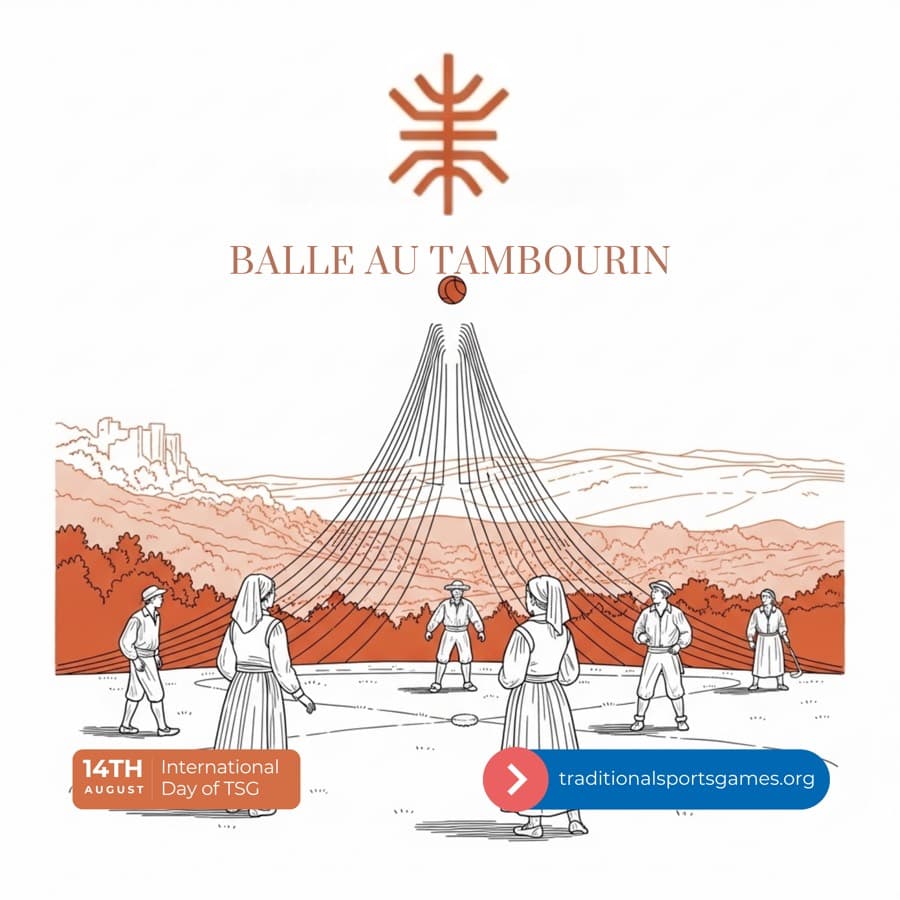
Balle au Tambourin: Preserving the Heritage of Traditional French Ball Games Balle au Tambourin is a traditional ball game originating from France, recognized for its unique use of tambourine-like rackets. Deeply embedded in the cultural fabric of the region, this sport not only fosters physical excellence but also plays a vital role in the safeguarding of intangible heritage in alignment with ICTSG and UNESCO values. Historical Background The origins of Balle au Tambourin date back to the 19th century in the south of France, particularly in Occitania. It evolved from older handball traditions and was named after the tambourine-like racket used to hit the ball. Historically played during festivals and community gatherings, it reflects indigenous knowledge and regional customs. Gameplay and Rules
Players use a round, drum-like racket to strike a rubber ball over a net or marked boundary. Typically played in teams of five on a rectangular court, either outdoors or indoors. Games are fast-paced, demanding agility, strategy, and precision. Variants of the sport exist, including single and doubles formats.
Cultural Significance This sport represents more than just competition—it serves as a vehicle for intergenerational transmission of cultural values and contributes to community participation and social practices deeply rooted in rural and urban France. Local costumes, music, and festivities often accompany matches, enriching the sport as a form of performing arts. Strategic and Educational Value
Promotes inclusive education through accessible participation. Encourages youth empowerment by offering a platform for young athletes to engage with heritage. Develops physical literacy and team coordination. Stimulates cultural diversity awareness and respect through sport.
Community and Global Impact Practiced across France and neighboring regions, Balle au Tambourin strengthens civil society engagement and contributes to global discussions on sustainable traditional sports. It plays a critical role in achieving multiple UNESCO Sustainable Development Goals, especially:
SDG 4: Quality education through sports inclusion SDG 5: Gender equality by encouraging co-ed teams SDG 10: Reduced inequalities via open community participation SDG 11: Sustainable communities by preserving local sports SDG 16: Peace and inclusive societies through sporting diplomacy SDG 17: Partnerships among cultural institutions and communities
Similar Traditional Sports Explore more traditional games from Europe and beyond:
Pallone col Bracciale (Italy) Pelota (Spain) Cirit (Turkey)
Call to Action Preserve the legacy of Balle au Tambourin by engaging in documentation, education, and participation. Join global efforts in promoting traditional sports and games (TSG) as powerful tools for cultural resilience and unity. Get Involved Benefits of Joining Support ICTSG
About ICTSG The International Council of Traditional Sports and Games (ICTSG) is dedicated to promoting, preserving, and revitalizing TSG worldwide as a means to foster peace, education, and cultural understanding. About Us History Contact
When a sport disappears, it is like a language no longer spoken - its stories, values, and lessons risk being lost forever. When we revive a game, we revive a culture.
Khalil Ahmed Khan - President, ICTSG