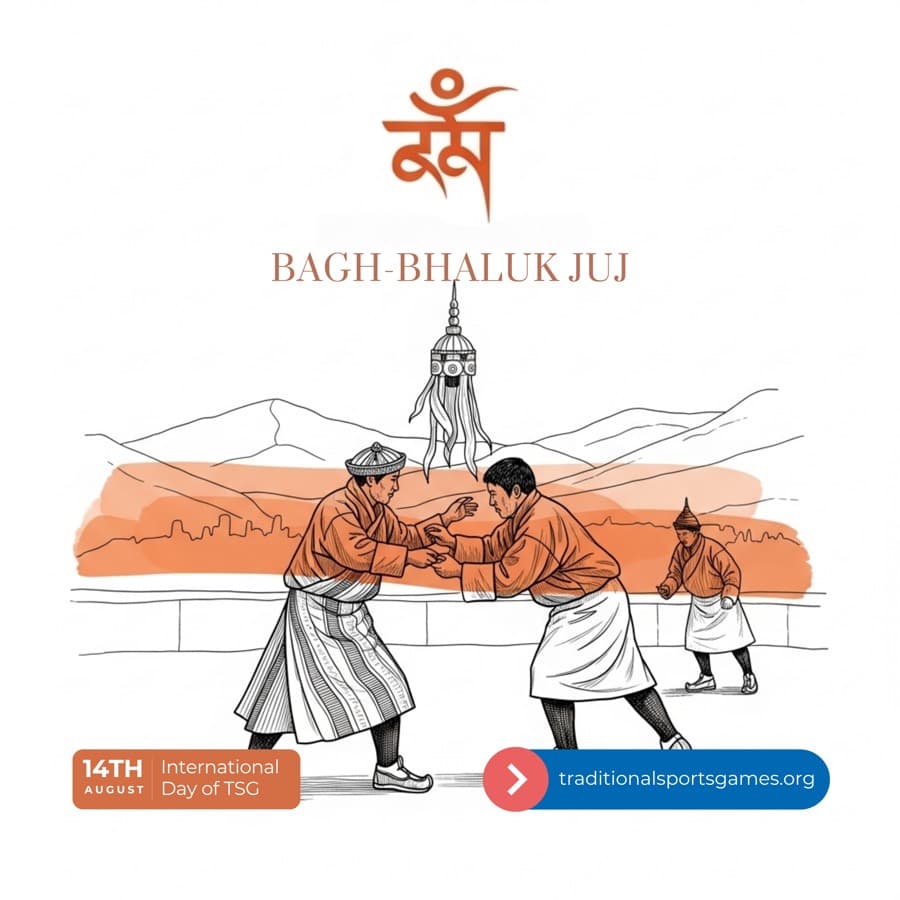
Bagh-Bhaluk Juj: The Symbolic Wrestling Game of Bengal Bagh-Bhaluk Juj (translated as Tiger-Bear Wrestling) is a fascinating traditional sport and game (TSG) originating from the Bengal region, including parts of Bangladesh and eastern India. Deeply rooted in folklore and myth, this wrestling-based game reflects intangible cultural heritage, indigenous storytelling, and rural community engagement. Historical and Mythological Background Bagh-Bhaluk Juj is inspired by local myths portraying a fight between a tiger (Bagh) and a bear (Bhaluk). Traditionally performed during harvest festivals or village fairs, this sport acts as a symbolic representation of the eternal struggle between power and wisdom. It has been passed down through oral tradition and intergenerational learning. Gameplay and Rules
Two participants represent the tiger and the bear. The "tiger" uses aggressive, direct force tactics. The "bear" uses grappling, circling, and defensive moves. The match ends when one player pins the other or forces a surrender. It is often performed in open fields with a referee and audience.
Cultural Significance Beyond physical skill, Bagh-Bhaluk Juj is a performing art — a living narrative showcasing social values, mythical themes, and cultural identity. Often accompanied by drumming and storytelling, it fosters community participation and creates space for both recreation and reflection. Strategic and Educational Benefits
Physical Strength: Develops stamina, flexibility, and resilience. Cognitive Skills: Symbolic play enhances critical thinking and moral understanding. Cultural Awareness: Preserves traditional knowledge, rituals, and folklore. Inclusive Education: Offers a space for learning outside the classroom through traditional expression.
Global Relevance and Similar Wrestling Traditions This indigenous sport resonates with many wrestling forms across the globe, including:
Kushti – India & Pakistan Schwingen – Switzerland Laamb Wrestling – Senegal
UNESCO and SDG Contributions Bagh-Bhaluk Juj contributes to SDG 4 (Quality Education), SDG 5 (Gender Equality), SDG 10 (Reduced Inequalities), and SDG 11 (Sustainable Communities). It promotes youth empowerment, civil society engagement, and safeguarding cultural heritage as recognized by UNESCO. Community Impact This rural sport reinforces community identity and offers a powerful platform for local festivals, intercultural dialogue, and mental and physical health. Reviving such practices through ICTSG opens pathways for sustainable development and heritage-based education systems. Get Involved Benefits of Joining Support ICTSG
About ICTSG: The International Council of Traditional Sports and Games (ICTSG) protects and promotes the world’s heritage through sport. By preserving local traditions like Bagh-Bhaluk Juj, ICTSG empowers communities and connects generations globally. About Us History Contact
When a sport disappears, it is like a language no longer spoken - its stories, values, and lessons risk being lost forever. When we revive a game, we revive a culture.
Khalil Ahmed Khan - President, ICTSG