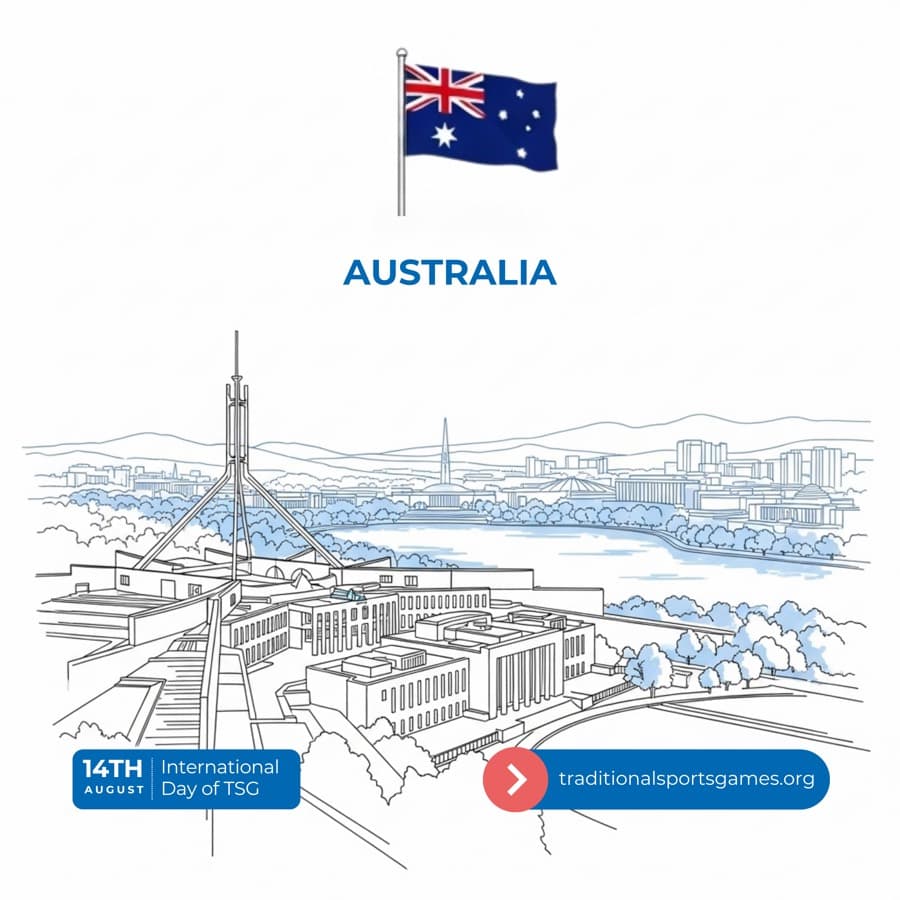
Positions Open with Australia Chapter 1. Chapter President for AustraliaApply Now 2. General Secretary for AustraliaApply Now 3. Information & Communications Lead for AustraliaApply Now Pre‑Qualification Checklist Benefits & Perks Responsibilities
Australia – A Global Leader in Traditional Sports & Indigenous Games Overview of Australia Australia is globally recognized for its *Australia traditional sports* heritage, rooted in Aboriginal and Torres Strait Islander communities. From vibrant urban centers to remote desert communities, traditional sports are a continuous thread that binds generations, reinforcing identity, resilience, and cultural continuity. The use of traditional games in community gatherings, education, and reconciliation initiatives highlights Australia’s dedication to cultural preservation and inclusion. Geographic Importance Australia spans a diverse geography—from tropical rainforests and coastal plains to arid deserts and snow-capped mountains. Its varied climate fosters a wide spectrum of outdoor traditional sports, reflecting the ecological and cultural diversity across regions. Indigenous games such as Marn Grook and Woggabaliri are adapted to local environments, illustrating the deep interconnection between land and play in Australian culture. Indigenous Sports & Cultural Games
Marn Grook: A traditional Aboriginal football-like game involving punt kicking and high catches; seen by many as a forerunner to modern Australian Rules Football Woggabaliri: A cooperative circle-kicking game with a soft ball—widespread in schools to teach foot-eye coordination Yulunga Traditional Indigenous Games: A curated set of over 100 Indigenous games (including ball, tag, skipping, spinning) used in educational and community programs Coreeda: Modern folk wrestling inspired by kangaroo dances and Aboriginal combat techniques Weet weet: A stick-throwing game (throwing the “kangaroo rat”), testing accuracy and strength
Australia’s Role in ICTSG Australia actively contributed to the consensus-building process that led to ICTSG's mission, sharing best practices in integrating Indigenous sports in formal education and national reconciliation strategies. Australia’s engagement underscores its commitment to ensuring that Australia traditional sports inform global frameworks for cultural sustainability. Keywords like “Australia traditional sports” and “Indigenous Australia games” feature prominently to enhance search ranking. Weather & Climate Conditions (150 words) Australia's climate varies immensely: tropical in the north, temperate along the coast, and arid inland. For traditional sports, this means seasonal adaptation—from beach-based Woggabaliri to dry‑land Coreeda in the outback. Rainy seasons enable water-based games, while dry seasons prime land sports. These variable conditions nurture resilience and flexibility in organizing events. Pitch preparation, footwear, and scheduling integrate weather considerations, ensuring that traditional sports are sustainable and safe. Climate-aware programming also promotes inclusive community participation by respecting local environmental cycles. UN-SDG Goals Alignment Australia’s traditional sports programs support several UN Sustainable Development Goals (SDGs). They foster Quality Education (SDG 4) by integrating Yulunga games in schools; promote Good Health and Well‑Being (SDG 3) via active participation; advance Reducing Inequalities (SDG 10) by empowering Indigenous voices. For more, see SDG 3, SDG 4, and SDG 10. Historical Relevance & Cultural Legacy Australia’s Indigenous sports stretch thousands of years, with games like Marn Grook woven into cultural lifeways :contentReference[oaicite:9]{index=9}. Early encounters between colonists and Aboriginal players influenced national sporting traditions. Programs like the Indigenous All-Stars (AFL) and Tiwi Bombers highlight sport’s role in spiritual healing, community resilience, and representation :contentReference[oaicite:10]{index=10}. A sustained legacy empowers youth, fosters identity, and ensures cultural knowledge is passed forward as ICTSG advances globally. Indigenous & Aboriginal Games – Introduction & History
Marn Grook: Deriving from Kulin languages, this football‑like game involved high marking and aerial skills and influenced early Australian Rules Football Woggabaliri: A co‑operative kicking volley game for children, emphasizing teamwork and balance, now revived in schools {index=12}. Yulunga Games: A collection of traditional activities across categories like ball rolling, tag, and spinning—used extensively in educational settings Coreeda: Folk wrestling form based on kangaroo dance moves—modern expression of Aboriginal martial culture Weet weet: Traditional stick‑throwing game increasing hand‑eye coordination and historically used in hunting practice
Get Involved Benefits of Joining Support ICTSG
About ICTSG: The International Council of Traditional Sports and Games (ICTSG) is dedicated to preserving, promoting, and revitalizing traditional sports and games as powerful tools for education, peace, and sustainable development.
About Us History
When a sport disappears, it is like a language no longer spoken - its stories, values, and lessons risk being lost forever. When we revive a game, we revive a culture.
Khalil Ahmed Khan - President, ICTSG