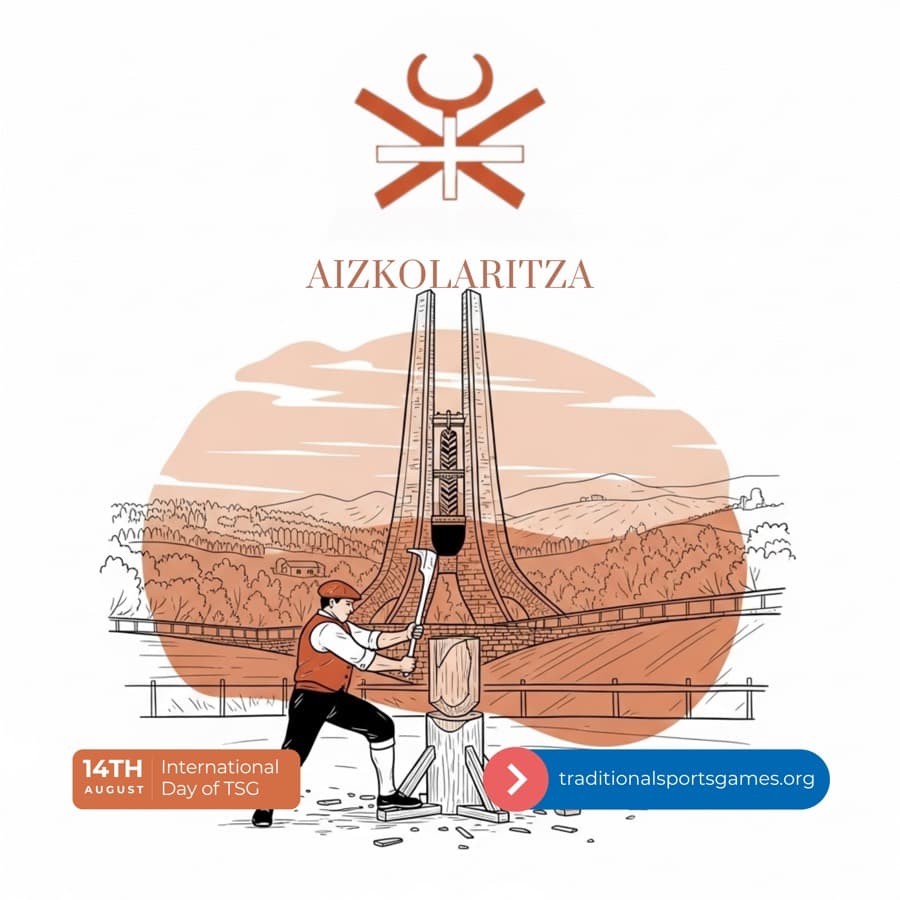
Aizkolaritza: The Basque Tradition of Strength and Cultural Identity Aizkolaritza, also known as the traditional Basque wood-chopping competition, is a powerful expression of strength, endurance, and cultural identity rooted deeply in the traditional sports and games (TSG) of Europe. Originating in the mountainous regions of the Basque Country, this sport embodies values of community participation, indigenous knowledge, and intangible cultural heritage. Historical Background Originally practiced by woodcutters to demonstrate skill and stamina during logging seasons, Aizkolaritza evolved into a structured sport in the 19th century. It became a symbol of Basque resilience and pride, showcased in festivals and community events across northern Spain and southwestern France. Rules and Gameplay
Chopping Task: Participants chop horizontally through large logs using specialized axes. Log Types: Typically beech or pine logs, often up to 45 cm in diameter. Competition Format: Time-based—winner is the one who cuts through a specific number of logs the fastest. Safety: Traditional methods are blended with modern safety gear in formal events.
Cultural Significance and Social Practice Aizkolaritza is more than sport—it’s a social practice that reflects traditional labor roles, intergenerational transmission of technique, and performing arts during community festivals. It plays a central role in sustaining cultural diversity and heritage in the Basque region.
Community Identity: Symbol of Basque strength, pride, and cooperation. Festive Performances: Accompanied by music, dance, and other traditional activities. Gender Inclusion: Growing inclusion of women in modern competitions supports inclusive education and SDG 5.
Educational and Strategic Benefits
Intergenerational Learning: Elders train youth, reinforcing cultural transmission and continuity. Physical Development: Promotes fitness, coordination, and safe handling of tools. Youth Empowerment: Celebrates identity, builds self-esteem, and encourages community responsibility.
Global Health, Sustainability, and SDGs
SDG 4: Incorporates traditional sports in cultural education programs. SDG 10: Fosters equity by providing local youth access to heritage sport training. SDG 11: Strengthens cultural infrastructure through community festivals and local pride. SDG 16: Promotes peaceful competition, unity, and cultural dialogue. SDG 17: Engages stakeholders including NGOs, civil society, and schools in heritage promotion.
Similar Traditional Strength Sports Worldwide Wood-based and strength-oriented games are a common theme across cultures:
Tug of War (global) – A traditional test of team strength found across continents. Log Racing (Japan) – A team-based log-carrying sport rooted in forestry traditions. Stone Lifting (Scotland) – A heritage strength sport tied to Celtic festivals and endurance.
Call to Action: Protect and Promote Aizkolaritza By safeguarding Aizkolaritza, we preserve a vibrant piece of Basque identity and contribute to global efforts in conserving intangible cultural heritage. Join hands with educators, youth, and communities worldwide to promote inclusive participation, heritage education, and sustainable sport practices. Get Involved Benefits of Joining Support ICTSG
About ICTSG: The International Council of Traditional Sports and Games (ICTSG) unites communities, cultures, and institutions to preserve, promote, and celebrate global heritage sports. Through inclusive action and sustainable partnerships, ICTSG safeguards diverse traditions for future generations. About Us History Contact
When a sport disappears, it is like a language no longer spoken - its stories, values, and lessons risk being lost forever. When we revive a game, we revive a culture.
Khalil Ahmed Khan - President, ICTSG