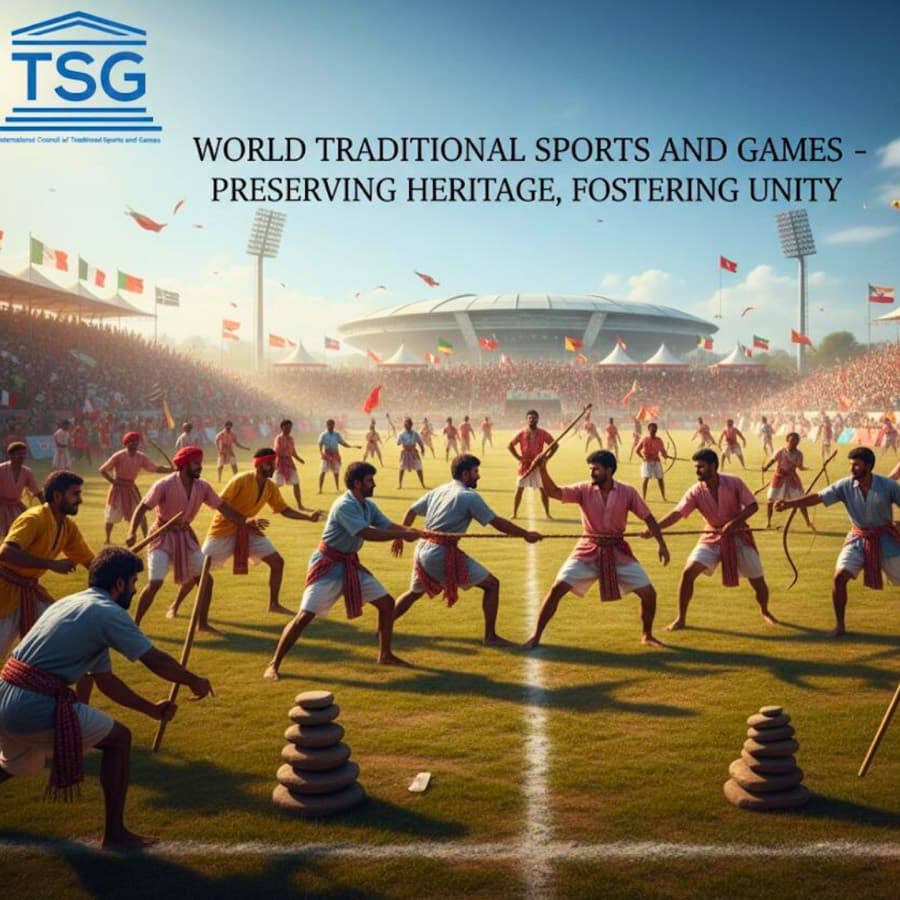
More Than a Game: Why the World Traditional Sports and Games is the New Global Stage?. In a world dominated by a few globalized sports, the rich, diverse tapestry of human heritage often sits in the shadows. We know the 100-meter dash, but what about Senegalese wrestling (Laamb)? We celebrate the high jump, but what about the ancient horse-riding games of Central Asia (Chovqan)? This is all about to change. The 1st World Traditional Sports and Games (WTG), championed by the International Council of Traditional Sports and Games (ICTSG), is not just another athletic competition. It is a monumental global celebration of living history, a platform where culture, community, and sport unite. A Festival of Humanity's Heritage:Supported by the vision of UNESCO's Advisory Committee on TSG, the ICTSG has a clear and powerful mission: to safeguard and promote the thousands of traditional sports and games that form our planet's intangible cultural heritage. These are not relics of the past; they are the living legacies of human identity, wisdom, and community spirit, passed down through generations. The World Traditional Sports and Games is the grand stage for this mission. Imagine a single event where participants from every continent gather not just to compete, but to share their unique cultural expressions—from the martial arts of the Philippines to the traditional games of Brazil. It is a vibrant, colorful, and powerful statement that in an age of globalization, our unique identities are a source of strength and celebration. The Unprecedented Benefits of Hosting:For the nation that earns the honor of hosting this landmark event, the benefits extend far beyond the playing field. This is not simply a two-week event; it is a long-term investment that builds a legacy of culture, prosperity, and global prestige and a history. 1. A Powerful Economic and Tourism Engine: Hosting a "mega-event" is a proven catalyst for economic growth. The World Traditional Sports and Games would trigger a massive, immediate boost to the host nation’s economy. Hotels, restaurants, and local artisans would see a major influx of international tourists—not just typical sports fans, but cultural tourists, families, and academics eager to witness this unique spectacle. This event creates thousands of jobs in hospitality, logistics, and event management, injecting significant foreign revenue directly into the local economy. 2. A Global Spotlight and Nation "Re-Branding": While modern Olympics often focus on sheer athletic performance, hosting the WTG is a powerful act of cultural diplomacy. It positions the host nation as a global leader, a forward-thinking country that values heritage, peace, and intercultural dialogue. The international media coverage would be immense, thrusting the nation into a positive global spotlight and "re-branding" it as a crossroads of world culture. This "soft power" and national pride are invaluable assets on the world stage. 3. A Legacy of Modern Infrastructure: To host the world, a nation must build for it. This event would spur significant, long-term investment in national infrastructure. This includes not only state-of-the-art sporting venues but also critical upgrades to transportation networks (airports, roads, public transit), telecommunications, and urban centers. Unlike stadiums for niche sports that may fall into disuse, these improvements serve as a lasting legacy for citizens, enhancing quality of life and attracting future business and investment for decades. 4. Revitalizing National Identity and Youth Engagement: Perhaps the most profound benefit is internal. Hosting the WTG would ignite a powerful wave of national pride and inspire a new generation to connect with its own traditional roots. In a world of digital distraction, this event encourages youth empowerment by making heritage active, exciting, and relevant. It fosters social cohesion, inclusivity, and a shared sense of community. The World is Watching: The 1st World Traditional Sports and Games is more than a competition; it’s a movement. The nation that steps up to host it will not just be organizing an event—it will be hosting humanity's shared story, bridging the past with the future, and securing its own legacy as a true guardian of global culture. The opportunity is here. The time is now. The World Traditional Games represent a global festival of cultural heritage and athletic spirit, uniting countries under the shared values of respect, peace, and diversity. Organized under the auspices of the <strong>International Council of Traditional Sports and Games (ICTSG), this monumental event celebrates the world’s ancient sporting traditions, reviving them for future generations. Through participation, dialogue, and cultural exchange, the Games strengthen bonds among nations, encourage youth involvement, and preserve the unique identity of Traditional Sports and Games (TSG). Aligned with United Nation’s vision, the World Traditional Games serve as a bridge between heritage and modernity — a symbol of humanity’s collective pride and unity.
When a sport disappears, it is like a language no longer spoken - its stories, values, and lessons risk being lost forever. When we revive a game, we revive a culture.
Khalil Ahmed Khan - President, ICTSG