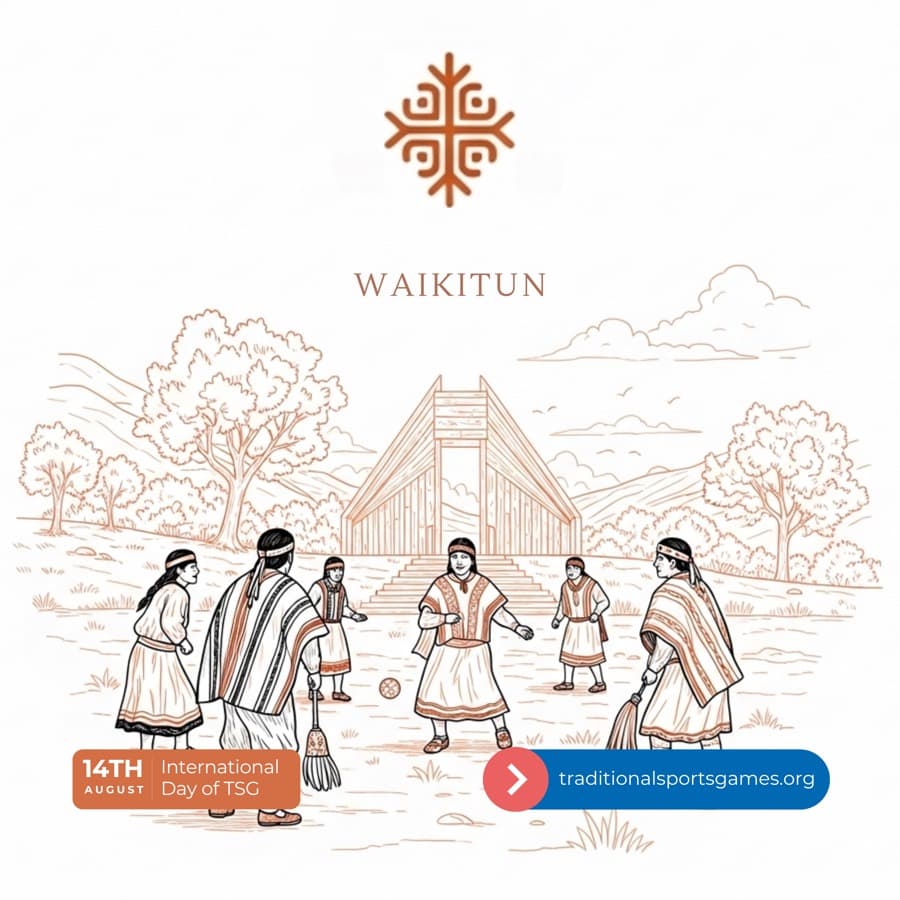
Waikitun: Ancestral Spear Martial Art of the Mapuche People of Chile Waikitun is a traditional martial art practiced by the Mapuche people of Chile, involving the disciplined use of a spear known as the Wayki. This indigenous combat tradition is more than a sport—it is a spiritual, physical, and educational practice deeply rooted in the Mapuche worldview and communal identity. As a traditional sport and game (TSG), Waikitun represents a powerful element of intangible cultural heritage that deserves recognition, safeguarding, and revitalization in contemporary society. Historical Background and Cultural Context Waikitun originated as part of the Mapuche people's preparation for defense and leadership, especially during historical resistance against colonial and state forces. The spear (Wayki) was not only a weapon but also a ceremonial object symbolizing honor, protection, and connection to ancestral spirits. Traditionally passed down through generations, Waikitun was taught within families and communities, reinforcing intergenerational transmission of knowledge, resilience, and indigenous identity. Gameplay and Martial Practice
Weapon Used: The Wayki — a long wooden spear used for offensive and defensive maneuvers. Techniques: Includes footwork, strikes, blocks, evasion, and balance techniques rooted in ancestral training methods. Setting: Practiced outdoors in natural environments, often on open fields or sacred Mapuche spaces. Instruction: Led by elders or experienced martial artists (lonko or ngenpin), who also teach the spiritual philosophy behind each movement. Code of Conduct: Emphasizes respect, humility, discipline, and spiritual harmony.
Strategic Aspects and Educational Value Waikitun goes beyond physical training. It sharpens both body and mind, promoting:
Focus and agility through structured movement and observation. Resilience and discipline as core values for personal and communal strength. Leadership skills by reinforcing responsibility, heritage, and courage in youth. Holistic learning integrating language, history, and ecology in martial arts education.
Cultural Significance and Community Impact Waikitun embodies social practices that unite generations, inspire youth empowerment, and reinforce indigenous cultural identity. Its revival strengthens Mapuche self-determination and supports inclusive education rooted in ancestral knowledge systems. Practicing Waikitun allows Mapuche youth to reconnect with their history and values, contributing to civil society engagement and cultural resilience. Contribution to UN’s Sustainable Development Goals (SDGs)
SDG 4: Quality Education – Facilitating learning through indigenous martial arts and knowledge systems. SDG 5: Gender Equality – Encouraging participation of both boys and girls in cultural sports. SDG 10: Reduced Inequalities – Preserving traditions of marginalized indigenous communities. SDG 11: Sustainable Cities and Communities – Promoting traditional games as part of urban and rural cultural heritage. SDG 16: Peace, Justice and Strong Institutions – Strengthening peace through cultural empowerment and respect for indigenous law. SDG 17: Partnerships – Enabling cooperation between indigenous organizations, civil society, and global heritage bodies.
Similar Traditional Martial Arts
Bazh Yod – Traditional Breton wrestling from France Atlı Cirit – Equestrian spear sport of Turkey Kalaripayattu – Martial art of India
Call to Action Waikitun stands as a resilient emblem of Mapuche dignity and knowledge. Let us support the preservation, documentation, and revival of this unique martial tradition as part of our global commitment to cultural diversity and peace through sport. Your engagement can help build inclusive, sustainable, and respectful societies by empowering indigenous heritage through action. Get Involved Benefits of Joining Support ICTSG About ICTSG: The International Council of Traditional Sports and Games (ICTSG) is dedicated to preserving, promoting, and revitalizing traditional sports and games as powerful tools for education, peace, and sustainable development.
About Us History Contact
When a sport disappears, it is like a language no longer spoken - its stories, values, and lessons risk being lost forever. When we revive a game, we revive a culture.
Khalil Ahmed Khan - President, ICTSG