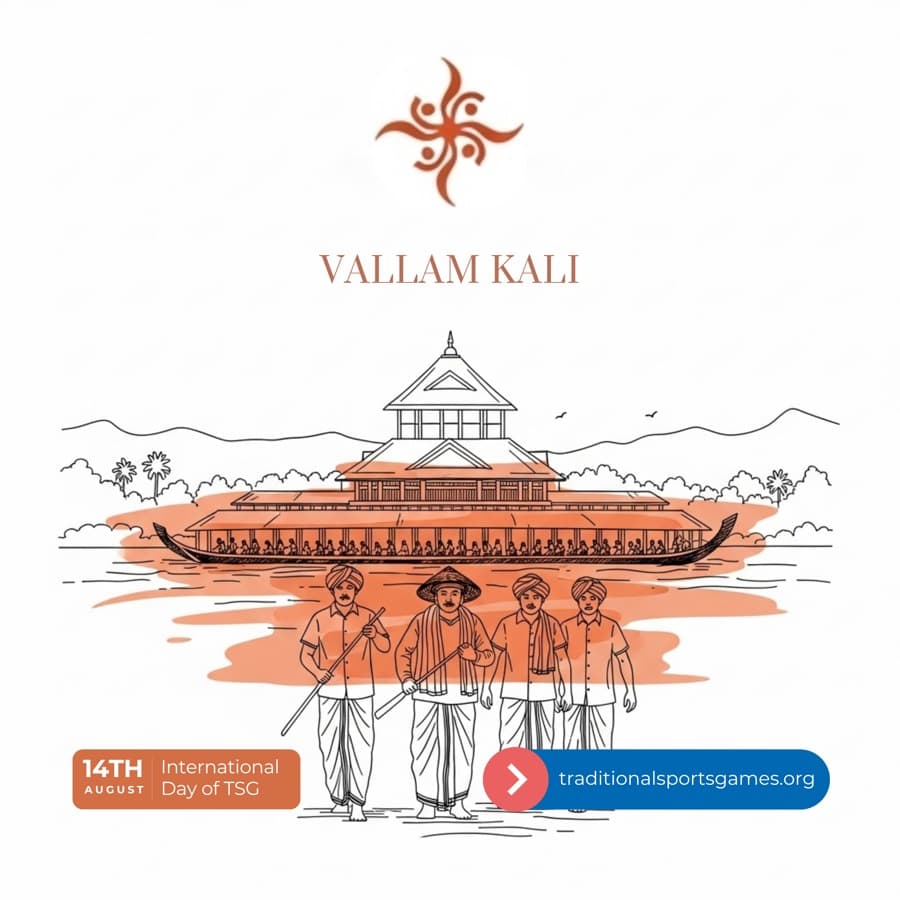
Vallam Kali: Traditional Boat Racing in Kerala – A Cultural Legacy on Water Vallam Kali, also known as the traditional boat race of Kerala, is a vivid and high-spirited water sport that has captivated communities for centuries. As one of India’s indigenous traditional sports and games (TSG), it showcases the synergy of intangible heritage, indigenous knowledge, and community participation. Historical Roots of Vallam Kali Originating in the lush backwaters of Kerala, Vallam Kali has long been associated with temple festivals and local traditions. The most famous among these is the Nehru Trophy Boat Race held on Punnamada Lake, celebrating both competition and camaraderie. The boats, called chundan vallams or snake boats, were initially used for military transport and evolved into symbols of unity and cultural pride. Gameplay and Structure
Boats range from 30 to 40 meters long and accommodate over 100 rowers. Races take place during monsoon months, coinciding with temple festivals. Team coordination, rhythm, and endurance are key strategic elements. Boats are blessed in rituals before the race, reflecting social practices and spiritual traditions.
Cultural and Educational Significance Vallam Kali fosters intergenerational transmission of traditional knowledge, encouraging younger generations to connect with their cultural identity. Schools and communities actively promote participation, aligning with UNESCO’s goals for inclusive education and youth empowerment. Key Benefits:
Preservation of performing arts through accompanying folk songs and chants. Promotion of gender inclusion and community-led events. Opportunities for civil society engagement and tourism. Encourages physical health and global wellness through sport.
Strategic Aspects and Sustainability Each team practices rigorously, fostering discipline and collective identity. The making of traditional boats supports local craftspeople, sustaining cultural diversity and local economies, a core component of UNESCO's safeguarding strategies. Vallam Kali and the Sustainable Development Goals (SDGs) Vallam Kali aligns with multiple SDGs:
SDG 4: Quality Education – through inclusive education on cultural heritage. SDG 5: Gender Equality – with emerging female-led teams. SDG 10: Reduced Inequalities – promoting access regardless of background. SDG 11: Sustainable Cities and Communities – as heritage contributes to resilient societies. SDG 16: Peace, Justice, and Strong Institutions – reinforcing values of fair play and community governance. SDG 17: Partnerships for the Goals – supported by NGOs and cultural organizations.
Global Recognition and Related Traditional Games Vallam Kali resonates with similar water-based TSG across Asia and Africa. Discover related games such as:
Dragon Boat Racing (China) Longboat Racing (Thailand) Regattas (Philippines)
Community Impact and Intangible Heritage Vallam Kali continues to be a vehicle for cultural revival, social bonding, and regional pride. Through ICTSG initiatives, this vibrant tradition is recognized as a global model for inclusive heritage preservation. Call to Action Let’s unite in preserving the soul of our traditions. Whether as a participant, supporter, or educator, your role in safeguarding Vallam Kali and other TSG matters. Get Involved Benefits of Joining Support ICTSG
About Us History Contact
When a sport disappears, it is like a language no longer spoken - its stories, values, and lessons risk being lost forever. When we revive a game, we revive a culture.
Khalil Ahmed Khan - President, ICTSG