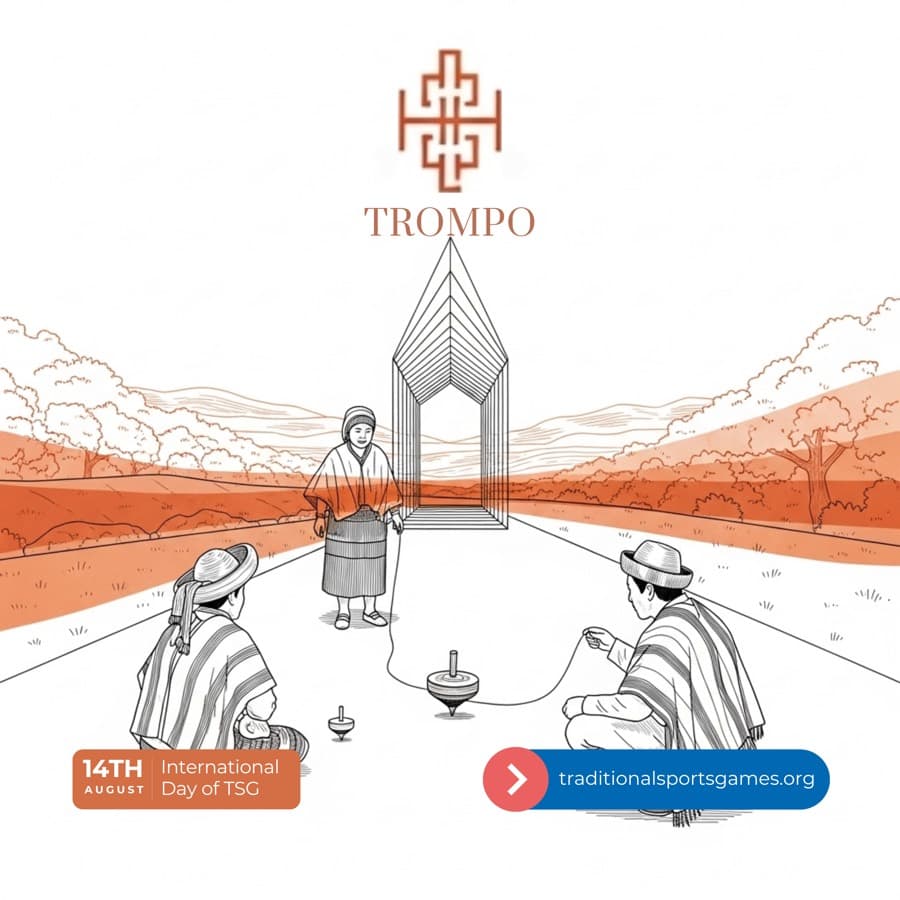
Trompo: The Spinning Heart of Ecuadorian and Bolivian Tradition Trompo is a time-honored traditional game from South America that involves spinning a wooden top with precision and control. Deeply embedded in the cultural fabric of Ecuador and Bolivia, Trompo continues to inspire generations, especially in towns like Cotacachi, where official competitions are still held today. As part of Traditional Sports and Games (TSG) promoted by ICTSG, Trompo embodies indigenous knowledge, cultural diversity, and intangible heritage — values central to UNESCO’s global safeguarding efforts. Historical and Cultural Context Trompo has been played for centuries, passed down through intergenerational transmission. While its origins are not precisely recorded, its presence in Indigenous and Mestizo communities of the Andes highlights its historical value. The crafting of wooden tops from native hardwoods is also an art form tied to performing arts and social practices. Gameplay and Rules The game is both competitive and recreational, demanding focus, skill, and hand-eye coordination. The core objective is to spin the top with maximum speed, control, and endurance.
Players wrap a string tightly around a wooden top. The top is thrown to the ground using a specific wrist movement. Players compete to see whose top spins the longest or lands on designated targets. Variants include target games, battle spins, or obstacle challenges.
Tournaments in places like Cotacachi bring together youth and elders alike, showcasing inclusive education and community participation. Strategic and Cultural Significance
Motor Skills and Precision: Develops fine motor coordination and physical control. Mental Focus: Encourages patience, strategy, and anticipation. Civic Engagement: Strengthens local identity and inter-village connections through festivals and tournaments. Accessible Play: A low-cost game made from local materials, ideal for rural and urban settings.
Alignment with Sustainable Development Goals (SDGs)
SDG 4 (Quality Education): Encourages informal learning through physical and cognitive activity. SDG 5 (Gender Equality): Promotes equitable participation across genders in traditional settings. SDG 10 (Reduced Inequalities): Popular across economic and ethnic lines. SDG 11 (Sustainable Cities and Communities): Preserves indigenous cultural identity in modern urban spaces. SDG 16 (Peace and Justice): Nurtures peaceful community interaction through organized local games. SDG 17 (Partnerships): Creates opportunities for collaboration between schools, NGOs, and cultural bodies.
Comparative Traditional Games Worldwide Trompo shares spinning-top elements with other cultures globally:
Beigoma (Japan) – A metallic spinning top game played in bowls or rings. Lattoo (South Asia) – A wooden top spun with a thread, common in Pakistan and India.
Get Involved Benefits of Joining Support ICTSG
About ICTSG: The International Council of Traditional Sports and Games (ICTSG) is dedicated to preserving, promoting, and revitalizing traditional sports and games as powerful tools for education, peace, and sustainable development.
About Us History Contact
When a sport disappears, it is like a language no longer spoken - its stories, values, and lessons risk being lost forever. When we revive a game, we revive a culture.
Khalil Ahmed Khan - President, ICTSG