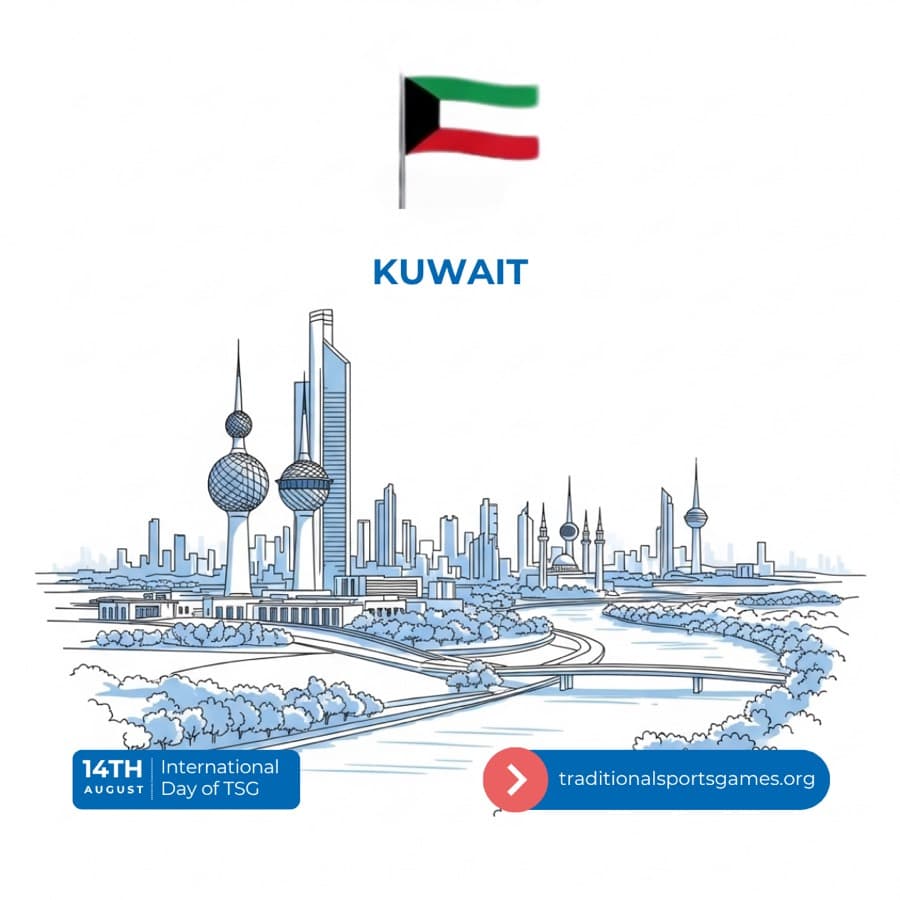
Positions Open with Kuwait Chapter 1. Chapter President for KuwaitApply Now 2. General Secretary for KuwaitApply Now 3. Information & Communications Lead for KuwaitApply Now Pre‑Qualification Checklist Benefits & Perks Responsibilities
Traditional Sports and Games in Kuwait Kuwait’s Participation in UNESCO’s 4th Collective Consultation on TSG Kuwait was proudly represented at the 4th Collective Consultation Meeting on Traditional Sports and Games hosted by UNESCO in Istanbul, Turkey on August 13–14, 2018. The gathering was held at the Sheraton Grand Istanbul Ataşehir and brought together 40+ nations dedicated to the promotion of cultural heritage through traditional sports. Representing Kuwait was Mr. Hisham S. K. Alijaser, President of the Kuwait Belt Wrestling Federation, who signed the official documents on behalf of the country, reaffirming Kuwait’s commitment to preserving and revitalizing traditional games globally. Overview of Kuwait Kuwait is a sovereign state located in the northeastern corner of the Arabian Peninsula. With a rich cultural history, strong maritime heritage, and strategic location near the head of the Persian Gulf, Kuwait has long been a center for trade, culture, and tradition in the region. The country balances modern infrastructure with deep-rooted traditions, making it a dynamic contributor to the preservation of intangible heritage. Geographic Importance of Kuwait Strategically nestled between Iraq and Saudi Arabia, Kuwait’s geography is defined by its coastline along the Arabian Gulf. This has historically made it a hub for maritime activities, fishing, and pearling—all of which influence its indigenous games and traditions. The arid desert climate and wide-open plains have also fostered sports tied to strength, endurance, and tactical skill. Traditional and Indigenous Sports in Kuwait The most notable traditional sport in Kuwait is Belt Wrestling, a form of grappling deeply rooted in the region’s nomadic Bedouin past. It emphasizes strength, technique, and mutual respect. Other traditional activities include camel racing and falconry, both of which hold cultural and historic importance in Kuwait and the broader Gulf region. Kuwait’s Role in the Formation of ICTSG By signing the declaration during the UNESCO consultation, Kuwait played a pivotal role in the formation of the International Council of Traditional Sports and Games (ICTSG). Mr. Hisham S. K. Alijaser’s presence and endorsement contributed to the recognition of TSGs as key pillars of cultural heritage and sustainable development. Kuwait’s active participation reflects its dedication to preserving its rich heritage for future generations and ensuring that traditional games are not forgotten amid globalization. Climate and Weather Conditions in Kuwait Kuwait experiences an arid climate with long, hot summers and mild winters. Summer temperatures often exceed 45°C (113°F), while winters are cool and pleasant, ranging between 8°C to 20°C. These climatic conditions have influenced the types of traditional games played, with many sports being structured around early mornings or late evenings to avoid peak heat. Indoor and shaded outdoor spaces have traditionally been used for wrestling and group activities, aligning with local environmental conditions. UNSDG Goals Alignment Kuwait’s engagement with ICTSG aligns strongly with the United Nations Sustainable Development Goals (UNSDGs), especially:
Goal 4 – Quality Education: Promoting educational value through sports and cultural transmission. Goal 11 – Sustainable Cities and Communities: Safeguarding intangible cultural heritage like traditional games. Goal 17 – Partnerships for the Goals: Collaborating with international bodies for sustainable sports development.
Kuwait’s contributions showcase its commitment to these global goals, using sports and culture as tools for societal advancement and intergenerational learning. Historical Relevance of Kuwait in TSG Promotion Historically, Kuwait has emphasized cultural preservation as a core national value. Its Belt Wrestling traditions trace back centuries, offering insights into strength, honor, and local tribal values. The country’s historical openness to global exchanges also supports its role as a collaborative partner in initiatives like ICTSG. Kuwait’s federation-led programs have nurtured youth engagement, while museums and cultural institutions continue to spotlight traditional sports as living heritage. Call to Action Let us unite to safeguard Kuwait’s traditional sports heritage for generations to come. Participate in your local ICTSG chapter, contribute to awareness, and become a part of this global movement dedicated to cultural identity and sportsmanship. Get Involved Benefits of Joining Support ICTSG
About ICTSG: The International Council of Traditional Sports and Games (ICTSG) is dedicated to preserving, promoting, and revitalizing traditional sports and games as powerful tools for education, peace, and sustainable development.
About Us History
When a sport disappears, it is like a language no longer spoken - its stories, values, and lessons risk being lost forever. When we revive a game, we revive a culture.
Khalil Ahmed Khan - President, ICTSG