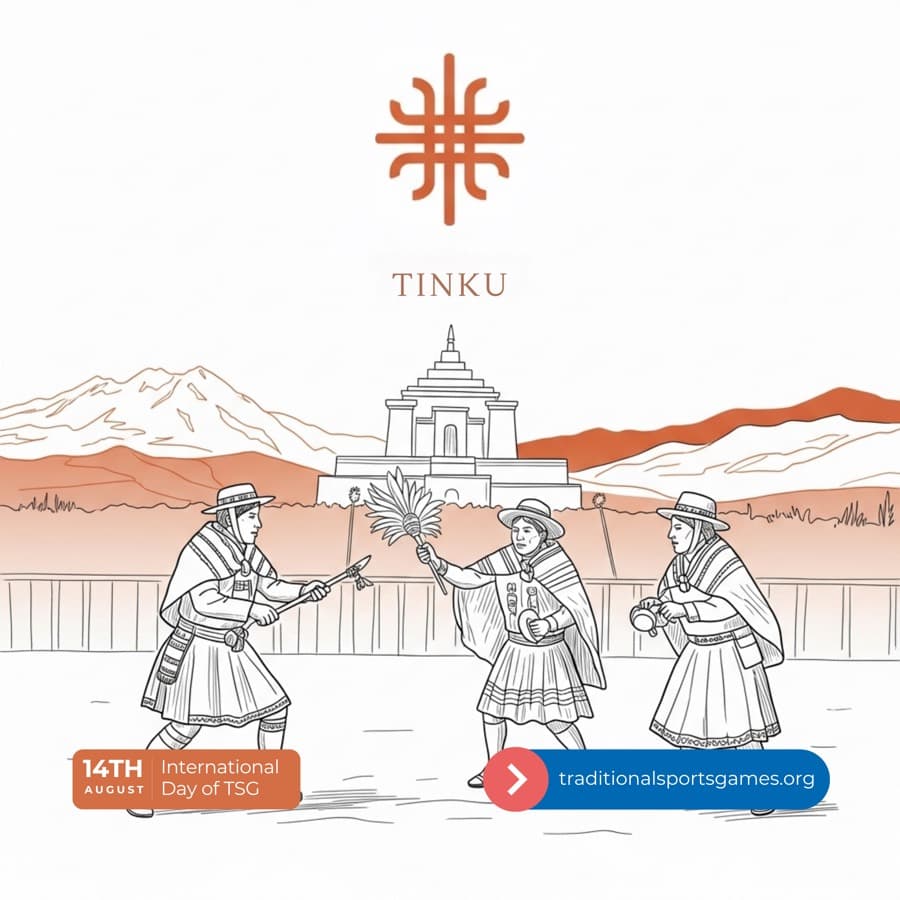
Tinku: Ceremonial Combat of the Bolivian Andes Honoring Pachamama Tinku is a ritualistic form of ceremonial fighting practiced by indigenous communities in the Bolivian Andes, particularly in the Potosí region. This traditional event is held as an offering to Pachamama (Mother Earth), reflecting the community's deep-rooted connection to nature, spirituality, and ancestral belief systems. More than a physical confrontation, Tinku is a living expression of indigenous knowledge and intangible cultural heritage. Historical and Cultural Origins The term "Tinku" means "encounter" in Quechua. Originating centuries ago, Tinku ceremonies were traditionally held during the planting season. These events were rooted in the belief that the shedding of blood on sacred ground would ensure a fertile harvest. Over time, the ritual has evolved while still maintaining its cultural and spiritual essence. Gameplay and Ceremonial Structure
Participants: Community members, often representing different villages or clans. Attire: Colorful traditional garments, helmets, and sometimes protective gloves. Objective: Engage in hand-to-hand combat as an offering to Pachamama; not about victory but about spiritual balance. Ritual Context: Accompanied by music, chanting, and communal celebration. Moderation: Modern Tinku is often supervised to prevent serious injury while preserving its cultural function.
Cultural Significance and Social Practices Tinku embodies a complex blend of spiritual tradition, social ritual, and indigenous resistance. It reinforces the identity of Andean communities and reflects a worldview where nature, human beings, and the cosmos are interconnected. The ceremonial fight acts as a platform for intergenerational transmission of values such as resilience, honor, and communal respect. Strategic Aspects and Physical Skills
Endurance: Requires strong physical conditioning and resilience. Awareness: Fighters must remain attuned to both opponents and the ritual context. Discipline: Despite its intensity, Tinku is guided by unwritten community norms.
Educational Value and Community Impact In the modern context, Tinku serves as an educational and cultural beacon:
Supports inclusive education through cultural curriculum and local pedagogy. Encourages youth empowerment by connecting younger generations to their heritage. Promotes global health through physical activity embedded in cultural identity. Enhances community participation in safeguarding traditional practices.
Alignment with UN SDGs Tinku actively contributes to the fulfillment of several UN Sustainable Development Goals (SDGs):
SDG 4: Quality Education – Integrating cultural learning through traditional sports. SDG 5: Gender Equality – Encouraging inclusive participation in ceremonial practices. SDG 10: Reduced Inequalities – Empowering marginalized indigenous communities. SDG 11: Sustainable Cities and Communities – Preserving cultural rituals for future generations. SDG 16: Peace and Strong Institutions – Promoting conflict resolution through ritual channels. SDG 17: Partnerships – Bridging civil society, academia, and policy for safeguarding heritage.
Similar Traditional Ceremonial and Combat Games
Selk’nam Wrestling (Argentina & Chile) Kabaddi (South Asia) Bazh Yod (Brittany, France)
Call to Action Tinku is not just a ritual—it is a sacred dialogue between people and the earth. Preserving such traditions means honoring our shared humanity and sustaining our planet’s diverse cultural ecosystems. We invite you to support, participate in, and promote traditional sports and games like Tinku for cultural continuity and global solidarity. Get Involved Benefits of Joining Support ICTSG About ICTSG: The International Council of Traditional Sports and Games (ICTSG) is dedicated to preserving, promoting, and revitalizing traditional sports and games as powerful tools for education, peace, and sustainable development.
About Us History Contact
When a sport disappears, it is like a language no longer spoken - its stories, values, and lessons risk being lost forever. When we revive a game, we revive a culture.
Khalil Ahmed Khan - President, ICTSG