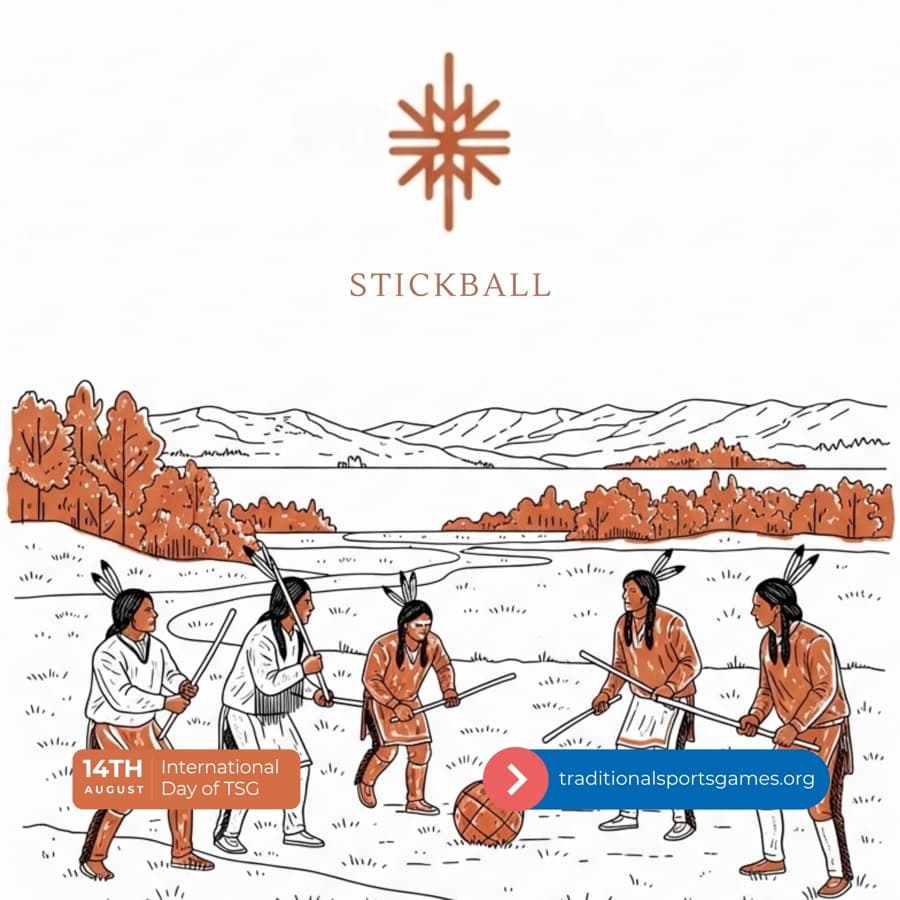
Stickball – The “Little Brother of War” and a Legacy of Indigenous Resilience and Skill Stickball is a historic traditional sport and game (TSG) played by many Native American nations, especially among tribes in the Southeastern United States such as the Choctaw, Cherokee, and Creek. Revered as the “Little Brother of War”, this physically intense game tests skill, dexterity, agility, strength, and stamina. Today, it is celebrated as a living symbol of indigenous knowledge, intangible heritage, and community identity. Historical Background Stickball has been played for centuries, originally used as a ceremonial alternative to war. Conflicts between tribes were resolved on the field rather than the battlefield, promoting peaceful competition. Stickball was deeply woven into social, political, and spiritual life, involving sacred rituals, traditional dress, and songs that are considered part of the performing arts of Native culture. Gameplay Rules and Structure The game is played with two handcrafted sticks and a small ball made of leather or cloth. The objective is to strike a pole or target with the ball. Traditional matches could involve hundreds of players and span large fields.
Each player uses two sticks to catch, carry, and throw the ball. Contact is allowed, requiring physical strength and stamina. Scoring involves hitting a designated target or pole. Games are often preceded by traditional songs, dances, and ceremonies.
Cultural Significance Stickball is far more than a sport—it is a social practice that encompasses tradition, diplomacy, identity, and intergenerational learning. It was used to train warriors, settle disputes, and prepare youth for adult roles within the community. Its ceremonial dimension reinforces cultural diversity and inclusive education through storytelling and shared heritage. Strategic and Educational Aspects
Promotes teamwork, leadership, and physical strategy. Strengthens cultural identity and Indigenous language retention. Supports school curricula focused on intangible heritage. Fosters intergenerational transmission of rituals, chants, and values. Empowers youth to take pride in Indigenous resilience and traditions.
Health and Community Impact Stickball plays a vital role in youth empowerment, global health promotion, and community participation. It supports physical wellness and mental endurance, while bringing families, elders, and youth together in public ceremonies and local events. UN and Sustainable Development Goals (SDGs) As recognized by global initiatives like the International Council of Traditional Sports and Games (ICTSG), Stickball strongly aligns with UN’s SDGs:
SDG 4 – Quality Education: Teaches Indigenous history and values in schools. SDG 5 – Gender Equality: Inclusive versions promote female participation in modern contexts. SDG 10 – Reduced Inequalities: Highlights the richness of Native sports on global platforms. SDG 11 – Sustainable Cities and Communities: Protects Indigenous urban identities through sport. SDG 16 – Peace and Justice: Historically used to prevent tribal warfare peacefully. SDG 17 – Partnerships for the Goals: Encourages intertribal, intercultural, and institutional collaboration.
Related Global Traditional Games
Buzkashi (Central Asia) – A horseback game with deep cultural roots and team strategy. Kalapalo Wrestling (Brazil) – Involves strength and ceremonial traditions. Gaelic Football (Ireland) – Community-based game with shared heritage value.
Call to Action – Preserve, Participate, Promote Stickball is a vibrant celebration of Indigenous resilience, strength, and community. Let us honor and protect this sacred game by supporting education, participation, and cultural safeguarding. Schools, communities, and cultural institutions are encouraged to teach and celebrate games like Stickball as key pillars of global cultural diversity. Get Involved Benefits of Joining Support ICTSG About ICTSG: The International Council of Traditional Sports and Games (ICTSG) is dedicated to preserving, promoting, and revitalizing traditional sports and games as powerful tools for education, peace, and sustainable development.
About Us History Contact
When a sport disappears, it is like a language no longer spoken - its stories, values, and lessons risk being lost forever. When we revive a game, we revive a culture.
Khalil Ahmed Khan - President, ICTSG