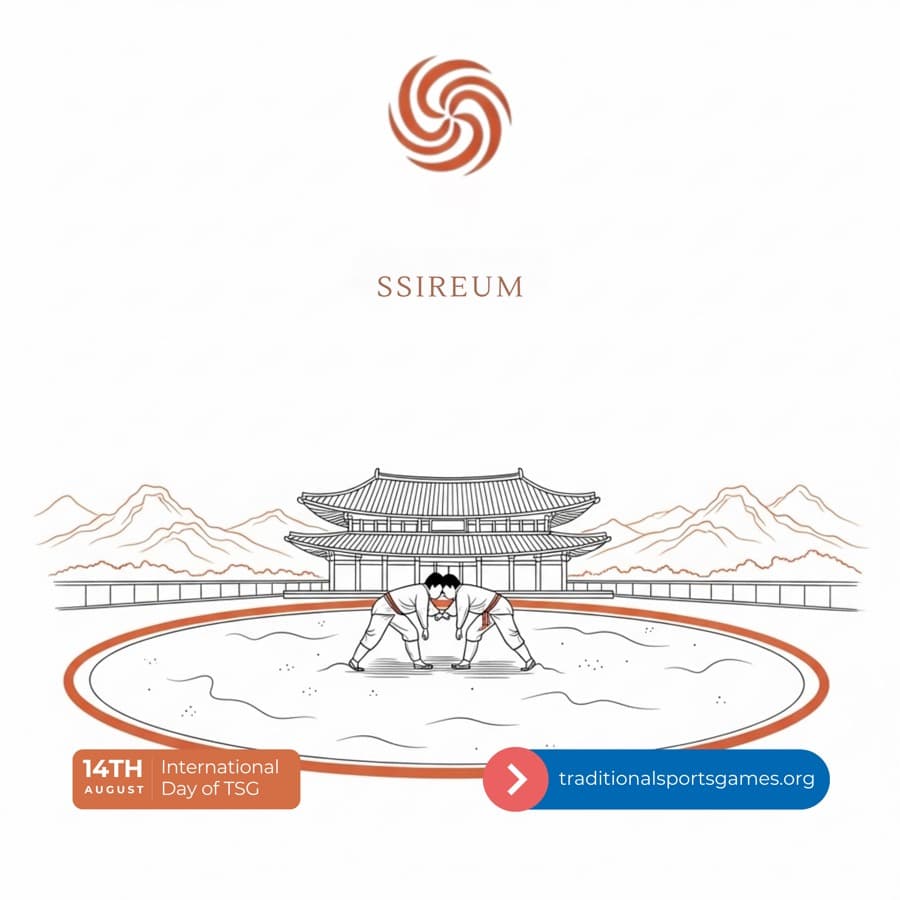
Ssireum – Korea’s Traditional Wrestling Sport Ssireum is Korea’s traditional wrestling sport, deeply rooted in the nation’s history and cultural identity. Recognized by UNESCO as an element of intangible cultural heritage, Ssireum is a celebrated practice that embodies strength, technique, and community spirit. Historical Background Originally used in military applications, Ssireum became a popular pastime during the Goryeo and Joseon periods. Matches were traditionally held during the Dano holiday, and large tournaments called baekjung were organized on the full moon of the seventh month. Historically, Ssireum featured two styles: a right-sided style and a left-sided style. In 1994, the Korean Ssireum Federation proposed unifying Ssireum into a single left-sided style. Gameplay and Rules
Two competitors face off in a circular sand pit. Each wrestler wears a satba (long fabric belt) used for gripping. Matches consist of three or five rounds, each lasting one minute. The objective is to force the opponent to touch the ground with any part of their body above the knee. Strength and technique are used to execute throws and takedowns. The Korean Ssireum Association (KSA) governs the sport.
Cultural Significance Ssireum is more than a sport—it is a performing art and a social practice that fosters community participation and civil society engagement. It has been nationally televised in South Korea since the 20th century, reinforcing its role in intergenerational transmission and cultural identity. Strategic Aspects Ssireum requires exceptional balance, grip strength, and tactical awareness. Wrestlers must master leverage, positioning, and counter-moves to succeed. Educational Value and Community Impact
Promotes inclusive education by teaching traditional skills. Enhances global health through physical activity. Strengthens cultural identity and indigenous knowledge. Encourages youth participation and leadership.
UNESCO and Sustainable Development Goals (SDGs) Ssireum aligns with UNESCO’s mission to safeguard intangible heritage and promote sustainable development. It supports:
SDG 4: Quality education through cultural learning. SDG 5: Gender equality by encouraging participation. SDG 10: Reduced inequalities through inclusive sports. SDG 11: Sustainable cities and communities by preserving heritage. SDG 16: Peace and justice through cultural diplomacy. SDG 17: Partnerships for the goals via international cooperation.
Similar Traditional Games Explore other traditional wrestling sports from different regions:
Kushti (India) Bokh (Mongolia) Sumo (Japan)
Call to Action Join the movement to preserve and promote traditional sports and games. Get involved, support indigenous heritage, and become a part of the ICTSG community. Get Involved Benefits of Joining Support ICTSG About ICTSG: The International Council of Traditional Sports and Games (ICTSG) is dedicated to preserving, promoting, and revitalizing traditional sports and games as powerful tools for education, peace, and sustainable development.
About Us History Contact
When a sport disappears, it is like a language no longer spoken - its stories, values, and lessons risk being lost forever. When we revive a game, we revive a culture.
Khalil Ahmed Khan - President, ICTSG