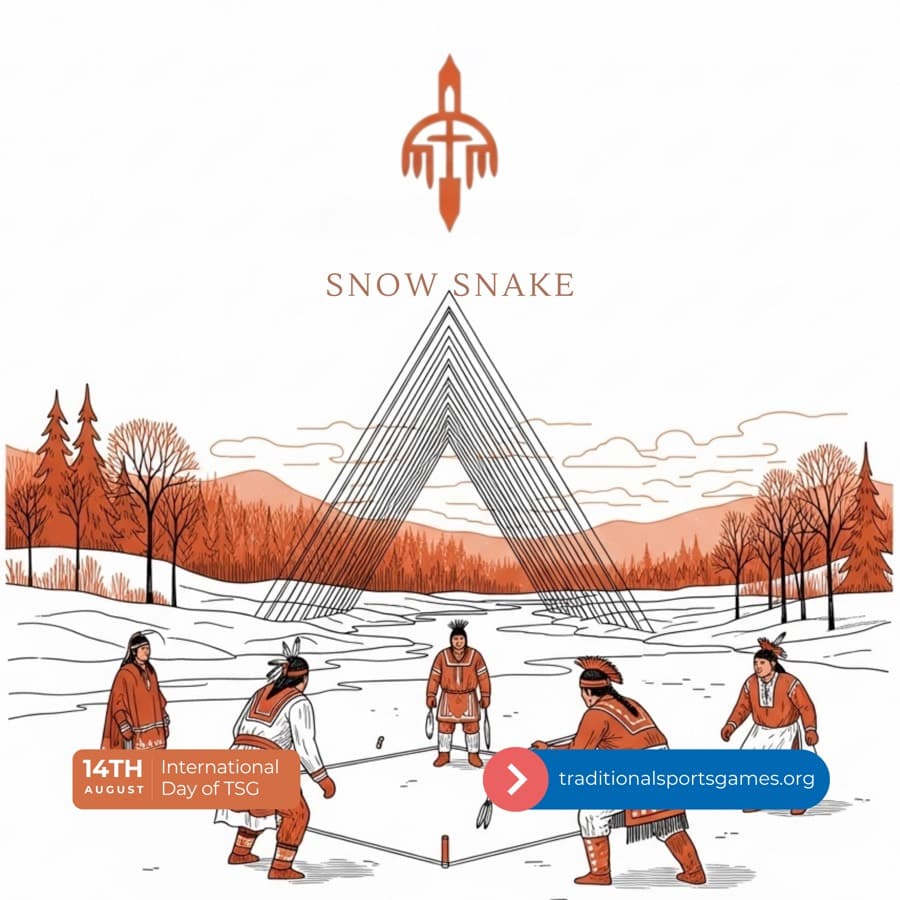
Snow Snake – Reviving the Indigenous Winter Sport of Precision, Strength, and Heritage Snow Snake is a traditional winter sport practiced by various Indigenous nations across North America, particularly the Haudenosaunee (Iroquois) and Anishinaabe communities. As part of their traditional sports and games (TSG), Snow Snake reflects generations of indigenous knowledge, oral storytelling, and community bonding. It stands as a powerful representation of intangible heritage passed from elders to youth. Historical Background Rooted in the long winters of Northern America, the Snow Snake game was originally developed for both practical and ceremonial reasons. Long, polished sticks—sometimes carved with clan symbols—were hurled across snow-covered tracks. This practice was more than recreation; it was a way of sharpening skills needed for survival and unity. Snow Snake became an integral part of festivals, winter gatherings, and intergenerational transmission of stories and values. How to Play Snow Snake The game involves players sliding long, smooth sticks (called "snow snakes") down a specially prepared snow trough to see who can throw theirs the farthest:
Tracks are dug out in snowbanks, forming a long and slightly downhill channel. Players take turns launching their snow snakes with a swift arm motion. The objective is distance—whichever snow snake glides the farthest wins. Snow snakes vary in length and weight; some can be up to 6 feet long and are custom-designed.
Cultural Significance and Symbolism Beyond competition, Snow Snake carries deep cultural symbolism. Sticks are often personalized and blessed. Playing this game fosters connection with ancestors, landscapes, and seasonal rhythms. It reflects values of community participation, peaceful interaction, and shared memory. Strategic and Educational Aspects
Enhances physics understanding—force, friction, and angles. Promotes inclusive education through storytelling and craftsmanship. Empowers youth by integrating sport into identity and tradition. Teaches patience, observation, and environmental respect.
Global Health and Community Impact
Encourages physical activity and mental focus during long winters. Revitalizes community through seasonal festivals and tournaments. Supports civil society engagement via cultural preservation events. Promotes unity among Indigenous and non-Indigenous groups through intercultural exchange.
UN SDGs and the Role of ICTSG Snow Snake aligns with the goals of the International Council of Traditional Sports and Games (ICTSG) and contributes to UN’s Sustainable Development Goals:
SDG 4 – Quality Education: Promotes heritage-based learning rooted in Indigenous wisdom. SDG 5 – Gender Equality: Encourages inclusive participation by all genders in cultural events. SDG 10 – Reduced Inequalities: Revives marginalized traditions and celebrates diversity. SDG 11 – Sustainable Cities and Communities: Preserves heritage in both rural and urban contexts. SDG 16 – Peace and Strong Institutions: Builds intergenerational trust and peaceful coexistence. SDG 17 – Partnerships for the Goals: Involves Indigenous councils, educators, and global heritage organizations.
Similar Traditional Games from Other Regions
Bazh Yod (France – Brittany) – A precision sport requiring aim and posture. Kene (Tibet) – Indigenous snow-based wrestling promoting strength and balance. Asparezoba (Georgia) – An equestrian sport embedded in mountain culture.
Call to Action – Preserve and Play the Snow Snake As winter returns each year, so should the practice of Snow Snake. Reviving such traditional sports and games not only ensures safeguarding of intangible cultural heritage but also enriches our modern societies with ancient wisdom. Join hands with ICTSG to promote education, wellness, and diversity through this extraordinary Indigenous game. Get Involved Benefits of Joining Support ICTSG About ICTSG: The International Council of Traditional Sports and Games (ICTSG) is dedicated to preserving, promoting, and revitalizing traditional sports and games as powerful tools for education, peace, and sustainable development.
About Us History Contact
When a sport disappears, it is like a language no longer spoken - its stories, values, and lessons risk being lost forever. When we revive a game, we revive a culture.
Khalil Ahmed Khan - President, ICTSG