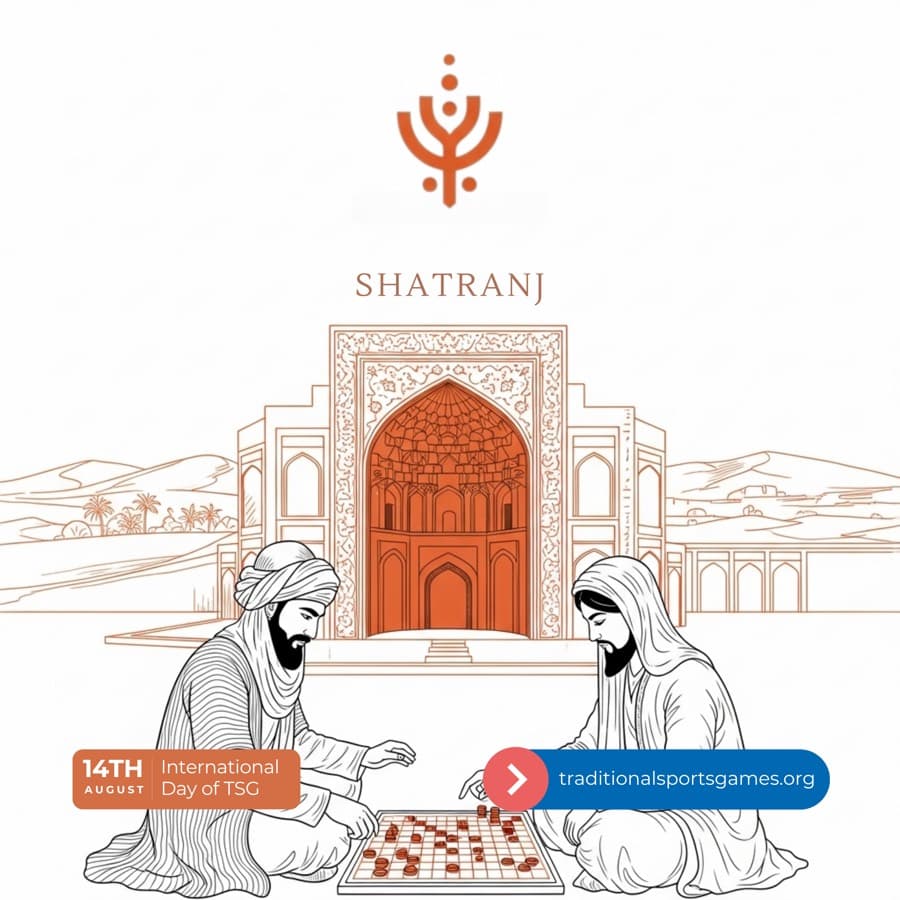
Shatranj: The Ancient Persian Chess Game Shatranj is an old form of chess that originated in the **Sasanian Empire** and gradually evolved into modern chess. It was introduced to Persia from **India’s Chaturanga** and later spread across the Islamic world and Europe. Historical Background During the reign of **Khosrow I (531–579 CE)**, an Indian king gifted a chess set to the Persian court, marking the introduction of Chaturanga to Persia. Over time, Persians adapted the game, refining its rules and terminology, leading to the development of Shatranj. Gameplay and Rules
Played on an **8×8 board**, similar to modern chess. Pieces included the **Shah (King), Wazir (Queen), Rukh (Rook), Faras (Knight), Pil (Bishop), and Sarbaz (Pawn)**. Victory was achieved through **checkmate (Shah Mat)** or capturing all opponent’s pieces except the king.
Cultural Significance Shatranj was more than a game—it was a **symbol of strategy, intellect, and cultural exchange**. It was widely played in Persian courts and later became a cornerstone of Islamic scholarship on strategy and tactics. Strategic Aspects and Benefits
Enhances **critical thinking and strategic planning**. Promotes **cultural pride and heritage preservation**. Encourages **intergenerational transmission and youth empowerment**.
Educational Value and Community Impact Aligned with **UNESCO’s Sustainable Development Goals (SDG 4, 5, 10, 11, 16, and 17)**, Shatranj supports **inclusive education, social practices, and global health initiatives**. Similar Traditional Games Explore other traditional strategy games like Makruk (Thai Chess) and Xiangqi (Chinese Chess), which share similar competitive elements. Call to Action Join the movement to preserve Shatranj and other traditional games. Engage with ICTSG and support cultural heritage. Get Involved Benefits of Joining Support ICTSG About ICTSG: The International Council of Traditional Sports and Games (ICTSG) is dedicated to preserving, promoting, and revitalizing traditional sports and games as powerful tools for education, peace, and sustainable development.
About Us History Contact
When a sport disappears, it is like a language no longer spoken - its stories, values, and lessons risk being lost forever. When we revive a game, we revive a culture.
Khalil Ahmed Khan - President, ICTSG