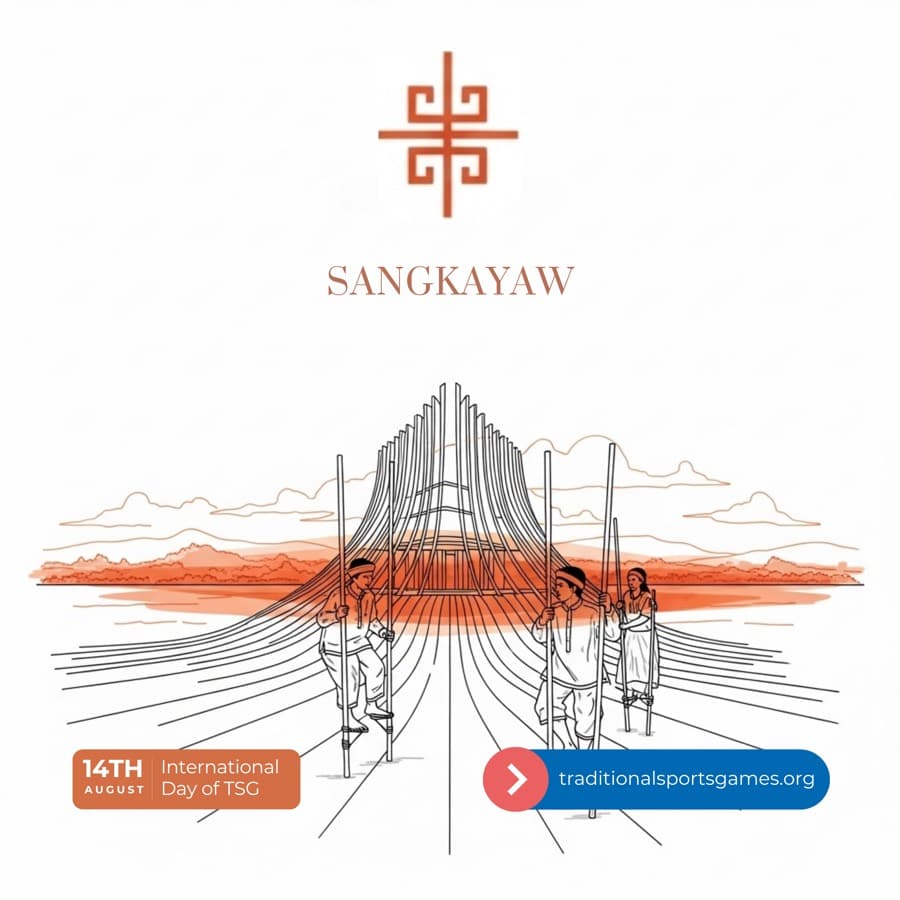
Sangkayaw: The Traditional Coconut Shell Race of the Philippines Sangkayaw, also known as the coconut shell race, is a beloved traditional sport and game (TSG) from the Philippines that embodies the spirit of indigenous ingenuity, intangible heritage, and communal joy. Rooted in rural life and childhood memory, Sangkayaw exemplifies the intergenerational transmission of values, health, and cultural identity. Historical Background This game has been passed down for generations, traditionally played in open fields, village plazas, or schoolyards. Utilizing coconut shells—a natural and abundant resource in the Philippines—children fashioned sandals from the shells, attached with strings, and used them to “walk” or race. This low-cost, eco-conscious game reflects both indigenous knowledge and environmental adaptation. Gameplay and Rules
Each player steps on two coconut shell halves, with strings looped around their toes or hands for grip. The goal is to walk or race using the shells, without touching the ground with bare feet. Races are either one-on-one or team-based. The game ends when a participant crosses the finish line or completes a relay-style course.
Cultural and Social Significance Sangkayaw reflects cultural diversity and shared Filipino values such as unity, resourcefulness, and celebration. It is often part of school activities, local festivals, and barangay games, strengthening community participation and social practices. Strategic and Educational Value
Promotes balance, coordination, and physical agility. Encourages youth empowerment through fun, competitive play. Fosters creativity by allowing children to craft their own racing shells. Builds social bonds and respect for cultural heritage in both rural and urban settings.
Alignment with UNESCO’s SDGs As a grassroots activity rooted in tradition, Sangkayaw aligns closely with several of UNESCO’s Sustainable Development Goals (SDGs):
SDG 4: Quality Education – Encourages informal learning through play and cultural storytelling. SDG 5: Gender Equality – Played by boys and girls equally. SDG 10: Reduced Inequalities – Accessible to children of all backgrounds. SDG 11: Sustainable Cities and Communities – Preserves local traditions through participatory events. SDG 16: Peace, Justice, and Strong Institutions – Promotes fair play and conflict resolution. SDG 17: Partnerships for the Goals – Offers opportunities for NGOs, schools, and communities to collaborate.
Benefits and Community Impact
Reinforces traditional values and intergenerational respect. Enhances global health through physical activity and reduced screen time. Encourages civil society engagement by involving parents, elders, and educators. Supports inclusive education and heritage-based learning.
Similar Traditional Games
Tumbang Preso – A Filipino street game using a can and slipper. Gasing (Malaysia) – Traditional top spinning as a communal contest. Chindro (Pakistan) – A similar balance-based game on marked ground.
Call to Action Sangkayaw is more than just a game—it's a celebration of cultural resilience, creativity, and community spirit. Let us work together to safeguard, promote, and share this invaluable part of our global heritage. Get Involved Benefits of Joining Support ICTSG
About ICTSG: The International Council of Traditional Sports and Games (ICTSG) is dedicated to safeguarding and celebrating global traditional sports like Sangkayaw. Learn more about our mission, explore our history, or contact us to become part of this global movement.
When a sport disappears, it is like a language no longer spoken - its stories, values, and lessons risk being lost forever. When we revive a game, we revive a culture.
Khalil Ahmed Khan - President, ICTSG