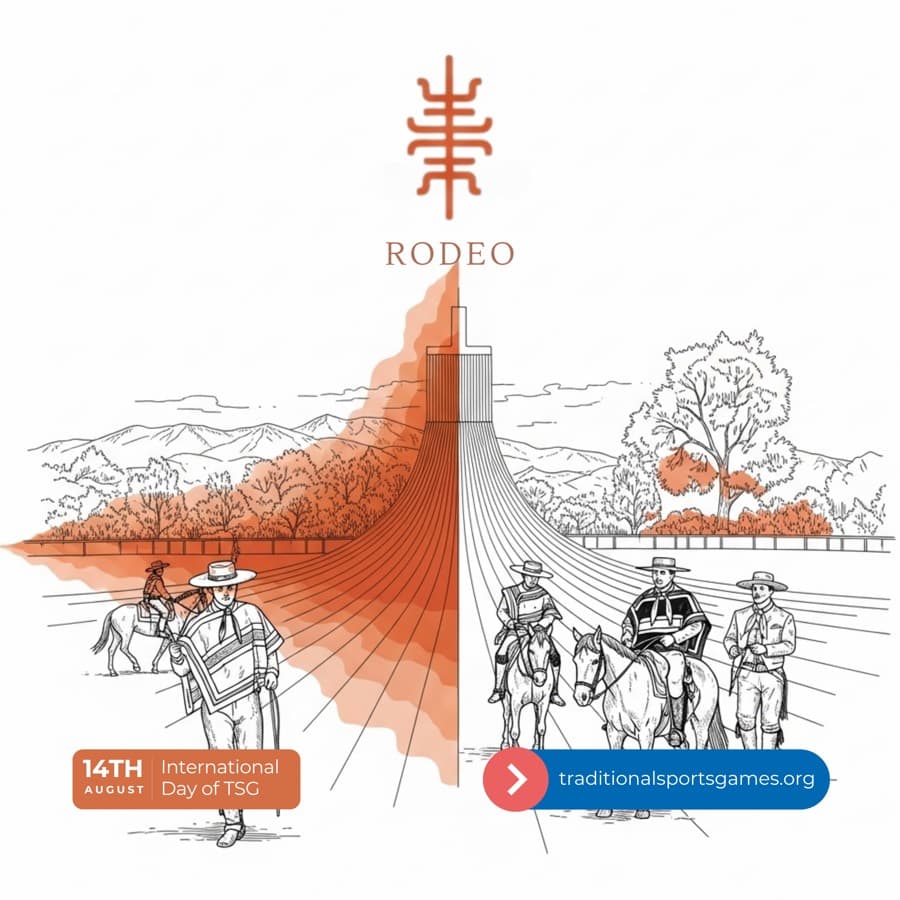
Rodeo – Chile’s National Traditional Sport of Horsemanship and Cultural Identity Rodeo is one of the most iconic traditional sports in Chile, officially declared a national sport in 1962. With deep ties to the countryside, Rodeo is a vibrant expression of cultural heritage, indigenous knowledge, and rural traditions. It aligns closely with the traditional sports and games (TSG) recognized by UNESCO for their role in promoting peace, diversity, and sustainable development. Historical Background and Origins Rooted in Chile’s colonial past, Rodeo emerged from cattle herding techniques practiced by “huasos” – skilled rural horsemen. These skills evolved into competitive sport during community gatherings and festivals. Rodeo reflects a blend of indigenous horsemanship and Spanish equestrian influence, forming a key component of Chile’s intangible cultural heritage. Gameplay and Structure
Teams: Two riders (called a “collera”) work together to control and corner a steer. Arena: The event is held in a crescent-shaped arena known as a “medialuna.” Objective: Riders must steer a young bull around the ring and skillfully stop it within marked zones for points. Attire: Traditional huaso clothing includes ponchos, boots, spurs, and flat-brimmed hats, emphasizing performing arts and regional identity.
Cultural and Strategic Significance Rodeo is more than a sport; it is a space of intergenerational transmission, where grandparents, parents, and children share skills, ethics, and identity. It encourages social practices of respect, teamwork, and community celebration.
Promotes inclusive education by engaging youth in horsemanship schools and rural clubs. Strengthens community participation during national rodeo championships and local fiestas. Preserves rural traditions, indigenous knowledge, and craftsmanship in gear-making.
Rodeo and Sustainable Development Through the lens of UN and ICTSG, Rodeo actively supports the following Sustainable Development Goals (SDGs):
SDG 4 (Quality Education): Promotes learning of animal care, equestrian skills, and ethical conduct. SDG 5 (Gender Equality): Increasing participation of women and youth in rural sport culture. SDG 10 (Reduced Inequalities): Strengthens rural inclusion and heritage visibility. SDG 11 (Sustainable Cities and Communities): Vital for preserving countryside lifestyles and spaces. SDG 16 (Peace, Justice, and Strong Institutions): Encourages peaceful community interaction and tradition-based governance through local rodeo clubs. SDG 17 (Partnerships): Enables collaboration between civic organizations, heritage bodies, and government.
Comparable Traditional Games Around the World
Atlı Cirit (Turkey) – Traditional equestrian game involving spear throwing and teamwork. Buzkashi (Central Asia) – A team-based horseback game with strong cultural symbolism. Kökpar (Kazakhstan) – Horse-mounted heritage sport emphasizing strength and coordination.
Educational Value and Youth Empowerment
Offers young people leadership and mentorship opportunities through local rodeo associations. Acts as a practical platform for learning environmental ethics and animal welfare. Promotes global health via physical activity, discipline, and emotional well-being.
Call to Action – Safeguard Rodeo for Future Generations Rodeo continues to embody the heritage, values, and community spirit of Chile. As part of the global effort to preserve traditional sports and games, we must celebrate and support Rodeo’s contribution to cultural identity, education, and sustainable development. Get Involved Benefits of Joining Support ICTSG About ICTSG: The International Council of Traditional Sports and Games (ICTSG) is dedicated to preserving, promoting, and revitalizing traditional sports and games as powerful tools for education, peace, and sustainable development.
About Us History Contact
When a sport disappears, it is like a language no longer spoken - its stories, values, and lessons risk being lost forever. When we revive a game, we revive a culture.
Khalil Ahmed Khan - President, ICTSG