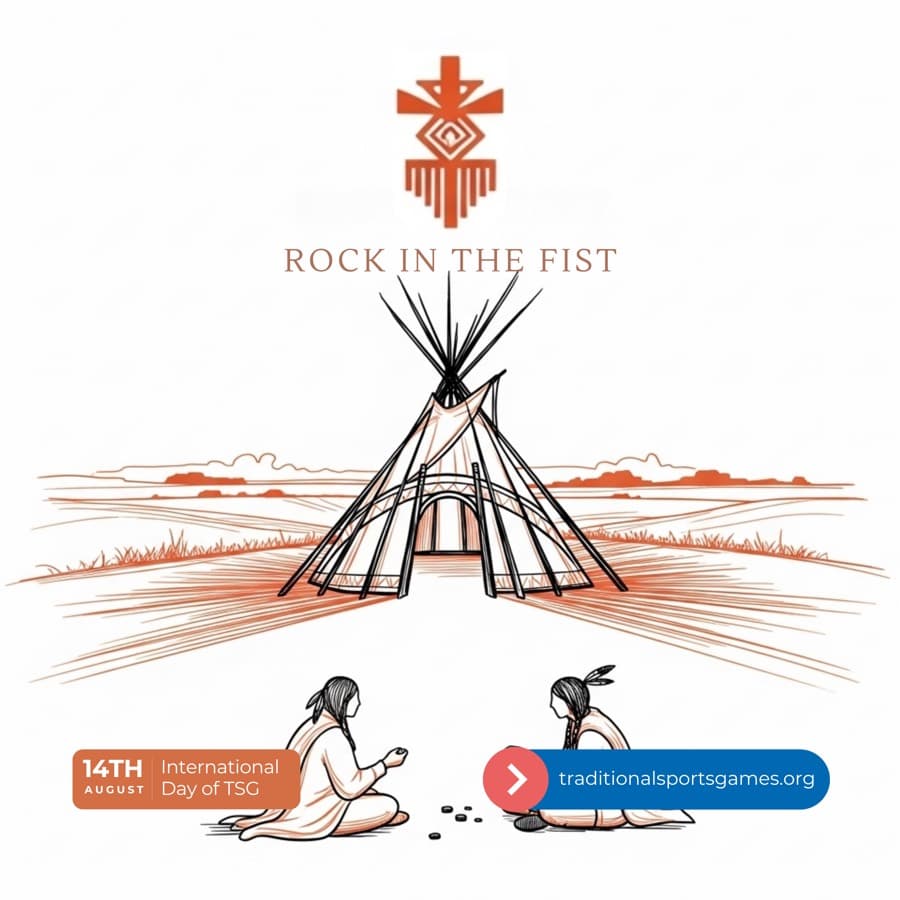
Rock in the Fist – A Native American Game of Deception and Social Learning "Rock in the Fist" is a traditional North American Indigenous game that exemplifies the fusion of physical action and mental strategy. Rooted in Indigenous social interaction, this game carries profound educational, cultural, and communal values that align with the mission of UNESCO and the International Council of Traditional Sports and Games (ICTSG). Historical and Cultural Background Played by Plains tribes such as the Lakota and the Crow, "Rock in the Fist" was a common part of social and ceremonial gatherings. The game required no special equipment—just a small stone and the hands of the players—making it widely accessible and inclusive. It fostered social bonding, observation skills, and intuitive intelligence, all while reinforcing community cohesion. Gameplay and Rules
Players: Typically 2–5 participants. Objective: Guess which hand hides the stone (or pebble). Setup: One player places a small rock in a fist behind their back, quickly bringing both fists forward. The other players must guess which fist holds the rock. Strategy: Bluffing, eye contact, distraction, and intuition are all part of the game's success.
Cultural Significance This game is a form of indigenous performing art—a cultural performance of observation and expression. It encourages intergenerational transmission of values, as elders often teach children how to detect subtle cues and understand social behavior. More than entertainment, it’s a ceremony of trust, intellect, and cultural continuity. Strategic and Educational Value
Builds skills in critical thinking and emotional intelligence. Improves hand-eye coordination and rapid decision-making. Teaches self-control and observation. Encourages peer learning and respectful challenge.
Social and Community Impact
Fosters civil society engagement by bringing different age groups together. Promotes inclusive education with no gender or material restrictions. Preserves indigenous knowledge through active participation. Encourages community participation in local and cultural festivals.
UNESCO and Sustainable Development Goals ICTSG and UNESCO emphasize that safeguarding traditional games like "Rock in the Fist" contributes to achieving multiple Sustainable Development Goals (SDGs):
SDG 4 – Quality Education: Uses play to teach reasoning and social cues. SDG 5 – Gender Equality: Played equally among all genders. SDG 10 – Reduced Inequalities: Accessible to all socioeconomic groups. SDG 11 – Sustainable Cities and Communities: Encourages use of traditional knowledge in modern settings. SDG 16 – Peace and Justice: Promotes respect, fairness, and peaceful interaction. SDG 17 – Partnerships for the Goals: Strengthens community-school-NGO collaboration.
Similar Games Across the World
Pitj Kata (Australia) – Aboriginal catching game focused on deception and agility. Obstacle Games (Philippines) – Community-based challenge games involving wit and teamwork. Balle au Tambourin (France) – Tactical ball game with strategic team dynamics.
Call to Action – Pass the Stone, Pass the Knowledge Like the rock passed hand-to-hand, so too must our intangible heritage pass from generation to generation. Let’s ensure that traditional games like "Rock in the Fist" continue to educate, unify, and inspire future leaders, educators, and peacebuilders. Get Involved Benefits of Joining Support ICTSG About ICTSG: The International Council of Traditional Sports and Games (ICTSG) is dedicated to preserving, promoting, and revitalizing traditional sports and games as powerful tools for education, peace, and sustainable development.
About Us History Contact
When a sport disappears, it is like a language no longer spoken - its stories, values, and lessons risk being lost forever. When we revive a game, we revive a culture.
Khalil Ahmed Khan - President, ICTSG