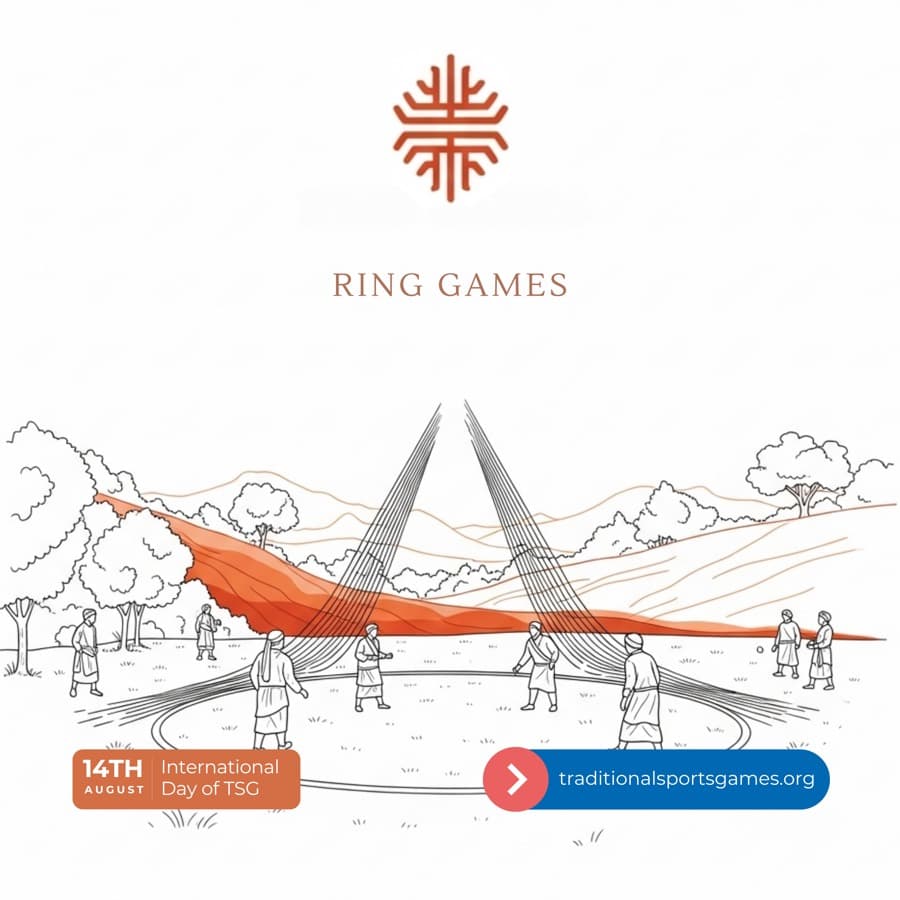
Ring Games of North America – Reviving Indigenous Precision and Play for Cultural Education Ring Games are among the most iconic traditional sports and games (TSG) of Indigenous North American cultures. With a blend of hand-eye coordination, cultural symbolism, and social participation, these games offer invaluable insights into indigenous knowledge, intangible cultural heritage, and the intergenerational transmission of values and skills. Historical Background Practiced by various tribes including the Blackfeet, Crow, Salish, and Lakota Nations, Ring Games served as both recreation and ritual. These games were often played in community gatherings, tribal ceremonies, and educational settings for young people to learn about precision, patience, and respect. The materials used — willow hoops, antler pieces, bone pins, and sinew cords — were locally sourced and handcrafted, demonstrating sustainable cultural practices rooted in the land. Gameplay and Rules
Setup: A ring (made of wood or bone) is tossed with the aim of landing it on a target, often a stick, peg, or hook. Objective: Score points by accurately tossing or rolling the ring onto designated target zones or into marked areas. Variations: Some versions involved multiple rings, while others used darts or poles for added complexity. Team Play: Played individually or in groups, encouraging healthy competition and collaboration.
Cultural Significance Ring Games were not just pastimes — they were rituals of learning. They taught youth to remain focused, to respect materials, and to celebrate community achievements. For elders, they served as moments of storytelling and instruction, reinforcing tribal identity and moral values. As a social practice, Ring Games promoted cultural diversity, inclusive education, and community participation. Strategic and Educational Value
Enhances hand-eye coordination and concentration. Teaches traditional measurements, physics (trajectory and angles), and patience. Embeds ethical learning through respectful competition. Supports youth empowerment by involving them in heritage practices.
Global and Local Benefits
Strengthens intergenerational ties between elders and youth. Promotes global health through physical activity rooted in cultural identity. Encourages civil society engagement in Indigenous-led educational activities. Preserves the environment through use of sustainable, natural materials.
UNESCO and the SDGs The International Council of Traditional Sports and Games (ICTSG) recognizes the Ring Games of North America as essential to achieving the following UNESCO Sustainable Development Goals:
SDG 4 – Quality Education: Promotes Indigenous learning through practical activities. SDG 5 – Gender Equality: Played by boys and girls equally, fostering shared learning spaces. SDG 10 – Reduced Inequalities: Centers underrepresented Indigenous knowledge systems. SDG 11 – Sustainable Communities: Revives traditions in community centers and schools. SDG 16 – Peace and Justice: Encourages respectful, peaceful recreation and conflict resolution. SDG 17 – Partnerships for the Goals: Connects schools, NGOs, and tribal councils for joint programming.
Similar Traditional Games from Around the World
Bazh Yod (France) – A traditional Breton stick combat game emphasizing balance and precision. Angkunh (Cambodia) – A playful stone-throwing game combining aim and community festivity. Ariarda Mene (Philippines) – A ring-and-spear variation using agility and timing.
Call to Action – Keep the Circle Rolling Ring Games teach more than play — they are tools for storytelling, learning, and healing. Their circular motion reflects the cycle of heritage that must never be broken. We invite educators, cultural workers, and communities worldwide to join ICTSG and safeguard these intangible treasures for future generations. Get Involved Benefits of Joining Support ICTSG About ICTSG: The International Council of Traditional Sports and Games (ICTSG) is dedicated to preserving, promoting, and revitalizing traditional sports and games as powerful tools for education, peace, and sustainable development.
About Us History Contact
When a sport disappears, it is like a language no longer spoken - its stories, values, and lessons risk being lost forever. When we revive a game, we revive a culture.
Khalil Ahmed Khan - President, ICTSG